By Dickson Omobola
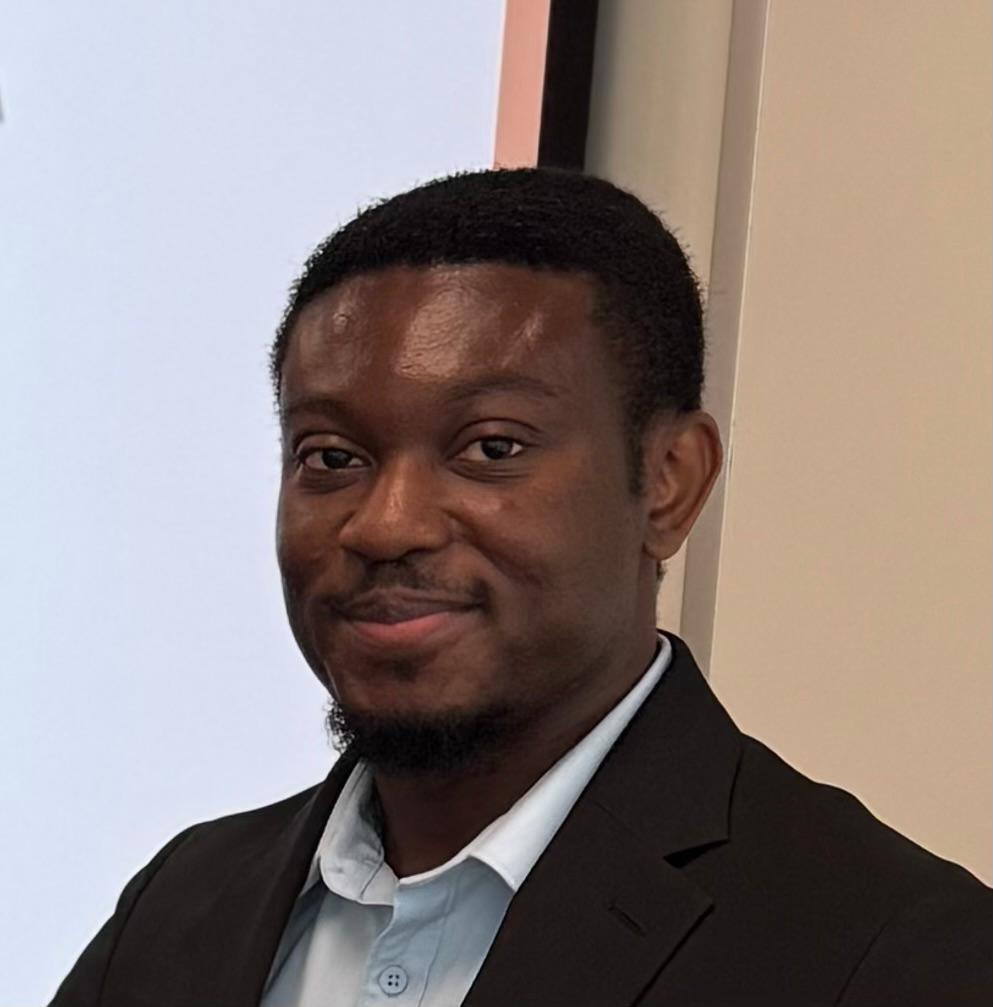
As concerns over collapsing infrastructure continue to grow globally, a Nigerian doctoral student, Emmanuel Ogunniyi, is breaking new ground in structural health monitoring by advancing research on flexible electronic skins that allow concrete structures to detect and report damage in real-time.
Ogunniyi, currently pursuing a Ph.D. in Mechanical Engineering at the University of South Carolina, is leading a transformative effort to transform traditional, passive infrastructure into intelligent systems. His research focuses on using flexible electronics in concrete structures, enabling them to monitor their health and signal early signs of failure.
“Infrastructure failure is rarely sudden, it’s usually silent,” Ogunniyi told our correspondent. “What my research does is give structures a voice. These sensors can detect very small strain, fatigue, and cracking long before visible signs appear, enabling engineers to act before it’s too late.”
One of the critical challenges in structural monitoring has been the limited durability, high cost, and poor adaptability of traditional sensors. Ogunniyi’s works tackle these hurdles head-on. His work on “electrically isolated capacitive sensing skins” significantly reduces data distortion caused by electrical interference, which has long plagued the accuracy of readings when the sensor is used directly on concrete.
In another breakthrough, Ogunniyi developed an adhesive-free, in situ assembly technique that allows large-area sensors to be seamlessly adhered during construction. “This method eliminates the need for glues or surface treatments, making installation cheaper and more robust,” he explained.
His research is already being put to the test. Backed by funding from the U.S. Department of Transportation, Ogunniyi’s sensors have been installed on live testbeds, including bridge decks and concrete beams. The systems generate high-resolution maps of strain and fatigue with minimal error, allowing for timely intervention and preventive maintenance.
“Many bridges around the world are structurally deficient yet remain unmonitored,” he noted. “We are working on flexible electronics that not only survive in harsh outdoor environments but are easy and cheap to deploy across entire bridge decks or building surfaces.”
The United Nations, through its Sustainable Development Goals, has emphasized infrastructure resilience as a global priority. Ogunniyi’s work aligns closely with this objective, addressing a growing need for scalable, smart monitoring solutions as infrastructure ages and climate pressures mount.
Recalling his upbringing in Nigeria, Ogunniyi said, “I grew up in a part of the world where infrastructure failure has real human costs, where a collapsed building or bridge doesn’t just make headlines, it takes lives. As a Nigerian researcher in the U.S., I see my work as a bridge between advanced technology and the everyday safety of millions.”
Looking ahead, Ogunniyi envisions a future where smart infrastructure is no longer futuristic. “We’re laying the groundwork for bridges that talk, buildings that learn, and cities that adapt. This is about saving lives and creating safer communities globally.”
Disclaimer
Comments expressed here do not reflect the opinions of Vanguard newspapers or any employee thereof.