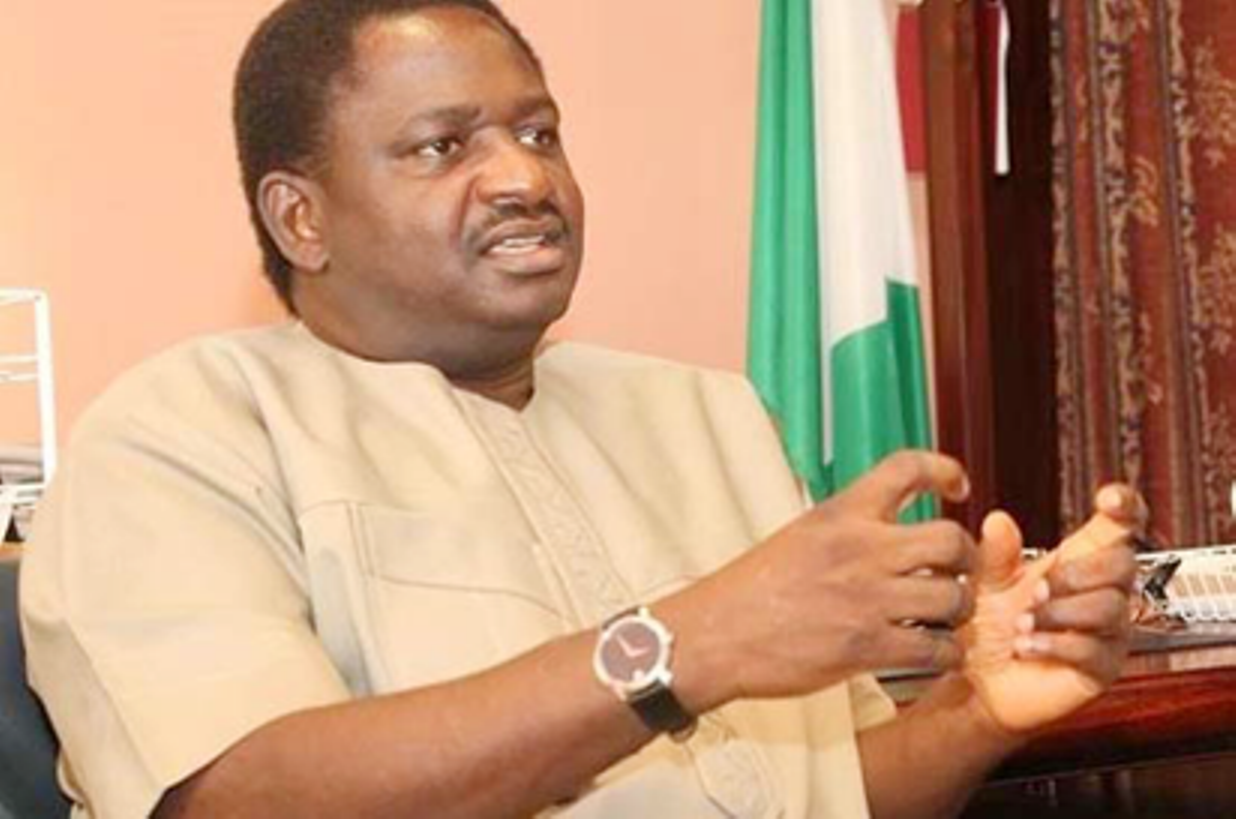
Femi Adesina
By Juliet Umeh
Critical stakeholders in the media space, including former Special Adviser, Media and Publicity, to ex-President Muhammadu Buhari, Mr. Femi Adesina, and president of the Nigerian Guild of Editors, NGE, Mr. Eze Anaba, yesterday, called on the media professionals in Nigeria to uphold the codes and ethics of the journalism profession.
The experts also stated that the sustainability of the industry was sacrosanct, as it was struggling to survive over high cost of running it.
The stakeholders made the call at the on-going two-day senior journalists’ capacity building programme, organised by the International Press Institute, IPI, Nigeria, in conjunction with MacArthur Foundation, in Lagos.
While applauding the programme, Adesina said: “Ethics of the profession is everything. If you are not an ethical journalist, you are actually a disservice to the profession.
”You must have codes that you follow, codes that you respect, things you hold dear. If you don’t subscribe to ethical journalism, you abuse the profession itself, and it will become a sorry thing.”
Responding on social media contents, he said: “Those are not necessarily journalists, they call them citizen journalists. So, they are not journalists in the real sense of the word. What it takes for people to become reporters now is just have an internet enabled phone and start posting things.
”That actually, is not journalism. Journalism has its codes, ethics that people that practice the profession subscribe to.
“Consumers must be wary about what they consume. If you consume everything you see online before you know it, you are misled and you will start to share those things that you have consumed which are not necessarily true,” Adesina said.
Similarly, Anaba said there was a study internationally which said citizen journalism and its questionable credibility is driving people back to mainstream journalism.
He said: “We are not competent enough to deal with citizen journalism because of our penchant for sensational stories and all that but increasingly, people are now saying no.
“Online journalists are not citizen journalists, they are well trained and some of them are editors who left their papers to set up the platform. But citizens journalists are anybody who has a smart phone and have access to data, they will start posting rubbish.”
Speaking on the independence of the media, Anaba said the press was weak, noting that “the independent press is weak.
”We are weak because we are all trying to survive. The equipment and the gadgets to do the job are very expensive and the purchasing power is low. Meanwhile, the revenue is not coming in.
“For the print media to get newsprint to print their papers, you have to really squeeze and when you squeeze, you cannot pay your staff salaries.
“Newsprint is just a component of the production, you have ink, plates and all these components are imported and they are dollarised. We know what the state of the economy is, people are not buying newspapers, and advertisers are not paying.
”The advertising capacity has shrunk. The print, the broadcast media, and online platform are all trying to survive.
“So with this, you have to find a way of surviving and if you say you want to survive aggressively, you can get into trouble in the sense that you will lose patronage. The biggest spender in Nigeria today is the government, either at the state or federal level.
”That’s why I responded that our independence is weak because surviving now is like walking a mine field. We are tiptoeing, not to walk on the mines that will cut off your legs.”
In his contribution, journalist-cum activist, Mr. Richard Akinnola, said to strengthen the profession, “we need to push for review or abrogation of certain laws.
”The review of criminal defamation law needs to be abrogated because it has been abrogated in Ghana when John Kuffour was president. I think we need to push for this abrogation in Nigeria because it’s a major tool by governments against critics.
“Of course, we need to push for the amendment to Section 24 of the Cyber Crimes Act of 2015, which is very broad and humongous, and which is normally used to attack the media.”
Disclaimer
Comments expressed here do not reflect the opinions of Vanguard newspapers or any employee thereof.