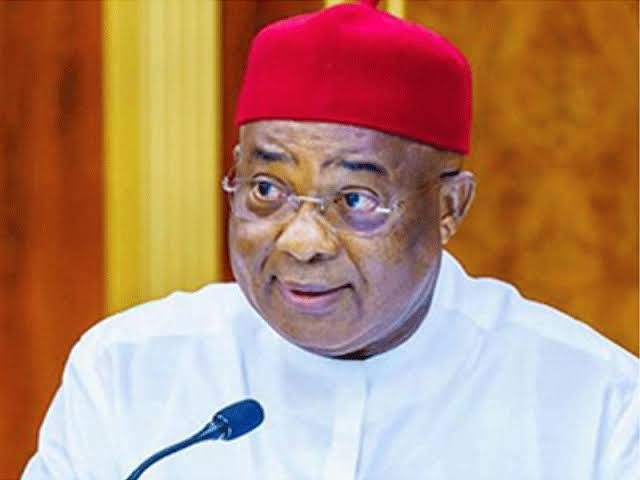
Gov Uzodimma
By Chinonso Alozie
The governorship candidate of the Young Progressives Party, YPP, Kemdi Chino Opara, on Monday said the solution to bad leadership was to sack the incumbent governor Hope Uzodimma, in the November 11, 2023 governorship election in Imo state.
He spoke to newsmen in Owerri, while rolling out his five-point agenda of his manifesto ahead of this year’s November gubernatorial election.
Opara’s reason was that the economy of the state has crumbled and that the insecurity has driven villagers away from their homes.
According to the YPP governorship candidate, “Imo state is not good. Imo state has been unfortunate with bad leadership. Education in Imo state is down. Health care is very bad. We have the worst airport. We have one of the worse stadium.
“Many villagers have been deserted. Can we agree that poverty is ravaging villages. The height of insecurity is terrible. The first solution is change of leadership that is the solution. Failure to do that it is going to be worse. Do you agree that there has not been any continuity in government in this state.
“Just imagine, there are 27 general hospitals started by former governor Rochas Okorocha, why can’t the government improve on it and make the state better and our state will become a health tourist centre.”
He continued by saying: “Let me say this, six months into my administration i will conduct LGA elections. I will bring back quality education and our children will acquire quality training.
“I will contract a company that will build modern infrastructure for our schools that will provide a conducive environment for leaning. I will pay local government chairmen that were sacked illegally and also, by the time we win, 75 percent of my cabinet will be made of youths.”
On insecurity in Imo state, he said: “I will declare a state of emergency in insecurity in Imo state, by deploying every mechanism through constructive dialogue between those aggrieved sections, the communities, civil society and the government to proffer a workable framework for ensuring sustainable peace and security in the state.”
Disclaimer
Comments expressed here do not reflect the opinions of Vanguard newspapers or any employee thereof.