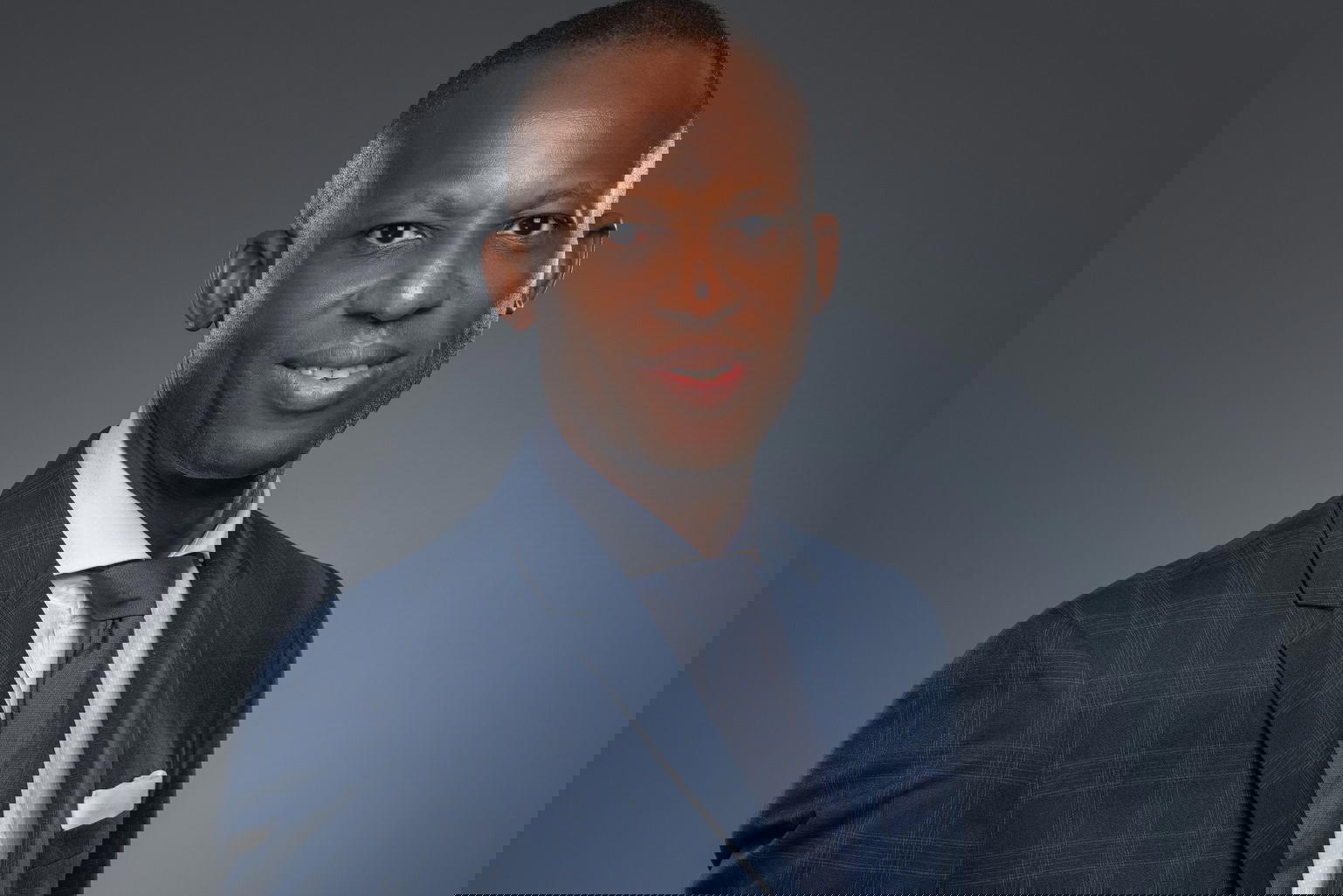
Photo by: Kelechi Amadi-Obi (www.kelechiamadiobi.com)
He is a financial services technology and business leader with global experience in banking, insurance and capital markets, and a track record of delivery in complex digital transformation programs, strategic leadership, cyber security, innovation, advanced data analytics and global payments technology.
He is passionate about the FinTech ecosystem and leveraging technology securely for exponential business growth, economic development and operational excellence.
Mr. Ade Bajomo, President, Fintech Association of Nigeria, is the leading FinTech ecosystem facilitator for Nigeria and Africa FinTechs with over 300 members. He served on the Board of Access Bank PLC, Africa’s largest retail bank by number of customers, from 2017 to 2022, as the Group Executive Director for Technology and Operations, repositioning the bank’s digital competitiveness to deliver exponential growth and an increased customer base from seven million to 50 million.
Prior to that, Bajomo worked at the Nigerian Stock Exchange (NSE) as the Executive Director for Market Operations and Technology, where he delivered market wide transformational initiatives that re-positioned the Exchange in the top three in Africa. In his response to his recognition by Vanguard as one of the 50 Nigerians of Repute and merit, spoke on the values of integrity, challenges in his line career, and how corruption can be nipped on the bud, amongst other issues. Excerpts:
What is your definition of the words “integrity and merit” and how do they apply to you in your daily activities?
For me, integrity means an unwavering mindset, backed by action, to do the right thing at all times. It is about setting the highest standards in how you deal with people and your employers at each and every engagement with just plain honesty, strong ethics, transparency and truth.
No sugar coating, acting in line with my moral and spiritual values and the greater good. Of course, it also means reflecting to admit mistakes and taking full responsibility for one’s actions.
Merit to me means developing your abilities to the fullest and giving your best at all times, rewarding and acknowledging individuals based on their abilities, qualifications, experience and achievements, and to be relentless unless you have given your very best, and then embrace the outcome gracefully, whatever it is.
It is the only basis that individuals and ultimately societies grow to be competitive, compassionate, loyal and dedicated to the cause of their countries. Merit always trumps mediocrity which can only thrive on external factors such as personal connections, nepotism and bias.
Adhering to and keeping the highest levels of integrity and merit is the ultimate mark of a professional. It is the only durable basis for differentiation and, perhaps, one of the highest marks of achievement that an individual or collective group can attain by recognising the importance of fairness, hard work, treating people with respect and without any form of discrimination.
It is often argued that some of the challenges facing Nigeria have to do with leadership and corruption. What is your take on this?
The world is at a point of reflection, perhaps not seen in about 100 years and you only need to look globally at elections, cost of living crisis, wars and other prevalent situations and there is a global cry for true leadership, in both democracies and other form of governance, and in virtually all institutions and organizations.
Specifically for Nigeria, this issue is often debated by experts, analysts and citizens extensively. The level of corruption by all measures, including international ranking, shows we have a serious issue that requires urgent attention if our people and country are to prosper and attain their rightful position in the global sphere.
It is hard for anyone these days to see examples of leaders who have excelled in their profession without wavering and drifting into corruption – if you doubt what I say, just speak to the youths. We have to create more examples that the next generation and beyond can follow and aspire to in order to create a prosperous nation.
We need more examples of upright and stern leaders who are content with whatever life offers and keen to exhibit the highest levels of professionalism, with integrity and merit.
This takes constant vigilance, reflection and discipline. We need good followers as well, many more, who will follow the examples of upright leaders, both in Nigeria and globally, to buck this dangerous spiral as this is what will form the basis of a sustainable and fairer society for the majority as we transition into becoming the third largest country on earth.
How do you think the issue of corruption can be tackled effectively in Nigeria?
It starts at an individual level and is reinforced by the society; I say individual level because personal contentment is the key foundation to tackling corruption. A society where everyone is literarily competing to get richer than the next person, just to consume on perishable goods and sheer vanity, will continue to fuel corruption and injustice into frenzy.
In fact, it becomes a way of life and this is what we all must work to fix. This reminds me of the quote that goes: ‘s/he who thinks s/he stands, let him (or her) take heed, lest s/he falls’.
Next is the rule of law. If anyone committing a crime knows that the long arm of the law will get them and they will be prosecuted, sentenced and serve the time/crime without fear or favour, then we will start building the right kind of society.
A lot of work needs to be done here to get us back on the right track as we need to reinforce some of our key institutions. Next are institutional frameworks, where even the most powerful and richest can be prosecuted firmly and fairy. If the national institutions (not individuals) believe there has been a breach of the law as we have seen recently in some countries in the West, where leaders are being prosecuted on both sides of the political stand, these must be prosecuted as we drive to create a fair an accountable society.
Then leadership of course comes in again and again. Leadership needs to ensure safety nets and have the checks and balance to care for the weakest and vulnerable in society, reinforce the critical institutions from undue influences and work to ensure the future of our youths.
Aside being integrity-conscious, what are those other factors that have brought you this far in your career?
I have always wanted to be the best in what I set myself to do, like many people. But I also realize that, sometimes, my personal best will fall short but never to give up but keep giving my best, learning, improving, and reflecting until I get results. That is the whole point about the pursuit of excellence.
As long as you’ve given your best, what else can you give? That means learning the nuances of your profession, always working to improve your skills and knowledge, seeking wisdom, being fair, working with integrity, and not tolerating mediocrity around you.
As a leader, I can be quite firm in demanding that people give their best to the work they are paid to do, just like I would, and not allowing sloppiness to slip in as that will most often compromise integrity, meritocracy, fairness and transparency. My spirituality is also important, having learned a lot on this from my grandfather.
What are the important lessons that have helped shape your career as a Chief Executive Officer?
I have never taken a role that I feel I do not have the pre-requisite competence to deliver on, and the passion to grow and excel at, which is where the fun and drive comes in.
This is quite important as a foundation to success. Next will be a clear understanding of the vision and a robust and brave strategy to deliver on the set objectives, then, most importantly, carefully working with the people you have and the new ones you may need to bring on board to complement the team, to achieving the strategy and drive the vision forward.
That often means hard work, smart work, innovation, adaptability, resilience, realistic but stretch metrics, and empathy, underpinned by teamwork and the highest levels of accountability and integrity.
It means reflecting on the role and ensuring it is aligned with your personal values and ambition. Quite recently, I am beginning to appreciate the importance of balance as well. The earlier parts of my career were unduly skewed towards very long and unsociable hours which yielded results but balance, in terms of relationships, spirituality, taking breaks, volunteering and other engagements that take mind off work are equally important.
Given the peculiarities of the Nigerian business environment, what are the challenges faced in your sector and how have you been able to overcome those challenges as an organization?
There is no doubt that the top challenges in the financial services and technology business at the moment are access to the best talent and funding. Recently, most pundits will probably shout cyber security as well.
And of course, regulatory environment and the chronic lack of infrastructure, trust and consumer confidence remain prevalent. However, what is most important is to be able to read and assess trends, and formulate and implement effective risk and business strategies before they impact you.
Firms that are struggling the most need to take a step back to understand these key drivers and map their unique and/or collaborative responses, and an appropriate but adaptive risk management framework, to address these and stay competitive.
What is your advice to young Nigerians on the need to imbibe the values of integrity towards achieving success?
I often say that my generation is probably the last to peep into the Nigeria we are all aspiring for today, but also saw things go pear shaped. Sometimes to fix a problem, you need to see what good looks like.
That then sets the standard to beat. In my teenage years, the country was prosperous, relatively balanced and had a robust safety net for the vulnerable. Let’s take my first couple of years in university; you could use a fifty kobo meal ticket to get a three-course meal.
You can only learn well with good nutrition. Sounds unbelievable! Those before us told us it was even cheaper in their time. We could change the Naira at a Bureau de Change in Oxford Street, London charging exorbitant commission exchange at a rate stronger than the British pound in 1982.
We had a steel factory, critical to catching up in the third industrial revolution. The refineries worked. You could go into a government hospital and receive first class treatment. You can say it is now all history.
Then we literarily saw the entire system collapse and become more and more unbearable for the majority.
I will say that young and not so young Nigerians must remind ourselves of who we were and how great we can be, in order for the next generation to dream dreams that will take us back on a growth and prosperity trajectory.
The next generation must follow good leaders who have demonstrated a high level of integrity, empathy, care for the weak and vulnerable, social justice and upholding values of integrity and transparency.
They must hold themselves accountable for their actions, not be carried away to get rich quickly, leading by example, be consistent, build a positive reputation, constantly learning, innovating, striving to be their God-given best and aspire to work with the highest levels of professionalism to make our nation and its people great by leveraging the immense human and natural resources endowed to our great country.
Disclaimer
Comments expressed here do not reflect the opinions of Vanguard newspapers or any employee thereof.