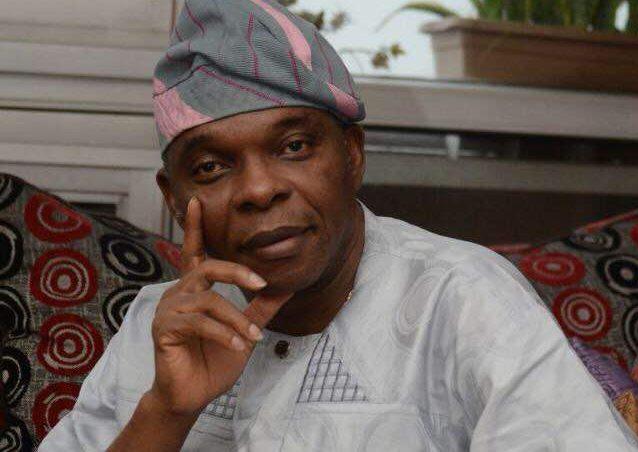
Muyiwa Adetiba
Many of us have made comments which have been considered idiotic by peers and even subordinates at different times in our lives. That does not make us idiots. One careless comment will not an idiot make. Besides, those doing the labelling might themselves be prejudiced and therefore lack objectivity in their pronouncement. In any case, we all have the image of the village idiot in our heads and most of us certainly don’t think we fit that image.
Neither do we fit the google definition of the word which refers to an idiot as a person of low intelligence. After all, we are smart, witty and on top of our professions and careers. However, a different perspective to an idiot; a different definition of the word was highlighted in a skit that was sent recently to me by a couple of friends. In the skit, a Commencement Speaker was addressing freshly minted graduates in a prestigious university in the US.
According to the Speaker, you might be highly successful and might even be elected President and still be an idiot based on his perspective. According to him, an idiot is someone who has refused to evolve from primal instincts. Someone whose view of life is seen from the age-old Hobbesian lenses. Our fore-fathers lived in a period when life was said to be short, nasty and brutish.
An era when everyone lived for themselves and only the fittest and the cruelest, survived. It was an era based on fear and extreme awareness. But that was eon years ago, and thanks to technology and vast travels, man should have evolved from that era of fear. But, have we? Really?
According to this man, who was trying to redefine life and relationship to a gathering of young men and women about to enter the real world, his definition of an Idiot might be simple but his illustration is anything but. Said he ‘when we see someone who doesn’t look like us, or sound like us, or act like us, or live like us, the first thought that crosses almost everyone’s brain is rooted in fear or judgement or both.
We survived as a specie by being suspicious of things we are not familiar with. In order to be kind therefore, we have to shut down our animal instinct and force our brain to travel a different pathway. Empathy and compassion are an evolved state of being. They require the mental capacity to step past our most primal urges’.
He went to state that many in the society have weaponized cruelty (might is right) and used the vulnerable as rungs to the ladder of power. (Very familiar to us since we often use the poor through religion and tribe as tools to power). He concluded by stating that from his experience as a businessman and politician, the smartest person in the room is often the kindest.
Although his conclusion was in the direction of kindness and cruelty, his illustration on how we react to people who don’t look, think, sound, act or live like us got me thinking. We can identify and empathize with this statement because those of us in this part of the world are usually victims of racism. But it goes far beyond this I think. Do we respond with fear and judgement to those whose religion is different from us? Whose tribe is different from our tribe? Whose circumstances in life are different from ours?
If we still do, then we have not evolved from the animal instinct of fear which ruled our forefathers. Many of us bristle whenever we are victims of racism or simply come across incidents of racism. We are also loud in condemnation of tribalism when it is against us; when we are the victims. Yet we show manifest lack of understanding to people of the Gay Community for example and those of a different culture. We are curt and cruel towards the vulnerable and those whose lives have been dealt body blows by fate. These are symptoms of primal fear and judgement towards those whose circumstances are different from ours. In which case, and according to this man’s book, we qualify to be classified as idiots.
When President Tinubu recently removed the heads of the Armed Forces and the Police and appointed new ones, it is a sad commentary on the state of affairs in the country that many of the so called elites started looking at the zones they come from judging from comments in the social media. Very few commented on the competence and antecedence of the appointees. I have always been an advocate of zonal balancing in public appointments. I believe every zone has enough competent people either here or in the diaspora if we are well intentioned.
So in a diverse country like ours, competence and zonal balance should be considered and commented on with competence having an edge. I also believe, as a manager of men, that character or trust is as important, if not more so than competence. So to investigate the zones of origin without investigating competence, character and loyalty to the State, is an unfortunate reflection of who we have become. Another sad development is the social media’s reference to the religion of the appointees with Muslims wanting more Muslims and Christians wanting more Christians. It never used to be like this. But I suppose religious bigots like El-Rufai, judging from his last public stance, have taken us back in our religious evolution.
We need to manage our ethnic and religious diversity for therein lies our strength. To do that effectively, we must go beyond mere tolerance of other people’s lifestyles and focus more on the content within the person. We must show kindness and empathy. Each is a person within a community, within a country. We must individually do our best to make that community help the country and the country to help that community.
Our strength and indeed our identity, cannot lie in individualism. Otherwise, we have not evolved from that Hobbesian State. And those who have refused that evolution; who still want to live in fear, judgement and distrust, are, in the words of that Commencement Speaker, IDIOTS. This is irrespective of whatever they have attained in life.
Disclaimer
Comments expressed here do not reflect the opinions of Vanguard newspapers or any employee thereof.