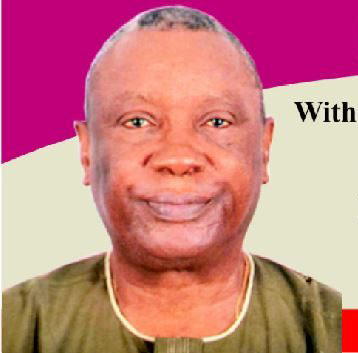
ON May 4 this year, the Edo Deputy Governor, Philip Shaibu (54) lambasted the 18 local government chairmen in the state over their Internally Generated Revenue, IGR. At a meeting with the council leaders, Shaibu said it was disappointing that they generate only N3 million (combined) every month.
“Between now and the end of May, I will personally do a letter to the Governor (Godwin Obaseki) to sack you people. Before sacking, we will get the EFCC to check all your books…and you’ll be fired. We cannot continue like this. How can 18 local governments (generate) N3 million in a month as revenue. Eighteen local governments, N3 million!” Shaibu fumed.
I don’t know whether or not any of the chairmen of the local government in Edo State has been prosecuted, if we are to go by the threat of Comrade Shaibu. I think Comrade Shaibu is just being pharisaical or rather hypocritical. He knows why the local governments are not performing. He cannot claim ignorance.
Being the son of the late Pastor Francis Osikpomobo Shaibu, Comrade Shaibu grew up in a family where issues are discussed at breakfasts, devoid of emotions and sentiments. And as a former President of the National Association of Nigerians Students between 2000 and 2001, he is well enlightened on the provisions of the Constitution.
He even represented Etsako in the Edo State House of Assembly in 2010 and in the House of Representatives later. He knows that governors have abused the provisions of the Constitution as regards the local government. That is not to say that I am blaming Comrade Shaibu, an ex-senior officer of the Nigerian Prison Service for the defect in the Constitution.
The third tier of government is dying in Nigeria. That is not the way it is supposed to be. And what is happening in Edo state is happening in the remaining 35 states in the country. Each of us who grew up in the fifties and the sixties saw the smooth running of the local government system; it was perfect at that time.
According to Mr. U.D. Anyanwu in a book titled Foundations of Nigerian Federalism—1900-1960, edited by J. Isawa Elaigwu and G.N. Uzoigwe, local government administration in colonial Nigeria contributed to the evolution of federalism in Nigeria largely because of two sets of actors: the internal and the external. The internal had to do with the plurality of cultures, people and even geography which made it necessary for the colonial authorities to adopt the indirect rule system which to some degree preserved the respective identities of Nigerian peoples. That is: it was the local government system which was used to make each Nigerian group feel that despite colonial rule as well as the evolving colonial state of Nigeria, their respective aspirations and values were to be preserved.
This internal aspect affected not only the British political officers and officials who were in charge of the component units that made Nigeria but also the emerging nationalist and political leaders whose activities contributed to the successful decolonisation of Nigeria. In fact, throughout the colonial period, the dominant opinion among the leaders and people was that the local government system should keep to the principle of separate development espoused by the colonial authorities. By the time of independence, this internal consideration had also involved the aspect of the value the local government system had to serve in the power struggle among the regional political parties.
The external dimension had first to do with the way Nigerian was acquired separately (in parts), phases and instalmentally by different units of the colonizing power. Thus, though the invaders and colonisers belonged to the same country, Britain, yet they initially settled in different geographical and cultural areas as independent rulers. Some vested interest developed in the process and so even when amalgamation came up, there were significant variations in their views on how local government and indeed the entire colonial administration should be organised.
Disclaimer
Comments expressed here do not reflect the opinions of Vanguard newspapers or any employee thereof.