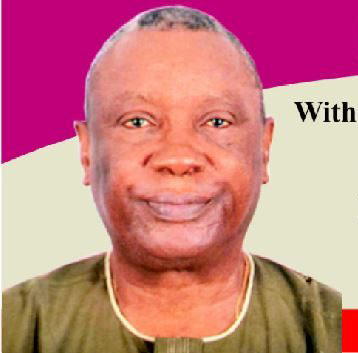
From last week, continues the author’s narrative of his journey of discovery when in 1982 he accompanied Dr Joseph Wayas, a former Senate president, to Gbadolite in the Democratic Republic of Congo
Gbadolite was the ancestral home and residence of Joseph-Désiré Mobutu, later self-styled as Mobutu Sese Seko where airport, colleges, malls, supermarkets and libraries were built by the President in a programme of modernisation. Gbadolite is where Mobutu led the summit that would produce the Gbadolite Declaration, a short lived ceasefire in the Angolan Civil War, in 1989.
Mobutu built Gbadolite into a luxurious town often nicknamed “Versailles of the Jungle”. He built a hydroelectric dam on the nearby Ubangi River in Mobayi Mbongo, an international airport, Gbadolite Airport, which could accommodate a Concorde, and three large palaces.
President Mobutu hosted us in Gbadolite. At that time, he built a soft drink factory in Gbadolite. Mobutu also built a nuclear bunker that could house more than 500 people and was the largest in Africa; this was the only nuclear bunker in Central Africa. The bunker was connected to the Ubangui River by a secret tunnel, giving access to the military harbour at the village of N’dangi.
Mobutu Sese Seko Kuku Ngbendu Wa Za Banga (born Joseph-Désiré Mobutu; October 14, 1930 – September 7, 1997) was the President of the Democratic Republic of the Congo from 1965 to 1971, and later Zaire from 1971 to 1997. He also served as Chairman of the Organisation of African Unity from 1967 to 1968. Mobutu was the object of a pervasive cult of personality. During his rule, he amassed a large personal fortune through economic exploitation and corruption, leading some to call his rule a “kleptocracy”. He presided over a period of widespread human rights violations. Under his rule, the nation also suffered from uncontrolled inflation, a large debt, and massive currency devaluations.
In August 1997, Mobutu Sese Seko (October 14, 1930- September 7, 1997) flew from Gbadolite to Lome, Togo to be a guest of President Gnassingbé Eyadéma (December 26, 1935 – February 5, 2005), Togolese military officer and politician who was the president of Togo from 1967 until his death in 2005. And from Lome, President Mobutu flew to Rabat in Morocco. He died on the September 7, 1997.
His corpse is yet to be exhumed and reburied in the Democratic Republic of Congo—a land he ruled for over 32 years. The Democratic Republic of Congo has moved on without Mobutu where the mere mention of his name is now a taboo.
Gbadolite and Yamoussoukro got transformed by the power of the PRESIDENCY. Now the two towns are like ghost towns. What is happening to the two towns now is a clear example of the futility and vanity of ‘this is our turn’ syndrome. It happens in some countries of the world, especially in Africa, where leaders personalise their offices.
Let us take a look at Iraq whose leader tried to impose his tribe on the other tribes in a united country. Such attempt is dangerous as it is only very short term. In this part of the world we call it nepotism and ethnicity. But nepotism itself is corruption. Nepotism refers to granting jobs to one’s relatives in various fields including business, politics, entertainment, sports, religion and other activities. The term originated with the assignment of nephews to important positions by Catholic Popes and Bishops. Trading parliamentary employment for favours is a modern-day example of nepotism. Criticism of nepotism, however, can be found in ancient Indian texts such as the Kural literature.
Nepotism refers to partiality to family whereas cronyism refers to partiality to a partner or friend. Favouritism, the broadest of the terms, refers to partiality based upon being part of a favoured group, rather than job performance.
The term Nepotism comes from the Italian word nepotismo, which is based on the Latin word nepos (nephew). Since the Middle Ages and until the late 17th century, some Catholic Popes and Bishops, who had taken vows of chastity and therefore usually had no legitimate offspring of their own, gave their nephews such positions of preference as were often accorded by fathers to sons.
Several Popes, according to the papal history, elevated nephews and other relatives to the cardinalate. Often, such appointments were a means of continuing a papal “dynasty”. For instance, Pope Callixtus III, head of the Borgia family, made two of his nephews cardinals; one of them, Rodrigo, later used his position as a cardinal as a stepping stone to the papacy, becoming Pope Alexander VI. Alexander then elevated Alessandro Farnese, his mistress’s brother, to cardinal; Farnese would later go on to become Pope Paul III.
Paul III also engaged in nepotism, appointing, for instance, two nephews, aged 14 and 16, as cardinals, as well as making efforts to increase the territories of his illegitimate son Pier Luigi Farnese. The practice was finally limited when Pope Innocent XII issued the bull Romanum decet Pontificem, in 1692. The papal bull prohibited Popes in all times from bestowing estates, offices, or revenues on any relative, with the exception that one qualified relative (at most) could be made a cardinal.
The ancient Indian philosopher Valluvar condemned nepotism and ethnicity as both evil and unwise. In a larger world, nepotism could be applied to where you favour your tribe more than other tribes. That is enlarging the word in its interpretation.
To be continued…
Disclaimer
Comments expressed here do not reflect the opinions of Vanguard newspapers or any employee thereof.