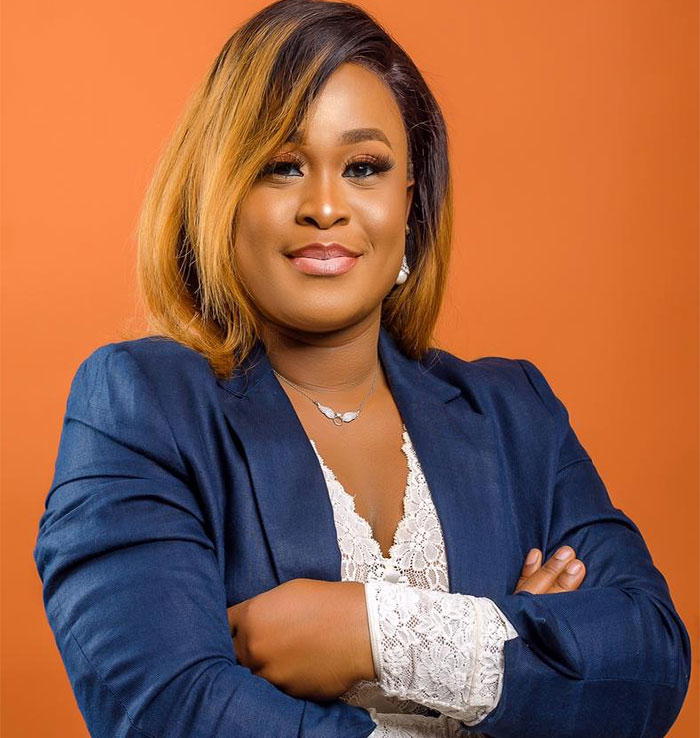
As the Executive Director of the largest network of entrepreneurs in Africa, Africa’s Young Entrepreneurs, AYE, Organisation; Joy Michael spearheads the growth, expansion, strategy implementation and program impact of the organisation in all the countries where the organisation has footprints.
In this interview, the Managing Director of the Entrepreneurs Trust Fund speaks on the urgent need for the digitalization of African economies.
In this new economy in which many entrepreneurs use Social Media to project their businesses, what should people be doing differently?
Social Media has taken businesses far. Twitter happens to be one of the strongest pillars; it has been able to take brands from local to global ones A lot of organisations have come into Nigeria to do businesses because of Twitter. People should develop their brand and be unique in what they do.
Are you suggesting that people should be allowed to do what they wish on Social Media?
Social Media should be regulated because where there are no rules and regulations, abuse is imminent; no government should ban social media considering the economic involvement.
Considering the input of policymakers, do you see Nigeria putting things in the right place regarding the digital economy?
Nigeria is just starting that conversation. I don’t think the global giant has done a great job in putting the right people in the right place. We are talking about a country where we have over 200 million people. If you want to ensure that you have an economy where everything is going as it should, there must be a long-term plan. There are some countries that have 20-year plan.
However, in the short- term, individuals should be able to identify what they want to fix within the stipulated time.
In Nigeria, there are great opportunities.
What is the scope of Africa’s Young Entrepreneurs?
Our key focus has always been to eradicate poverty through entrepreneurship development, and we try to achieve that in all the African countries in which we are operating. We are empowering African entrepreneurs by providing grants for their businesses, training, mentorship, equipment and a platform where they can interact, network and carry out trade.
We help entrepreneurs to move from point A to B through sustainable network, education or empowerment. We are at the forefront, and as of today, we are the largest.
Can you highlight the fastest growing industries?
The fashion industry, recycling, waste management, food processing, agricultural sector and many others.
How are you monitoring these entrepreneurs digitally?
We ensure that entrepreneurs in Nigeria and Africa find a way to express themselves, to be sustainable and we have been able to confidently empower, support, train and found businesses that are sustainable today, trying to reduce the poverty rate in Nigeria and Africa at large.
Our focus is to reduce the poverty rate, which I believe is the SDG1.
The environment is not friendly, so we need people that are able to thrive regardless of the challenges that are enormous in this part of the continent. Regardless of these challenges, we are proud to say that we have some entrepreneurs who are doing us proud.
Entrepreneurship is not about starting a business or running a business. It is about finding a problem and creating a solution to solve that problem. When you create a solution and you do not have the right policies in place to support such creation, it becomes a wasted idea or effort. We do not have enabling incubators. One of the reasons we launched the Entrepreneurs Trust Fund was because we realised that it was not enough to support, even with brilliant ideas.
You do not need to be physically present in the same geo-political region to operate or meet with people across the country. You can access funds, access legal advisory for free; business and medical advisory for free. We have created an ecosystem. We do not need to blame the government for everything.
What is your driving force?
I am always interested in people finding solutions to their problems. I don’t like to be idle. Even in secondary school, I was modeling. When my parents had a farm, we would go to the farm, cultivate crops and sell in the market. My dad had a commercial bus so we would follow the driver to monitor the operations.
Looking at my parents, I felt if they had had opportunities in the past, they would have done a lot better and that is why I considered it necessary to focus on entrepreneurs. I am learned, exposed and connected, so I should support entrepreneurs by building a community where entrepreneurs can network, interact, trade and grow in order for Africa to become a zero-poverty continent.
How would you advise women who have not been able to tap into some of these resources?
All fingers are not equal and information, as free as it is, is not totally accessible. It takes a level of understanding for you to be able to interpret data and utilise the opportunities that such information provides. Everyone should be able to find that one thing he or she is excited about. Whether you are a woman or a man, ensure that you are adding value to yourself and people around you. Don’t be a pest, be a host.
Disclaimer
Comments expressed here do not reflect the opinions of Vanguard newspapers or any employee thereof.