By Danladi Bako
WITHOUT a doubt, the upcoming general elections for various positions in our political space can easily be ranked as the most discussed, strategised and anticipated political battle in our country’s recent history. The days of yore had mainly two frontrunners: the National Party of Nigeria, NPN, and the Unity Party of Nigeria, UPN, with a smaller party, the Nigeria Peoples Party, NPP, trailing the duo.
In the past, voting behaviour was influenced by godfathers; quite frequently, votes were discounted and results sheets written in government houses; in quite a few cases, ballot boxes were snatched, stuffed with thumbprinted ballots, and returned for declaration. Decades later came the era of manipulation at collation centres or tampering with ballot boxes while in transit between polling booths and collation centres.
Nigeria’s electoral evolution has seen drastic change for the better through the maturation of civil society organisations like PLAC, CDD, and ACE, the introduction of technology in the pre-voting process, and the deliberate political will decidedly propagated by the Umaru Yar’Adua, Goodluck Jonathan, and Muhammad Buhari regimes of the Fourth Republic. Along with the above factors, the inevitable advent of digital technology into our daily lives has witnessed the growth of the Bimodal Voter Accreditation System and its predecessor, the card reader.
Another under-appreciated driver of increased trust in our electoral process is the incredible cross-pollination of opinions and ideas, as well as increased awareness and advocacy, that the 740 active radio and television stations across the country have created over the last 20 years of private media ownership. Phone-in programmes, access to information, feedback to the government, and the opportunity for horizontal communication as opposed to the top-down, one-way model have been huge impetuses. The omnipresent and continually impactful social media and internet platforms have also generated further intense engagement on political issues, especially among millennials.
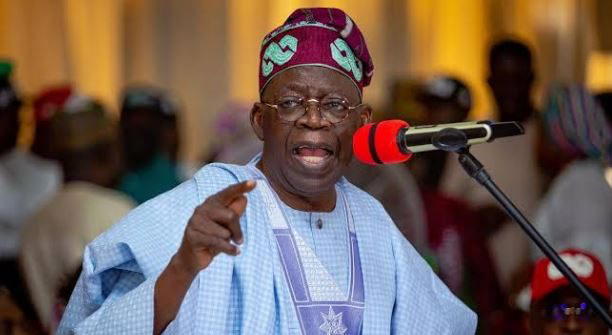
Tangentially, all these factors influence and propound the inevitability of a new strategy to win the next general election, since the arsenals required for the old battle have changed. The templates of yore included more vote-buying, manipulation of results, intimidation of voters, and other such maladies. As our electoral process evolves with more defined and stricter entrapments, it is clear that the candidate who has built his candidacy on mentorship capacity, records of past high grade performance quotient in public life, a massive human capital development index, and unrivaled vision will eventually coast home to victory in the next elections in a few days. These are the pragmatic realities on the ground; this is the praxis of Ashiwaju Bola Ahmed Tinubu’s candidacy as the frontrunner in Nigeria’s 2023 presidential race.
The circumstances of the hardships, global economic challenges, and global health challenges such as COVID, the Russian-Ukrainian war, and the earthquakes and natural disasters in Turkey and Syria have compelled us as a people to look for our best materials, our first eleven, and place them in positions of leadership. As Plato, the philosopher, once said: “One of the penalties for not participating in politics is that you end up being governed by your inferiors.”
In context, we the electorate delegated our power of selection of political party candidacies to delegates numbering less than 10,000, who decided our party representatives through indirect primaries; having outsourced our mandate, we are forced to limit our choices for the seat of the President to 18 odd candidates, four of whom have emerged as frontrunners. Ashiwaju, Atiku, Obi, and Kwankwaso lead the pack as we try to tilt the minds of the undecided voters.
I daresay that by the beginning of the year, a large number of party faithful and about half of our 93 million registered voters had made their choices. The imperative of having Tinubu as president is predicated on the plethora of issues being considered by undecided voters. Today’s debate has swept away the Muslim-Muslim ticket distraction, the parochial consideration of ethnicity in favour of competence, and the trivia about health and age being dusted by a robust, physically enduring campaign tour schedule at home and abroad, all of which have proven Tinubu as the unavoidable choice as President of the Federal Republic of Nigeria at this auspicious time in our history.
If intellectual prowess were the sole criterion for choosing a president, then Professor Wole Soyinka would have been in Nigeria and Al Gore in the United States. If physical strength were the only criterion, perhaps the late Power Mike would have been elected; if popularity and pop culture were the only criteria, perhaps the late legend Fela Anikulapo Kuti or Gani Fawehinmi would have been elected. However, the vicissitudes of time and the unflappable change of fortune in the political, socioeconomic, and cultural realms, as well as the unmistakable genealogy of Nigerians’ “can-do” spirit, necessitate a shift from idealism and theorisation of our unfavorable situation to a pragmatic expression of our choices on election day.
For today, this country could do well with a realist, a pragmatist, a leader, a fisher of men, and a consummate patriot to lead this great nation to even greater heights. I present to you Tinubu for President on Saturday.
Bako, OON, Kogunan Sokoto, is a member of the APC PCC Media Directorate
Disclaimer
Comments expressed here do not reflect the opinions of Vanguard newspapers or any employee thereof.