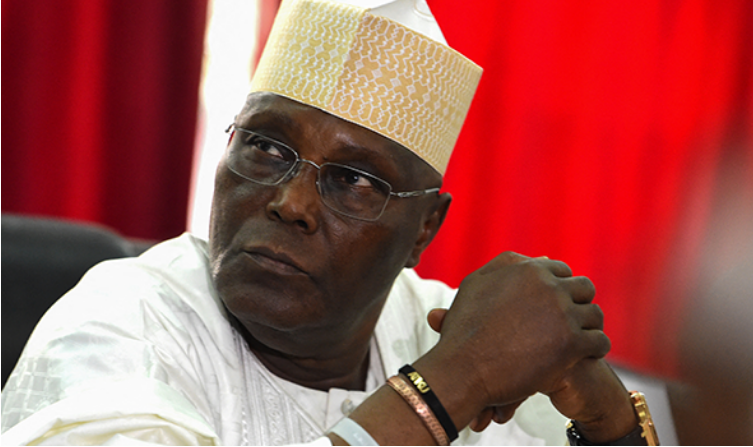
Atiku Abubakar
—CSOs adopt PDP presidential candidate as Buhari’s successor
By Johnbosco Agbakwuru, Abuja
Ahead of the February 25 presidential elections, Southwest Political Technocrats, on Tuesday, endorsed the Peoples Democratic Party, PDP, presidential candidate, and former Vice President Atiku Abubakar, as their candidate.
This is as a coalition of Civil Society Organisations, CSOs, have adopted the PDP presidential candidate, claiming that his manifesto was the best among other candidates’ manifestos.
Speaking in Abuja after the endorsement of Alhaji Atiku Abubakar, the Director, Contact and Mobilisation of the Southwest Political Technocrats, Hon. Mustapha Adegboyega Lateef said that the Saturday presidential election is not a matter of ‘this is my turn’, but rather a matter of competence and the ability to deliver.
He said that “Atiku’s manifesto speaks volumes of turning Nigeria around.”
He said that the PDP presidential candidate will be proactive with the NNPC which will generate about $12 billion and which in turn will help to provide security, job employment, and many other things like infrastructural facilities as well as devolution of power to federating units.
Civil Society Organisations in their numbers also adopted the PDP presidential candidate for the Saturday election, citing his manifesto as the main reason for the adoption.
Speaking to newsmen, Hon. Kunle Yusuf, Assistant Director, Civil Society Organisations for Atiku Abubakar Presidential Campaign Council, said, “Civil Society is a very key sector in Nigeria especially at this time most of the civil society will play their constitutional role on Saturday by observation. Some of them will be doing monitoring responsibility and they called themselves together.
“I am one of them, they are my colleagues, they said they want to work with Atiku Abubakar having studied, listened, and scrutinized his manifesto and that his manifesto actually aligned with the development agenda and because they are also development agents, they have accepted, agreed and ready to work with Alhaji Atiku Abubakar.”
On the roles expected of the CSOs to play, he said, “They will have different roles to play. In Nigeria today, we have close to 40, 000 registered Civil Society Organisations by the CAC (Corporate Affairs Commission).
“All of them are performing different responsibilities. These different 40,000 registered civil societies and NGOs (Non-Governmental Organizations) have over 45 million workforce.
“So, you know if you now have some cluster of civil societies, a coalition of civil societies that are ready to endorse you as their president, that is a very good positive development and we are happy.
“We need a president that understands what development is all about and a president that will be accepted globally, a president that is a vision builder. In his manifesto, Atiku Abubakar has taken care properly the issue of social inclusion, the issue of youth development, the issue of IDP most importantly and critically, Alhaji Abubakar has taken care of climate change, this is the height of it.”
Asked what differentiates the PDP presidential candidate from other candidates, he said, “Vision, experience, focus and teamwork distinguish him from other candidates.”
On her part, Ambassador Nkoyo Toyo, Deputy Director, Civil Society Organisations in the PDP Presidential Campaign Council said the manifesto of Atiku Abubakar speaks very well to things that are pertinent to the country’s development.
She said, “Civil Societies in the country are concerned about development and they are particularly concerned about being unsafe, they are particularly concerned about the fact that we are the headquarters of poverty in the world.
“They are also worried about the fact that our country is not working well. We are ridiculed everywhere we go. The manifesto tries to raise the bar and put us at a certain standard where we begin to speak about concerns that are of primary interest to us.”
Disclaimer
Comments expressed here do not reflect the opinions of Vanguard newspapers or any employee thereof.