*I spoke with the banana plant today we are friends now
By Ebri Kowaki
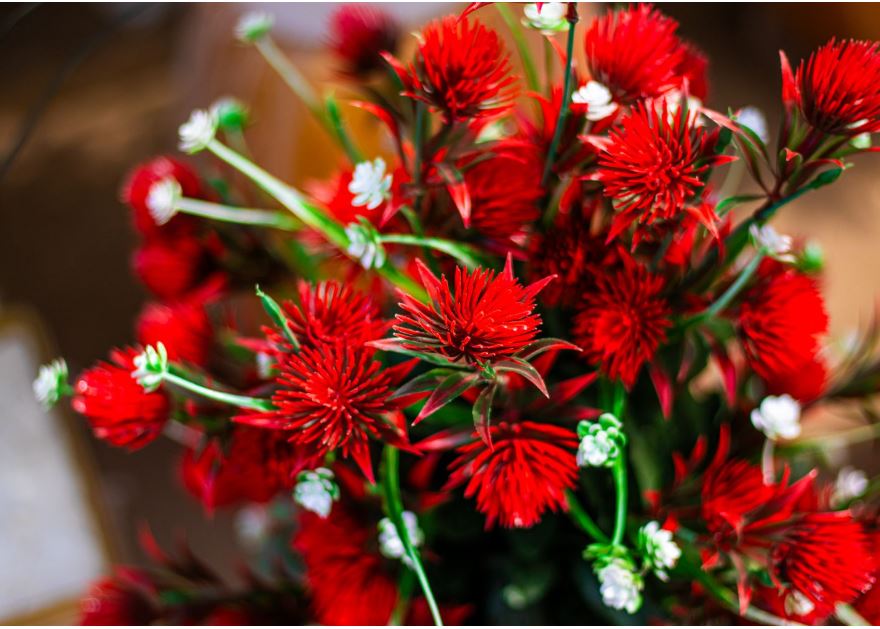
Transplanting a gomphrena is the closest you might get to old holiness. As in extinct sacredness, the kind that died off as machines multiplied on the face of the earth and rain forests slowly fell to rebirth as workstations for Vietnamese wage workers coupling screens on those gadgets. Loamy soil was goddess-soil, you know. & you are god with those potted seedlings that sat on your terrace through the weekend, approaching dispersing mannikins into misty air. Today they return to earth under your study window, from pot to the ridge you had hoed just above the line of bougainvillea.
Do not speak to Racheal Okogie about gardening – except you have the rest of the day to talk. Certainly do not speak to her about God, dear God, with kindling gazes like that she’d probably just tell you to talk to flowers. Away from the garden, Racheal organizes art exhibitions.
Racheal Okogie is something of a doyen in the academy of contemporary Nigerian art photographers, no stranger to the camera since she took her first shot in 2014. She prefers to work in peculiar circuits, closeups, parably. They nonetheless retain cultural currency as in Haija Funky. Naturally, a huddle of aspiring artists gravitate to her brimming with hopes of turning Kodaks to racks that may hold the next cultural traffic light, freeze art critics’ eye blinks for three seconds or a little longer. Flowers, however, are what she goes to sleep daydreaming of, on many a night.
Americans spend nearly half the day daydreaming, not even the good kind that has a poor thing in traffic thinking he’s the red suited man in that nice car. The chest heavy anxiety kind that has them flitting between reality and delusional perception, causing them to second guess the simplest decisions. It’s has been common knowledge that American artists – the poets, oh dear- rarely make it past their own heads. Like many quirky updates in the species lately, we would dismiss this with a chuckle or smirk, but pre-internet residents would be too concerned to share the humor.
A French nerd, Jean Baudrillard, expressed such worries about the sort of activity that engenders such mass detachment from social reality back in 1981, discussing four stages of delineation into simulation in a treatise Simulacra and Simulation. Then he had Catholic relic in mind. Imagine what he would say to this webbed depressed world sloshing AI written academic papers and more smiley emojis than actual smiles. He’d probably be quiet, unpublished, tightly bound in fear of being canceled for being politically incorrect, whatever that phrase means. Jean says the entry way to simulated reality is when Professor Achara’s handing Olanna (Half of a yellow sun reference) a plastic bouquet on her wedding day elicits zero incredulity, maybe even a hit of joy and serotonin. We now get excited for less – two rose flowers and one heart emoji. At least in Olanna’s day, a plastic rose meant I’d give you a rose if I could find it, so here is something in the image and likeness of a rose, just unalive. What reality does an emoji contain?
The replacement of an original with an unfaithful copy usually masks the destruction of the original. Sated with our computer generated copies, we can then stare unblinkingly at news of climate destruction, for natural or industrial purposes, and not meet the full impact, not realize our full complicity in the deconsecration and slow degradation of our ecosystem. What does it mean to be cut off from the environment you are born for?
Indeed our world is one where symbols of value is founded on nothing and represent other symbols; ie: non-fungible tokens as stand ins for money, i.e: printed pieces of paper kept artificially scarce to promote an illusion of value. An illusion because 21st century money is scarcely backed by real value as in before U.S dollar abandoned the gold standard in 1971. We can go on; social media stands in for broader social interaction which were stand in for family/community bonding, video game culture balloons into a virile industry for those seeking a more introverted sense of purpose, porn stands in for sex. In such a world, naturally, everything is readily personified, poetry waddles abstract interior realities forsaking the bewitchment of the vast nature, an anthophile prattling about the sacredness in touching stems has peculiar tastes, dear God, don’t get us started on star gazers and bird watchers.
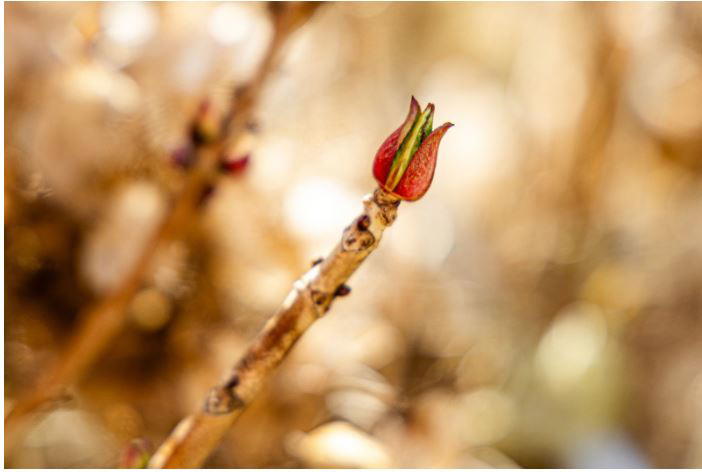
It is hardly surprising so much of urban mankind expends much energy in a circular search for God. What happens to god if he is buried into the soil and forgotten? Well, I suppose he just waits for the springtime to respawn as a budded stem. As he grows around you, he bids you to focus on the bud, so Rachael blurs out the background environment. The cold always leaves men pining for spring, for the warmth of perfect love. Yet the ground must wait. Perfect force that must still before a body. Love that is patient. Do you see the sacredness now?
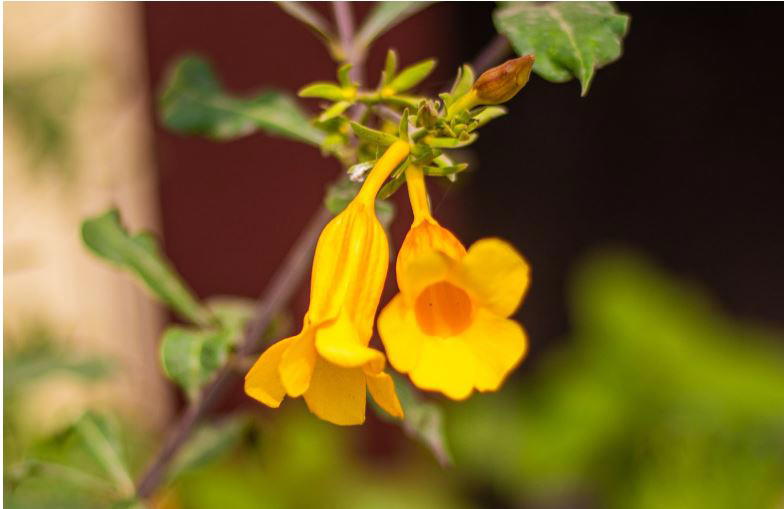
Racheal Okogie’s work continues to point out the holiness of every day, of the present eternal now. Because the task of observing plantlife, as with every life form, requires conscious focus, and an openness of heart to the love and truth that abounds everywhere, in the mundane and in everything else. The world is composed of beauty, as garden as Eden, and if you can still not see it, focus on bright yellow blooms of the trumpet bush.
Ebri Kowaki is an arts and culture journalist. His works have appeared in The Republic, UbuntuAfrica, Afrocritik, African Writer Magazine, and elsewhere.
Disclaimer
Comments expressed here do not reflect the opinions of Vanguard newspapers or any employee thereof.