… Urges African govts to prioritise water, sanitation issues
By Chioma Obinna
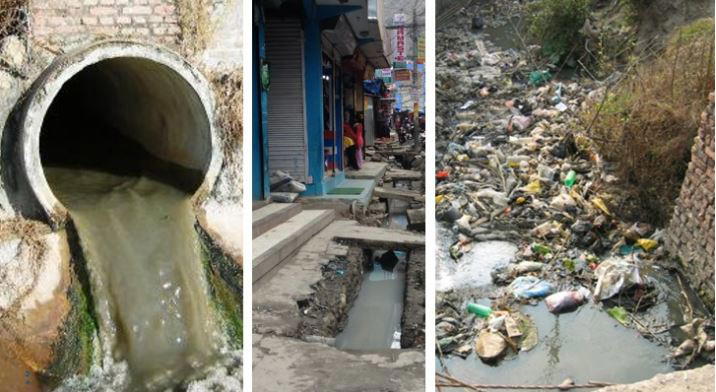
African governments have been admonished to prioritise efforts in tackling the perennial problems of open defecation and poor sanitation by creating enabling environment across the continent.
Experts in the Water, Sanitation and Hygiene, WASH, who called for a paradigm shift in sewerage management in Abidjan, Cote d’Ivoire, also expressed the need for behavioural change among Africans who still defecate in the open.
Speaking during media training for 20 journalists from different African countries, the experts also added that political will was needed to scale up efforts towards eradicating open defecation practices through the provision of WASH facilities across the countries.
The stakeholders who spoke during a media training organised by African Water Association, AfWA, in Abidjan, Cote d’Ivoire, said the sanitation challenge should not be seen as business as usual rather workable approaches should be deployed to tackle the menace.
Giving an “Overview of the AfWA Capacity Building Programme – SAO-CityWide Inclusive Sanitation, CWIS”, a project funded by the Bill and Melinda Gates Foundation/USAID designed to improve AfWA’s ability to more effectively fulfil its objectives in Africa, Senior Sanitation Coordinator at AfWA, Dr. Mbaye Mbéguéré expressed fears that the urban population was increasing at an alarming rate and predicted that by 2030, the world will have more than 43 major cities with over 10 million inhabitants. Most of the cities will be located in developing regions like Africa, hence the need for urgent policies to prevent potential environmental harm related to poor management of faecal sludge from households.
Mbeguere regretted that most cities in Africa face a serious challenge of poor sanitation, stressing the need for African countries to prioritise sanitation.’
According to him, Mbeguere Nigeria in 2017 recorded over 37 million open defecations followed by Ethiopia with over 23 million while Mali has the least number of ODF with over a million.
He said Nigeria leads in Africa among countries with a high burden of open defecation, adding that the government in these countries should create an enabling environment to ensure that water and sanitation services are properly provided for.
Further, he said in line with the AfWA mission, the association has been implementing since its creation a range of programmes and projects aimed at improving sanitation services.
Mbeguere said the business as usual in urban sanitation where conventional sewerage and wastewater treatment are considered the only solution will not get Africa to universal safely managed sanitation.
The expert explained that the CWIS means focusing on service provision and its enabling environment, rather than on building infrastructure, adding that it is targeting 10 million people in 52 cities in 14 countries in sub-Saharan Africa for access to sustainable and adequate sanitation.
“This shift in paradigm to CWIS requires a shift in mindsets. Governments and development agencies increasingly recognise that historic approaches to urban sanitation have not always worked, and new approaches are required.”
To this end, he noted that consulting firms need to think differently, and not simply replicate approaches found in high-income countries.
“Engineering curricula should include the design and management of non-conventional systems and should explore opportunities for leapfrogging to solutions that take full account of the public health and environmental imperatives of urban sanitation.
“CityWide Inclusive Sanitation, CWIS, or business as unusual, requires awareness raising and capacity building, capturing best practices, working in coordination with complementary city services, and the development and use of tools that help better design and implement sustainable urban sanitation services for all.”
Continuing, Mbéguéré who stressed the need for massive awareness on water and sanitation further explained that AFWA was committed to ensuring that utilities in the municipals are delivering water and sanitation correctly.
“We realised that we need journalists to convey this information to African countries that these utilities are really what they need. This is why we need to gather journalists here in Abidjan to discuss and harmonise our views and to be in a better position to spread the information in their own countries.”
He also urged governments in Africa to provide the enabling environment need to ensure that water and sanitation are delivered correctly.
“Mind shift is very important because we realised that it is not only government, the engineers and the general population also think that the best way to implement water and sanitation is just to develop sewerage network or other sanitation facilities. But they need to know that there are some alternatives for the collection of sanitation. Decision makers need to know that there is a quality alternative to implement sanitation though very expensive in terms of investment and operations.
“We need to think outside the box to reinvent some new solutions and we cannot do that without changing their mindset.”
Corroborating his views, Sanitation Training Manager, Mr Valentin Yao, who also called for a behaviour change among Africans towards sanitation issues, called for prioritisation of interventions geared towards improved water, sanitation and hygiene.
Yao said one of the major challenges in the sanitation campaign is getting people to change their mindsets. “We are working on persons, not things. You have to have an agreement with the people who will receive the projects. You need their cooperation to accept the best practices which is the first challenge. Other challenges like funding, mobilisation, knowledge and management can come after the mind shift is achieved.”
On the CWIS areas of focus, Yao explained that the project promotes workable approaches to manage faecal sludge, wastewater, drainage and solid waste.
“The core CWIS outcomes are equity – the services reflect fairness in distribution and prioritisation of service quality, prices, and deployment of public services, safety – services safeguard customers, workers, and communities from safety and health risks—reaching everyone with safe sanitation, and ensures sustainability – services are reliably and continually delivered based on effective management of financial and natural and human resources,” he added.
Earlier, the communication Officer of AfWA, Stéphanie Nzickonan, briefed journalists on the objective of the training, adding that it consists of theoretical on the various themes identified on water and sanitation and the practical as regards covering certain activities of the AAE Congress.
Disclaimer
Comments expressed here do not reflect the opinions of Vanguard newspapers or any employee thereof.