By Johnbosco Agbakwuru, Abuja
The Federal Government on Monday said it will collaborate more with the private sector, especially in the relevant policy formation process and the management of skills centres in the country in a bid to
effectively close the skills gap in Nigeria.
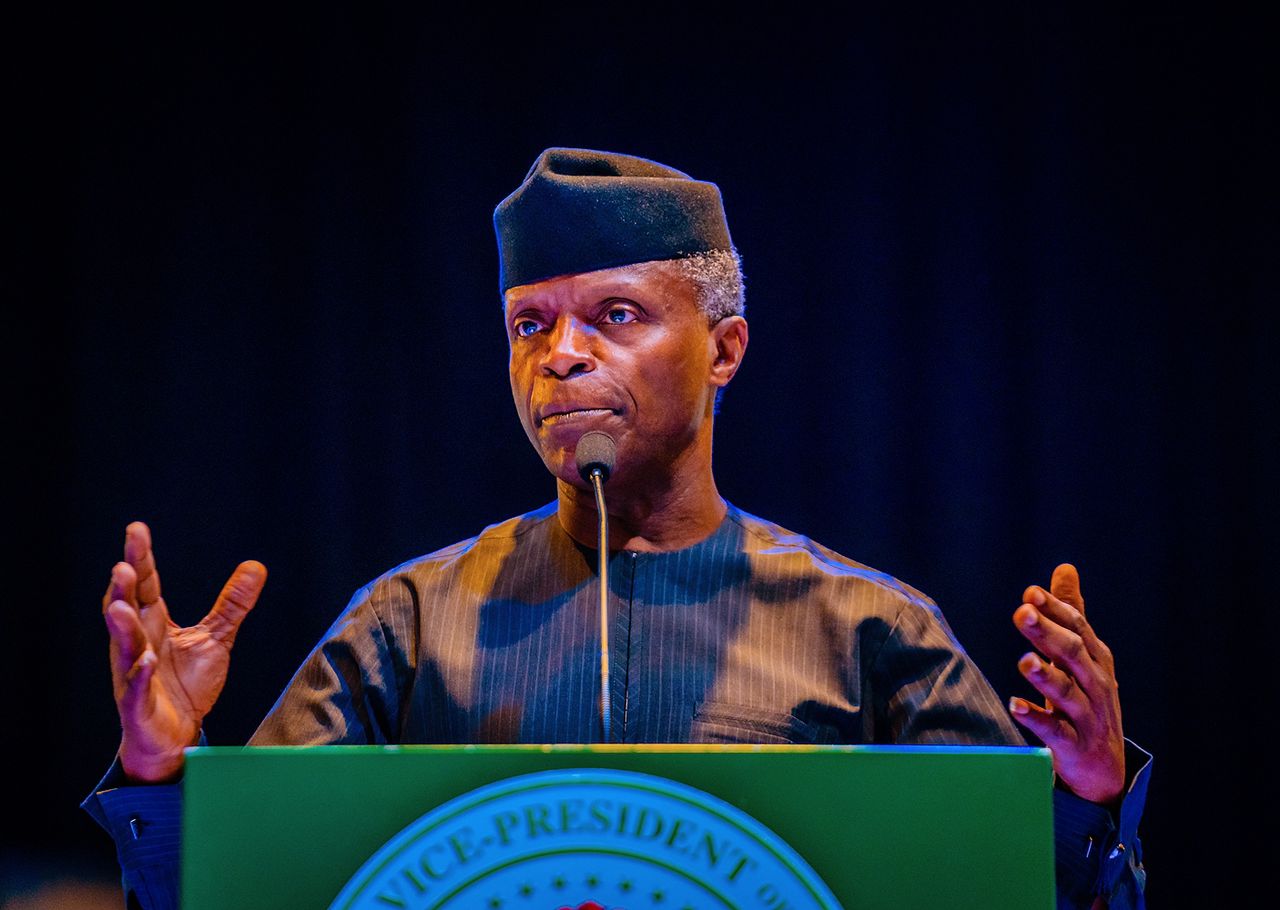
Vice President Yemi Osinbajo, stated this at the meeting of the National Council on Skills, at the presidential villa, Abuja.
At the meeting, it was resolved that more roles will be given to the Organized Private Sector (OPS) as a means to closing the skills gap in the country.
Based on the approval of the Council, the organized private sector represented by the Nigerian Economic Summit Group (NESG), Manufacturers Association of Nigeria (MAN), National Association of Chambers of Commerce, Industry, Mines and Agriculture (NACCIMA), the Nigerian Association of Small and Medium Scale Enterprises, among other groups, will be integrated in the activities of the NCS.
The meeting which was chaired by Professor Osinbajo also resolved to, among other things, encourage the establishment of State Councils on Skills to complement and replicate efforts made at the national level, in order to deeply tackle the issue of skills gap across the country.
The Vice President said that it was clear the private sector has critical roles to play in resuscitating many of the skills centres across the country, stating that the sector is better positioned to determine the needs of industries.
He emphasized the point about creating opportunities for digital skills acquisition as well as other relevant skills across different sectors, also with the active collaboration between the public and private sectors.
According to him, “This can be achieved by collaborating with private sector stakeholders to, among other things, get accurate data on the skills gap in the country and how to better address it.
“The establishment and running of the various skills centres should be private sector driven, it shouldn’t be left to the government alone to manage. The industry players know where the gaps exist.”
Kano State Governor, Abdullahi Ganduje also shared lessons learnt from operationalization of the Kano State Skills Acquisition Centre in collaboration with the Dangote Foundation to back up the resolution.
He said, “the Skills Acquisition Centre is being managed in collaboration with the Dangote Foundation, as a good example of collaboration with the private sector. The objective was to ensure that it is run on a sustainable basis.”
Council also approved the adoption of the revised Nigerian Skills Qualifications Framework (NSQF), presented by the Executive Secretary of the National Board for Technical Education (NBTE), Prof. Idris Bugaje, to have a more standardized framework for the certification of skills in the country.
It among others also endorsed the report of the inter-ministerial team on training of youths on relevant trades/skills, especially the sub-committees’ proposals on Training Module; Building and Works; Information Technology; Agriculture; Automobile Servicing, and Basic Management and Accounting.
Other members of Council present at the meeting were Deputy Governor of Borno State, Alhaji Umar Kadafur; Minister of Education, Malam Adamu Adamu; Minister of Industry, Trade and Investment, Otunba Niyi Adebayo; Minister of Labour and Employment, Dr Chris Ngige; Minister of Women Affairs, Dame Pauline Tallen; Minister of State for Science, Technology and Innovation, Mr Henry Ikoh, the representatives of the Head of Service of the Federation, and the Minister of Communications & Digital Economy, among others.
Disclaimer
Comments expressed here do not reflect the opinions of Vanguard newspapers or any employee thereof.