By Ibrahim Jibia
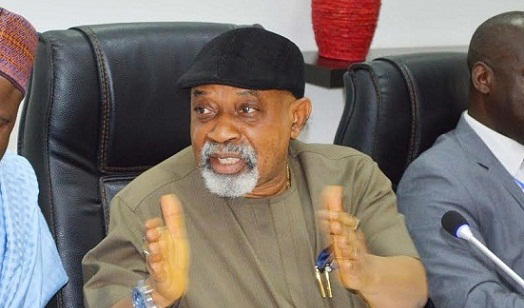
EVEN if the Minister of Labour and Employment, Senator Chris Ngige, has gone personal in mediating the dispute between ASUU and the Federal Government, it can be successfully argued that all he has done is meticulously engage the relevant provisions of the Trade Disputes Act and the Trade Union Act to bring discipline and decorum to labour administration.
ASUU, it must be stated unambiguously, is fighting a cause that cannot be punctured on the scale of patriotism but counterproductive, which must be accepted, given the manner and way it has lately pursued this. Social dialogue was effectively displaced, and social distemper enthroned, degenerating to cross-party name-calling and “panjandrum,” the Zik of Africa would say.
In the midst of it, was dissension over the place of law in the entire conundrum. But every progressive and prosperous society thrives on triumph of laws. In our peculiar clime, unfortunately, arguments still abound whether the problem of the country is the inadequacy of laws or the weakness of political authority to enforce laws despite their shortcomings. And just as the argument goes on, the quest for a better country where our children will suffer less than we currently face, gives no respite.
The minister of labour must have chosen to prove there are enough laws in labour statute book to put restiveness on the back foot and ensure equable production milieu. But God continues to love Nigeria. While the strike lasted, over two million youths were dispatched to loiter at home, adding to the army of unemployed others, whose percentage was put at 34 percent by the National Bureau of Statistics. This is amidst galloping inflation, runaway prices of goods and services, amidst terrorism, banditry, kidnapping and armed robbery.
Sadly, terrorism, thought to be resident of the ungoverned far-flung national periphery, surfaced in the nation’s centre. Kuje prison was disemboweled, hardened scorpion elements diffused, still at large. The chilly Kaduna train attack, became a prized trophy for terrorists, emboldened to even issue a threat to the President, further staging saber-rattling at Abuja suburb.
Uprising capable of engulfing the entire nation would have snapped with the restiveness in the mass of idle youth population. Luckily, ASUU is back to school but skirmishes continue between it and the government over unresolved issues, accentuated lately by the pro rata payment of October salaries to university teachers.
Ngige as usual is a constant factor at the receiving end of ceaseless blames. The no work-no pay protest organised by the University of Lagos chapter of ASUU was a lead op-ed on the bursting thoughts among members nationwide. It was literally gloves off for the chapter chairman, Dele Ashiru, who is as combative as his president, Emmanuel Osodeke.
“Ngige is the agent provocateur; he is the one instigating the government against ASUU. He has inexplicable hatred against our union and that is the reason he turned our struggle to a personal fight.” The allegations are long. “It was Ngige who poisoned the FEC against our union. Ngige started the campaign of “no work, no- pay” against our union.
Ngige dragged ASUU before the court; Ngige wrote the Ministry of Finance to stop our salary and make it prorated. He registered two stinking unions to weaken our union, which was against the Trade Union Act. Ngige also wanted our union to be proscribed, suggesting that we have not been submitting our aaccounts Ngige is out there to destroy public universities.”
I partly agree with Ashiru. The Minister of Labour is not known for taking prisoners. His precedent is that once he is within the legal boundaries, all paws are out. However, the legality or otherwise of the track he walks to make ASUU earn its pay, time-proven tripartite social dialogue having collapsed, is in focus to prove ASUU or vindicate Ngige. But there is some bad news. The crisis in the public universities is festering like a wildfire fueled by harmattan wind.
A source, I can’t place right out, had argued that Nigerian universities are hardly in the news for scientific research break through or academic excellence. It is always about doom-scrolling that tethers the system to decadence. Does it shock that only the University of Ibadan and Lagos could make the list of 600 best world universities released by the Times Higher Education Global University in 2022?
The report further highlighted lack of political will and financial commitment to lift higher education from the doldrums. Political commitment and financial will are key operative phrases that may explain the reason federal budget on education dwindled from 11 percent in 2015 to 5.3 percent in 2021. But while the issue of funding remains cardinal in re-positioning the university system, proper management of scarce resources becomes an albatross in a system accused of corruption.
While the report of the visitation panels set up by the Federal Government, one of the demands of ASUU, gathers dust, guided information reveals high scale misappropriation. The President had raised the issue of corruption in the universities while addressing ASUU in August, but the riposte from the union raises doubt as to who is responsible. Since ASUU dared government to release the report and prosecute the bad eggs, the dial back from government raises further questions.
Nigeria is a mystery, true! On the other hand, there is hushed allegation that for every one naira released to the universities as earned allowances,10 percent goes to ASUU as a booty for the struggle! Allegations and counter allegations confront each other. And the decay in the system doubles down.
Anyway, back to Ngige’s role as a provocation in the ASUU crisis. Did he go beyond the bounds of the law to chastise the union in his capacity as the competent authority on labour matters? With ASUU on strike for eight months, rejecting all entreaties even from tripartite-plus bodies, Ngige looked inwards and front loaded the elaborate provisions of the law, tucked away in a country of laissez-faire to ‘chastise’ the union.
Ngige simply scraped around the recess of labour laws to resolve the phenomenon that is doom-scrolling the university environment and desensitising ASUU to the torturing negativities of strikes. He simply said No to building a Potemkin that succumbs to perennial strikes. This is what must have disunited Ngige who used to tug the heartstrings of ASUU members. Now, the laws.
Did you know that education is classified as an essential service for which a strike requires 15 days’ notice under Section 7 of the Trade Disputes Act, Cap. 9? Available records only recall ASUU complied last with this in 2017. And to keep circumventing this, ASUU claims its strikes are roll-overs, which in the purview of the above section has no basis as strike has no other qualifier than being a strike.
The similar interpretation of Section 17 of the Trade Disputes Act, Cap. T8, makes ASUU accuse the Minister of Labour of taking the union to court, whereas transmitting a dispute to the National Industrial Court is the next stage in a collapsed conciliation process. Before further insight into section 17, let’s upload section 18 which provides that once any union fails to settle dispute with its employer and goes on strike, the Minister, acting under the section, apprehends the action by convening conciliation for the two parties.
Once apprehension is in place, the concerned union and the employer goes back to status quo antebellum. However, this is observed more in breach, otherwise, ASUU would have called off the February 14 strike on the 22nd of the same month when the Minister summoned a conciliation meeting. This section was a subject of intense discussion at the National Labour Advisory Council, which sat in Lagos on March 7, 2022.
As it is, section 17 ties the hands of the Minister by providing he should, within 14 days of collapse of talks, transmit the dispute to the higher body which is either the Industrial Arbitration Panel or the National Industrial Court. That is exactly what the Minister did. In fact, he was in breach of the law by delaying the transmission from 14 days to 8 months! Hence, rather than stating incorrectly that Ngige took ASUU to court, it is the union that made conciliation difficult to warrant transmission to the industrial court.
Similarly, the vexed issue of no work, no pay as contained in section 43 of the Trade Disputes Act has rarely been used. The present administration first invoked it on JOHESU in 2018 as well as ASUU and NARD in 2020 and 2021 respectively.
Dr. Jibia is former Director of Skills and Certification, Federal Ministry of Labour and Employment and a member, National Labour Advisory Council.
Disclaimer
Comments expressed here do not reflect the opinions of Vanguard newspapers or any employee thereof.