– Time developed countries honour $100bn a year in climate finance pledge
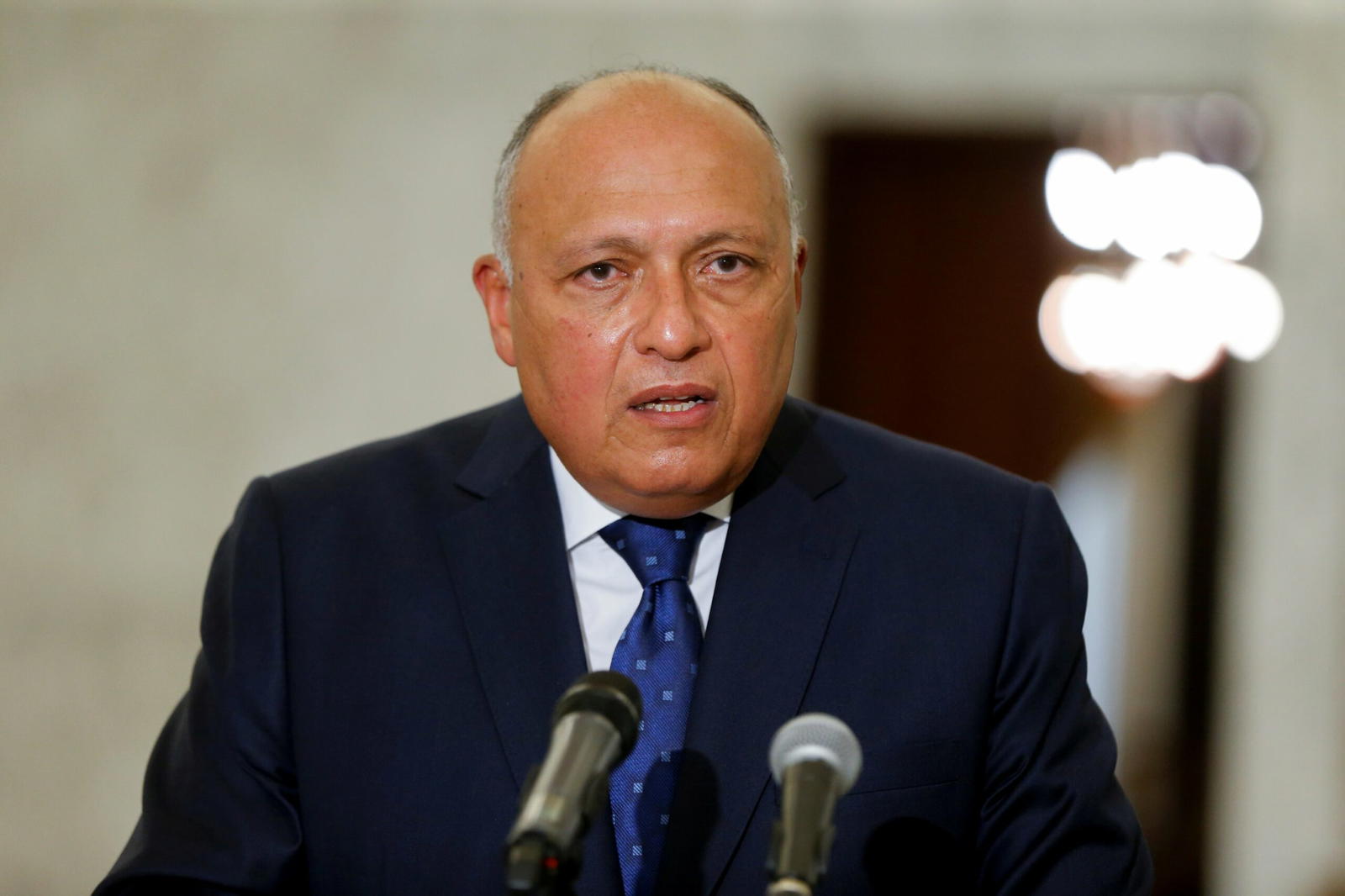
By Sameh Shoukry
At its heart, international climate action is based on a “Grand Bargain” whereby developing countries, including in Africa, have agreed to make their fair contribution to tackle a crisis they did not cause, in return for the support –including finance – we need to make such contribution, adapt to its negative impact, and pursue our legitimate sustainable development objectives.
As we approach the UN Climate Summit this November in Egypt, this bargain has been thrown into question. Our job is to restore it, and to put climate action back on track.
The challenge is clear. Heatwaves and droughts, fires, storms, and floods have left no society unscathed. Across Africa, millions face a battle for survival, as drought devastates our fields and livestock. And this is at just 1.1°C warming. With every extra tenth of a degree, the impacts will get worse.
Yet promises of climate finance have not materialized, and the transition to a low carbon society is taking too long. This comes against a backdrop of rising geopolitical tensions, and global food and energy shortages.
Some now fear COP27 may not make the progress we all aspire to. Yet, I believe the contrary – that this summit offers a unique opportunity for the world to come back together, to reaffirm our shared commitment to effectively address the climate challenges, and to put multilateral action back on track. Let us not waste it.
There is a good reason for hope. Societies everywhere are adapting, devising new technologies, getting more involved. Investment in climate tech is booming, from renewables, to new carbon removal technologies, to electric transport. Clean energy is getting cheaper every year.
But to succeed, we must manage this transition fairly. We recognize that the Global North faces challenges. Yet those faced by the Global South are greater, with fewer resources to address them.
Africa, home to 17% of the world’s population, was responsible for just 4% of greenhouse gas emissions between 1990 and 2017. Nigeria – with the sixth-largest population in the world – is in 40th place globally for CO2 emissions. Yet all of us across the developing world are suffering the consequences disproportionately.
In Africa, 600 million people are currently without energy, while in the global North– despite increasing costs –the lights are still on.
It is simply unfair to ask countries and people who contributed least to the making of the current climate crisis to shoulder the costs of clean transition and hamper their own development without enabling them to do so or through asking them to incur additional debt burden.
More than a decade ago, in 2009, developed countries pledged to provide $100bn a year in climate finance by 2020. Yet they still have not fulfilled that promise. Today, that promise remains unfulfilled.
Developed countries should also honour the Glasgow pledge to double adaptation finance by 2025 – so we can prepare and protect ourselves from the climate impacts already locked in. Let us not forget that according to the Standing Committee of Finance of the UNFCCC, the cost of NDCs of developing countries is estimated at about USD 5.8 trillion by 2030.
And the time has surely come to address the massive loss and damage from climate change suffered by people in Africa, and elsewhere in the Global South. This is contentious, and will require some deft discussions, but we cannot avoid it any longer. No just transition can be achieved without it.
The availability of additional, highly concessional grant-based climate finance is key if we are to effectively address the climate challenge. Public, private, philanthropic and Multinational Development Banks all have a role to play in this regard. We must think creatively and financial institutions must adapt their practices to the climate reality if we are to have a chance at success.
Meanwhile, all of us across the world must do more to deliver more ambitious mitigation actions at COP27. We must adopt a mitigation work programme that delivers, and countries that have not yet done so should consider updating their NDCs.
This is not an impossible task. Nigeria’s Energy Transition Plan establishes a roadmap to both deliver energy to its people and achieve net zero emissions by 2060. And if we succeed, and learn from each other, a cleaner more sustainable future is in our grasp.
Yet crucially, we must move on all these elements together – not piecemeal, but as a package. If any brick is missing, the edifice risks falling.
So, can we overcome our differences and restore the bargain? We can because we must. Developed countries can do more to support the financial and energy needs of Africa and beyond, to the benefit of all. And we can do more in the Global South to pursue the climate action our people and the planet demands if we ae assured that this is not on the expense of our legitimate pursuit of our sustained development goals on the elimination of poverty.
This will mean compromise and negotiation, but in Paris, in 2015, we proved that with the right will there is a way. We know what we need to do to tackle this crisis, and collectively have the means to do so.
Our job now as leaders is to get on and do it.
- HE Sameh Shoukry is COP President-Designate and Egyptian Minister of Foreign Affairs
Disclaimer
Comments expressed here do not reflect the opinions of Vanguard newspapers or any employee thereof.