By Biodun Busari
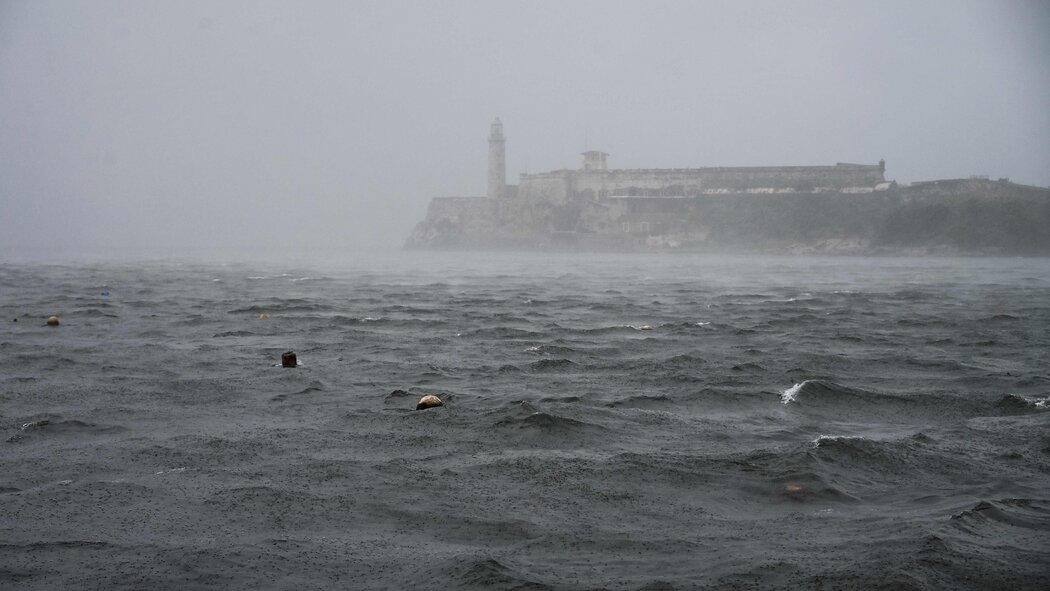
The first tough winds ahead of Hurricane Ian began to strike Cuba’s south coast on Monday evening as authorities were swift to evacuate residents, secure boats and board homes amid warnings of a life-threatening storm surge.
The fast-growing storm is positioned about 155 miles (250 km) southeast of Cabo San Antonio, in far western Cuba, but has increased in intensity in recent hours with maximum sustained winds of 100 miles per hour (155 km per hour), making it a Category 2 hurricane on a five-step scale.
Read also:
Enugu Capital City:As hurricane Onoh exhibits courage in leadership
Floods render thousands homeless in Yobe communities
Obasanjo, Okonjo-Iweala, others harp on purpose driven leadership
“Devastating wind damage is possible where the core of Ian moves across western Cuba,” the center said.
According to Reuters, the storm is predicted to strengthen into a Category 3 or greater hurricane and barrel north to the Florida coast, where residents are stockpiling supplies and filling sandbags.
Residents of Batabano on Cuba’s south coast worked with many fewer resources than in Florida as the storm closed in, threatening the fishing village of precarious wooden and concrete block houses perched just a few paces from the roiling sea.
“We are here saving human lives, going house to house, taking out the elderly and children,” a 43-year-old local official, Suleika Roche said while aboard a bus that was transporting residents to high ground.
However, the storm is set to hit north across the island as it progresses into the Gulf of Mexico, but forecasts put its track well west of the Cuban capital of Havana, where a direct hit could cause catastrophic damage to the city’s obsolete infrastructure.
Cuba is already suffering an economic crisis that has resulted in long lines for food, fuel and medicine, as well as regular blackouts nationwide.
Most grocery store shelves have been mostly bare for months, complicating preparations for the storm.
“I’m buying bread now because later I won’t be able to leave my house,” said 79-year-old Havana resident, Guillermo Gomez.
Gomez said this as he waited in a line that stretched several blocks for a few pieces of bread. “The water will be up to my knees,” he added.
On the capital’s waterfront Malecon boulevard, some residents boarded up windows. Others, lacking boards, taped them to keep them from shattering, while others simply removed the glass altogether.
Juan Ruiz, a custodian for a coffee shop looking over the Straits of Florida, said the business had stripped all its merchandise and equipment the night before, preferring to work with the sea instead of fighting it.
“We’ve been preparing since Saturday,” Ruiz said as the wind began to raise whitecaps on the water. “The sea always surges here.”
Cuba’s government called off interprovincial train and bus travel across the western half of the island ahead of the storm. Officials said they were also monitoring aging dams, many of which were already nearing capacity before the storm.
Disclaimer
Comments expressed here do not reflect the opinions of Vanguard newspapers or any employee thereof.