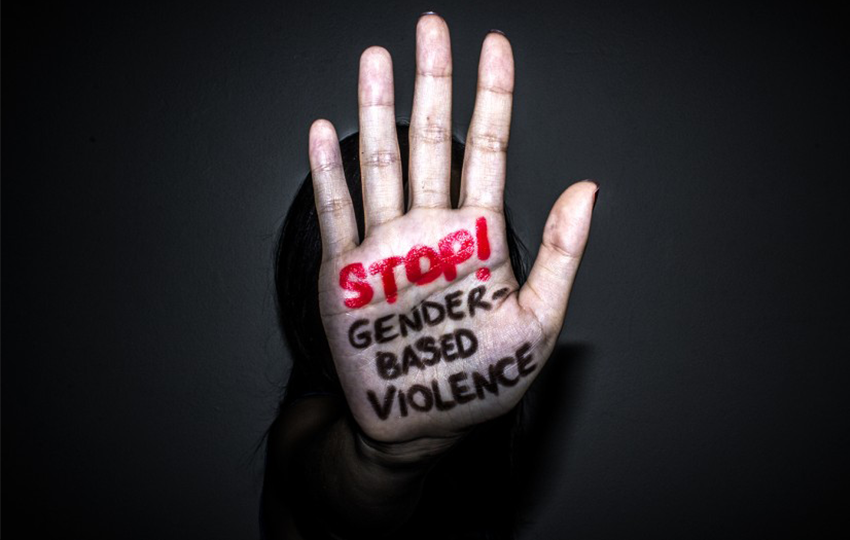
call for urgent global action to address
Trace root causes to armed conflicts, COVID-19 pandemic and Climate Change
By Gabriel Ewepu – Abuja
As women continue to suffer abuses across the world, three leading women’s health and rights advocates, PMNCH Board Chair and former Prime Minister
of New Zealand, Rt Hon. Helen Clark; United Nations High Commissioner for Human Rights
and former President of Chile, Michelle Bachelet; and Minister of Foreign Affairs, Spain, H.E. José Manuel Albares, Sunday, called for urgent global multi-lateral action to address ‘plague’ of sexual and gender based violence.
The trio in a jointly signed statement asserted that the root causes of these inhuman treatments to armed conflicts, COVID-19 pandemic and Climate Change.
The statement reads in part, “A toxic combination of global conflict, COVID-19 and climate change is exacerbating Sexual
and Gender-Based Violence (SGBV) against vulnerable women, children and adolescents
worldwide, including West Africa.”
Read Also:
Catholic Sisters frown at sexual and gender based violence
According to them, “In 2022, 274 million people will need humanitarian assistance and protection.This number is
figure in decades. While global estimates show that nearly one third of ever-partnered
to prevent and manage SGBV in humanitarian contexts, which overwhelmingly targets
women, children and adolescents.
“Armed conflict, natural disasters and humanitarian emergencies can significantly weaken a
lifetime, the threat of SGBV is elevated in humanitarian contexts.
“The risk and scope of
society’s ability to protect women, childrenandadolescentsfromSGBV.Rape,and other
forms of SGBV, are used in conflicts as tools of warfare to advance military or political aims. Systematic rape has a terrible effect upon women’s physical and mental health, including
sexual and gender-based violence (SGBV)is accordingly being exacerbated by the
protection from SGBV.
“There is therefore urgent need for targeted action and interventions
pregnancy-related complications, sexually transmitted diseases (STDs)and death resulting
to climate change toconflict.Yet, less than one per cent of global humanitarian funding is spent on
from unsafe abortion.
“The fear of social stigma associated with being raped discourages
women and girls ages 15-49 has experienced physical and/or sexual violence in their
cases are widely regarded as going unreported.
“Sexual and gender-based violence flourishes whenever armed conflict occurs,because fear,chaos and confusion provide perfect cover for the perpetrators,”write Clark Bachelet, and Albares.
“Conflicts exacerbate gender inequalities that disproportionally affect women and girls worldwide and worsen the levels of violence they are subjected to. The breakdown of social norms, legal restraints and common protections gives armed men the opportunity to prey on terrorize the population.”
They pointed that “Conflict related sexual violence is on the rise globally–in a report of the UN Secretary General to the UN Security Council, 49 parties were noted as being credibly committing or being responsible for patterns of rape or other forms of sexual violence in situations of armed conflict in 2021. Women and girls accounted for 97% of conflict related sexual violence cases reported in 2021.
“Girls and women caught up in conflict may also be forced to trade sex for food,money or
other resources they need to survive. And in some places, they are married off early or
forcefully to protect or care for their families. Due to loss of liberty and violation of rights, child marriage is of itself a form of GBV, and is recognised as such in international law.
“In 2018, 933 cases of sexual violence against children were verified in the Africa region.The
highest verified figures for violations relating to sexual violence continue to be documented
relating to sexual violence remained significantly under-reported, in particular, when perpetrated by boys owing to stigma, the lack of services and concerns for the protection of victims.
“Conflict is not solely responsible for the troubling rise in SGBV, however. The global COVID-19 pandemic and extreme climate events also significantly contribute to SGBV.
“Though entire populations are affected by climate change, women and girls are doubly victimized both as human beings, and because of their gender. It is estimated that 80 per cent of people displaced by climate change are women, according to UN Environment.”
“We have the tools to end this plague, but it will require an integrated partnership approach
at all levels,” conclude Clark, Bachelet and Albares.
“Our actions must be guided by key
human rights principles—equality and nondiscrimination, accountability and access to justice. No single input will work on its own, so every sector and stakeholder must contribute to stamp out sexual and gender based violence in conflict and humanitarian settings”, they added.
The impact of SGBV on physical and emotional health of women, children and adolescents will be among health explored in a forthcoming summit hosted by PMNCH, the world’s
largest alliance for women’s, children’s and adolescents’ health.
On Thursday, 22 September, 2022, the PMNCH Annual Accountability Breakfast:Tackling
in Latin America and the Caribbean will focus on the impact of the COVID-19 pandemic, conflict and the climate crisis on the health and well-being of women,children and
adolescents across the region.
Disclaimer
Comments expressed here do not reflect the opinions of Vanguard newspapers or any employee thereof.