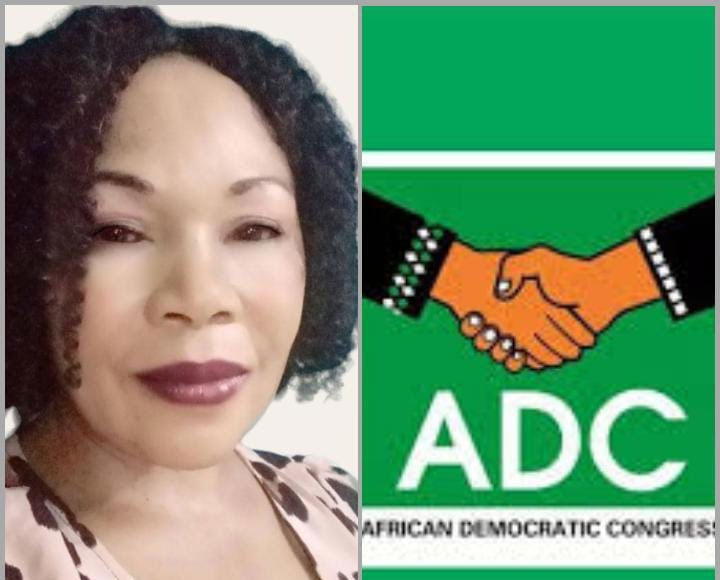
By Mabel Oboh
Nigerian women naturally have come a long way from the pre-colonial days. They have not only been involved in nation-building, but also as custodians of our legacies in a nation with a rich cultural heritage.
Although Nigerian women have done well as professionals, businesswomen and home managers, however, politically, they cannot be said to have fared well in contemporary Nigeria.
Even though women are known to give huge support to political parties, they are not well represented in political positions, appointments and policy making.
Read Also: Tribes, Nigeria and divisive politics
In today’s Nigeria, it has been suggested that Nigerian women have allowed men to hijack the top political offices, while others have opined that the doors of opportunities are purposely not being opened for women by the patriarchal system. In addition, women have also been tagged as self-defeatists and have self-excluded from the processes and structures of the government due to the belief that men will always hinder their chances to succeed.
As much as some of these schools of thought may have some valid points, if thoroughly examined, we may find that, apart from the aforesaid, the high monetisation of politicking, which can be a major setback for women, is a factor.
There is also a lack of genuine opportunities open to women in political parties and governance.
Although women are supposed to be protected by the 35% ‘affirmative action for women’ – a policy that demands 35% involvement of women in all governance processes – in actuality, the policy is not being honoured by the powers that be, despite its existence since 2006.
Despite the policy in place to improve women’s growth in governance, no woman has ever become a governor, Vice President or President in Nigeria.
Research confirms that the first and only woman who ever graced the seat of power as a governor in Nigeria in 2006 was Dame Virgy Etiaba. She functioned for only three months as Anambra State’s governor, due to the impeachment of the then Governor of the state, Peter Obi. Although there are past and serving deputy female governors, however, the figures are not impressive when compared to the number of states in the federation.
Notably, political parties also have the responsibility in setting exemplary standards by ensuring equal opportunities for women that are willing to serve their country. Sadly, most, political parties are also not honouring the 35% affirmative policy.
How then can the desired women’s inclusion in governance be accomplished if all quarters are failing to implement an existing policy?
Undeniably, women, have important roles to play in our nation’s building. But, the political glass ceiling must be broken if women are to become prominent benefactors in governance.
There is no doubt that for Nigerian women to move up the ladder of governance effortlessly, firstly, political parties need to top up their games to make this dream a reality.
So, it cannot be emphasised enough that for starters, women need credible political platforms that are willing to open their doors for them. Support their ambitions for the furtherance of all-inclusive fair governance, equity and justice for all.
Women must be allowed to work as our nation’s gatekeepers, where they can join hands with the male counterparts to inevitably work towards achieving an all-inclusive nation, where generations to come will come to believe in one Nigeria and cast away the backward hindrances currently faced by the country, especially, tribalism, godfatherism, religious bigotry, etc.
For instance, if we take a close look at other parts of Africa, where women were given platforms to excel, we will notice that the likes of Ellen Johnson-Sirleaf of Liberia, and Joyce Banda of Malawi became heads of their nations. In addition, Rwanda made it possible for over 63 percent of members of parliament to be women – notably, the highest proportion in the world.
All hope is not lost in Nigeria, as we are beginning to see some political parties making efforts to change the narratives for women.
For instance, the record shows that when it comes to supporting and offering women elective opportunities in politics, African Democratic Congress (ADC) ranks first among other political parties in Nigeria. For the simple reason that the party is known to give mandatory free tickets to women and youths who seek elective positions; coming 2023 elections inclusive.
Furthermore, the party has several initiatives available to help support women seeking various elective positions. Which includes conducting seminars, one-on-one consultations to enlighten women on all aspects of electioneering, mobilisation, knowledge sharing, expertise, technological capabilities, fundraising, etc.
Female candidates are also given information on available independent support groups and international organisations for women seeking electoral positions in Nigeria amongst others.
Certainly, If ADC’s footsteps can be matched by other political parties, the much-needed high level of female participation in politics and governance will grow significantly in no time for the betterment of our great nation.
Oboh is ADC National Diversity and Inclusion Secretary
Disclaimer
Comments expressed here do not reflect the opinions of Vanguard newspapers or any employee thereof.