By Osa Mbonu-Amadi, Arts Editor
Historically, artists and the arts – music, literary works, paintings, drama, cartoons, etc. – have been used as instruments of protests against societal ills and for the enthronement of positive social change.
Perhaps, one of the earliest examples of the role of arts in dismantling a rotten system was the fall of the walls of Jericho (1400 B.C.) as a result of blasts from trumpets (musical instruments) as recorded in the Bible (Joshua 6:15).
Read Also: BOLA TINUBU: EMI LO KAN: ‘How my training, experience, knowledge can rescue Nigeria’
As noted by Susy Bielak, the Block’s associate director of engagement and curator of public practice in 2014 during free Artists’ Congress on Evanston campus hosted by Block Museum, Chicago’s history runs deep with artists invested in questions of social change and artists who were on the front lines for civil liberties and workers’ rights. “Chicago is a center today for artists addressing social issues ranging from looming global climate change and wealth inequity, to gun violence and injustices in the prison industry.
“While the Artists’ Congress of the 1930s,” said Susy Bielak, “addressed the singular issues of class struggle and fascism, we are exploring what matters to artists and society today.”
Similarly, writing on “The role of artists in revolutionary struggle” in 2016, the artists, Rebecka Jackson-Moeser said, “Artists who I never thought would make the jump to direct activism are filling the streets, getting arrested and laying on the line to stop Trump. This shows how deplorable and detestable this man is. It also makes this the perfect time to recruit artists and encourage them to make revolutionary art.”
In dealing with the question, ‘What is art?’, Jackson-Moeser instead preferred to state what art is not: “What art is NOT is entertainment. An entertainer distracts. An artist’s job is to challenge. To make you uncomfortable, to make you question. For those who say art is not political, they don’t know shit about art. Art was always, and still is, a space to critique the ruling class.
She went ahead to quote Cesar Cruz who said “the role of art is to disturb the comforted and comfort the disturbed,” saying but now it goes deeper. It is time to instigate the disturbed, to give them strength and focus in their purpose, to connect and lead in the movement against imperialism.
“Art is a weapon,” Jackson-Moeser continued. “You can use it to protect yourself from the ugliness of the world and fight against those who mean to squash you. She cited her experience in Palestine, where she worked with the youth of Juliano Khamis’s Freedom Theater and “saw art save lives and give life to generations of people… Art was so dangerous there that they murdered Khamis. As artists, our job is to show people the grim, deadly reality that we could face.”
Jackson-Moeser also quoted Ernesto “Che” Guevara, the Argentine Marxist revolutionary, physician, writer, guerrilla leader, diplomat, and military theorist who said in his dying words: “Shoot, coward, you are only going to kill a man.” Che, she said, “knew that revolutionary ideas, like art, are the living incarnation of a knowledge much bigger than the artist or the person.
“Art teaches you how to think and it gives voice to the voiceless. Through art, you can discover the terms with which you are connected to other lives. This is a very great liberation for the suffering, struggling person who always thinks they are alone.”
Much more recently, we all saw how our own Fela Kuti and Bob Marley deployed music as an instrument of war against imperialism and corrupt governments.
Artists’ endorsement of selfless, pro-masses leaders is an integral part of the role artists play in revolutionary struggles. For instance, Leonard Kateete, an art teacher, painted Mandela’s portrait titled ‘Tears of Freedom’. As one commentator puts it, “from books and visual art to hit songs and acclaimed films recounting his struggles, Nelson Mandela has been celebrated by artists around the globe. Musical powerhouses such as Stevie Wonder, Bono and Annie Lennox and film and TV stars such as Morgan Freeman, Idris Elba and Oprah Winfrey have counted the anti-apartheid icon as an inspiration and muse for concerts, songs, poems, fiction and movies.”
Similarly, according to Wikipedia, the free encyclopedia, “Artists for Obama was a series of ten limited-edition fine-art prints created and donated by various artists under the direction of U.S. President Barack Obama’s 2008 presidential campaign organization, Obama for America. The prints were official campaign products of Obama for America, sold directly by its website, and all proceeds were considered campaign contributions.”
On February 23, 2015, Olaoluwakitan Adewunmi, in an article on Vanguard titled “On Soyinka’s New ‘Leap of Faith’, documented that the “Nobel Laureate, Professor Wole Soyinka’s recent curious endorsement of General Muhammadu Buhari’s presidential bid can be usefully deconstructed. In what Soyinka proposed as a ‘Leap of Faith’ he told Nigerians why he did a 360-degree summersault to pitch for Buhari’s election over the incumbent, President Goodluck Jonathan.” But it was an endorsement gone awry. Buhari turned out to be the worst president Nigeria has ever had.
Till today, many people still cannot understand why Buhari, with his past record of dictatorship, coup plotting, human rights violations and religious bigotry, could have passed Soyinka’s well-known strict critical assessment and usual scathing opprobrium, to earn his endorsement for the 2015 presidential election which has turned out to be a catastrophe for Nigerians to Soyinka’s chagrin.
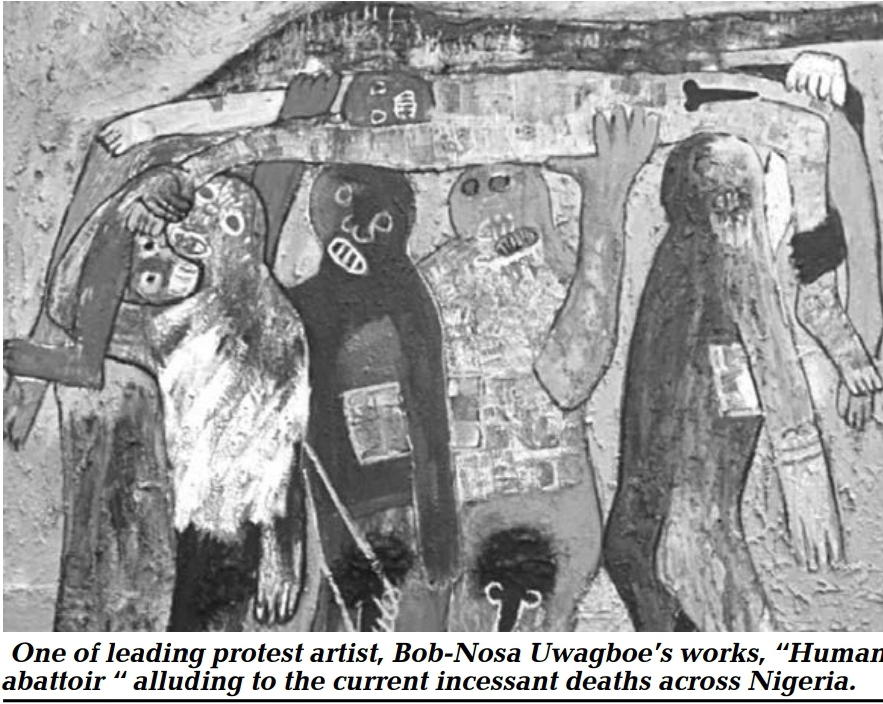
Today, apart from Chimamanda, many other artists like Paul Okoye of the PSquare fame, Bob-Nosa Uwaegbo, the renowned protest artists, and many other visual artists, have also endorsed Peter Obi. For a man who is already uniting Nigerians before becoming president, an endorsement from a globally acclaimed author like Chimamanda Ngozi Adichie with her large followership across the globe in a world that has become more interconnected than ever before by the social media, Peter Obi is bound to attract more global attention than it has already done. That is the full import of this endorsement.
Actually, this is the first time in Nigeria where people from different parts of the country are spending their own monies campaigning for a presidential candidate in an election, printing campaign posters, renting and hoisting campaign billboards, and donating their private houses to be used as political party offices.
We hope that Peter Obi and his running mate, Yusuf Datti Baba-Ahmed, will live up to the expectations of these artist like Chimamanda Ngozi Adichie.
Disclaimer
Comments expressed here do not reflect the opinions of Vanguard newspapers or any employee thereof.