“All history resolves itself very easily into the biographies of a few stout and earnest persons” – Ralph Waldo Emerson, 1803-1882.
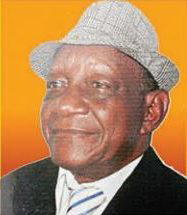
General (President) Ibrahim B Babangida, IBB, GCFR, was 81 on August 17, 2022; that was on Wednesday. Like it or not, Nigerian history would remember him as one of the “few stout and earnest persons” whose lives define our history. For those who want to know why an annual remembrance is in order, let me remind them that Americans still organise annual functions for US President Abraham Lincoln, 1809-1865. Honest history requires that we write about all the major performers – whose footsteps on the sands of every age cannot be obliterated forever. I am aware that the ever-present apostles of forgetfulness would want the truths about our past to be suppressed. They will have to wait until I am done with writing columns.
“Unhappy are people who don’t write their own history.”
One of the most disheartening burdens of Africans is our failure to write our own history. Worse still is our refusal to read what is written and to learn from them. On the few occasions when an attempt is made, the result resembles a sandwich made with two thick slices of emotions, on top, passions under and a very thin slice of meat in between. President Obasanjo, who removed History from the school curriculum during his tenure, could only have been a black leader. In any other continent, he would have been dismissed as a crackpot. Our leaders and we, the followers, never learn from history. We are contented to repeat the same mistakes over and over again.
Right now, economically and politically, we have got our country into a mess, a quagmire; and each new step renders the difficulty of extrication immensely greater. Institutions, which elsewhere could have prevented us from reaching this stage, have been rendered redundant or corrupted. A country in which the Accountant General allegedly embezzled more than the annual budget of an entire state has embarked on a journey to self-destruction.
“Our government may, at some time, be in the hands of a bad man. When in the hands of a good man, it is well enough…We ought to have our government so shaped that even when in the hands of a bad man, we are safe” – Frederick Douglass, 1818- 1895 (Black American Leader).
It was during a year-long course in demographics that I learnt that 30 years is regarded as a generation; 1992 was therefore a generation ago. As a rule of thumb, a national population growing at three per cent annually will be double what it was in 30 years. Nigeria’s population has been growing at 3.2 per cent annually. That fact partially explains why Nigeria’s population is about 210 million this year; and might become 440 million by 2052. That also means that those alive then will require twice as much food, housing, transport, education facilities, health services and potable water to drink. We better start planning to provide for those needs. I won’t be around; but I owe a duty to sound the alarm.
There is, however, a second fact to be derived from the fact that we have passed through another generation. It means that approximately half of the Nigerians alive today were not born then. Add to the almost 100 million under 30 years those ten years old and below; and it is clear that about 65 per cent of Nigerians today are not aware of what happened in their country 30 years ago.
When we turn to those who were old enough to know about the situation in Nigeria then, there is only one question to ask them: Will you rather live in Nigeria of 1992 or 2022? The answer to that question represents your honest verdict on whether Nigeria has progressed or regressed.
“The most uncharitable critic of IBB, after experiencing four other administrations (Shonekan, Abacha, Abubakar and Obasanjo) readily concedes that but for the annulment of June 12, 1993, the man, IBB, would have been a hero” – Double Chief Duro Onabule, Chief Press Secretary for IBB.
To senior brother Onabule’s list of Nigerian Heads of State after Babangida, I will now add Yar’Adua, Jonathan and Buhari – to bring us to date about those who have ruled us since 1992. So, those not incorrigibly wedded to falsehood can make an objective judgment.
The year 1992 started with a change agenda. Chief Ernest Shonekan, Chairman/Managing Director of UAC of Nigeria, was appointed as Chief Operating Officer in a military regime headed by IBB. History would record that it was Shonekan, with tacit approval from Babangida, who convened the first Nigerian Economic Summit Group, NESG, from which the first VISION 2020 idea emerged as a paradigm for rapid and sustainable development of Nigeria along the pattern established by Malaysia. Incidentally, Malaysia is growing at 8.9 per cent this year and not submerged in debt.
If the ideas proposed by Nigeria’s brightest, best and most patriotic delegates to the NESG/VISION 2020 workshops had been implemented, Nigeria would not have been in the mess in which we find the country today. We would even have shrugged off the bad leadership of Jonathan and Buhari. We would have done better because 1992 was perhaps the year in which the Babangida regime created the largest numbers of institutions.
INSTITUTIONS MATTER IN NATION BUILDING
“An institution is the lengthened shadow of one man” – Ralph Waldo Emerson, 1803-1882, VANGUARD BOOK OF QUOTATIONS, VBQ, p 105.
The Malaysian who delivered the keynote address in 1992 opened our eyes to visioning and the role of institutions in fostering social and economic development also contributed one quotation to VBQ. “It does not matter if the cat is black or white – as long as it catches rats.” Professors Adamolekun and Pat Utomi were among the earliest and most prominent apostles of institutions as foundations of sustainable progress. While they apparently preached to a nation of deaf people, it is possible that even they, like me, were not aware that the IBB government was listening and passing several decrees to create many institutions – which its successors either rendered impotent or ignored altogether.
In 1992 alone, the Federal Government created more institutions than all the governments before or after it. Below is a short list of the decrees passed which still form the basis of governance today – without any attempt to fully discuss them right now. Future historians, if we have any, can fill in the gaps later for themselves and discover the truths that many people want to deny the present generation of Nigerians. Predictably, with IBB’s exit from government, most of them were either administered without fanfare or allowed to die quietly by being starved of funds. Below are 19 selected decrees passed a generation ago.
1. National Planning Commission Decree (Governance)
2. Oil Mineral Producing Areas Development Commission. Decree 23 (Governance)[OMPADEC has been renamed NDDC].
3. National Primary Health Care Development Agency, Decree 29 (Health)
4. National Institute for Sports, Decree 31 (Sports)
5. National Broadcasting Commission, Decree 35 (Communication)
6. National Commission for Women Decree 42 (Gender)
7. Federal Universities of Agriculture, Decree 48 (Agriculture)
8. Urban Development Bank, Decree 51 (Economic/Business)
9. Nigeria Export Processing Zone, Decree 63 (Economic/Business)
10. Consumer Protection Council, Decree 66 (Governance)
11. National Housing Fund, Decree (Housing)
12. National Agricultural Seeds, Decree 72 (Agriculture)
13. National Communications Commission, Decree 75 (Communications)
14. Chartered Institute of Taxation, Decree 76 (Economic/Business)
15. Nigerian Tourism Development Corporation, Decree 81 (Tourism)
16. Nigeria Press Council, Decree 85 (Media)
17. Environmental Impact Assessment, Decree 86 (Governance)
18. Fertiliser Control, Decree 90, 1992. (Agriculture).
19. Pharmaceutical Council of Nigeria, Decree 91 (Health)
Then-FG was passing approximately 8 decrees a month for our benefit. No other government has come close.
BIRTHDAY GREETINGS SIR
I have gone to great lengths to let Nigerians, especially the youth, know that your decrees are still governing Nigeria today. None of your successors passed as many laws and created as many institutions in their entire tenure as you did in 1992 alone. Irrefutable evidence is there to prove that you were far ahead of others – before or after you.
Happy birthday sir and many happy returns of the day; longer life and Allah’s abundant blessings. Journalism is the first rough draft of history. I am fortunate to write some of yours.
Disclaimer
Comments expressed here do not reflect the opinions of Vanguard newspapers or any employee thereof.