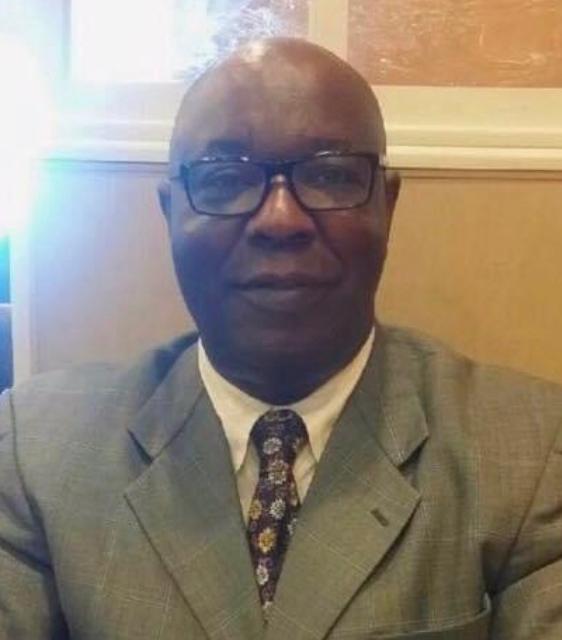
By Boston Edogi, Ph.D
The Nigeria Higher Education sector is currently in dire straits, particularly in terms of a crisis of leadership in higher educational institutions. Further woes includes: maladministration at most levels of educational operations including payment of faculty and non-faculty staff, academic faculties, students affairs, infrastructural developments, and problems with campus security.
Barriers to resolving these issues are profound; Unchecked corruption, infrastructural failures/decay, and a lack of connectivity between educational and administrative sectors all hamper any possible resolution.
The political class and government leadership are also insensitive to financial pressures within this sector, including the reckless use of resources, which in some cases extends to corruption.
Allegedly, there are reports by the government of self -assigned/unreasonable salaries, compensation, and allowances by the Academic Staff Union of Universities, ASUU, are insensitive and unacceptable, especially at the state and federal levels. The ASUU seems to act like a government within an existing government in Nigeria. But for now, let me focus on education at the state and federal levels.
Read Also:
Strike: ASUU NEC in crucial meeting
The education sector has by now deteriorated to the point of being worthless in most public institutions. Perpetual and lengthy strikes mean that curriculum objectives cannot be attained. Students are locked out of campuses indefinitely.
Academic and administrative staff have formed unions that seem to have held the leadership of the institutions to a standstill to the extent that the administrative and academic apparatus has been delegated to the unions.
This is troubling because the membership of the ASUU are the same people who were entrusted to lead and to develop the institutions in terms of Research and Development (R & D).
However, this is not truly the case. Thus, there is the emergence of a conflict of interest by the ASUU. This is the principal reason this strike has not been brought under control or resolved to this date.
Some Facts About the Current ASUU Strike;
*To hold an employer hostage for more than six months is unacceptable and disruptive.
*The strike runs counter to the mission of the public higher institutions in Nigeria.
*It is a known historical fact that committees were inaugurated for the purposes of re-negotiating the findings/recommendations of 2009 & 2021 strike negotiations.
The two committees were inaugurated by the Federal government(FG) in December 2020 and August of 2021 and headed by Professor Munzali Jubrin and Professor Nimi Briggs respectively. Both committees reports were not implemented by the federal government. This led to the meeting of the lecturers under the name ASUU. The strike started on February 14, 2022 when agreements reached by at the Nimi Briggs committee were not respected or implement by the government. The Strike is still on till this date.
*The leadership of the institutions has failed at the local, state, and federal levels. The dispensation of higher education needs to be drastically centralized at all levels in Nigeria.
* ASUU has never involved the leaders of the university student union in negotiations. Their exclusion implies that students’ overall interests are not protected, but only ASUU’s. Students and their parents have the right to be involved in negotiations related to their education.
* The ASUU President in a recent Punch News post, claimed that the government has not conveyed to ASUU leadership that the government does have money to meet their demands but the government has money to purchase vehicles as gift to the Niger Republic which is not a part of or affiliated to Nigeria.
*Additionally, a claim was made by the ASUU President that countries like the UK and Ghana resolve their strikes within two days, it’s simply that government of Nigeria cares less or pays a non-chalet-ant attitude of the current ASUU strike in our country.
* Moreover, the ASUU President and her leadership claim on channel News interview that they were waiting for further negotiation, but they didn’t mention or make any statement related to the claims of a salary system stress test failure that was made in a recent Channel News Question & Answer session hosted by Mr. Seun Akinbaloye while the guess was the government spokesperson, the Honorable Minister of Labor Festus Keyamo, SAN.
* On August 16, 2022, ASUU and the government re-negotiated their outstanding issues. ASUU President Professor Emmanuel Osodeke stated after the meeting that the schools will reopen soon but after couple of days later he reported that the federal government failed to sign the agreement, as such the re-negotiable ended in deadlock due to a number of reasons including rejection of the “no work no pay” stand that was communicated to the ASUU by the government, but the ASUU rebuffed by stating their position of, “no pay no work” to the Federal Government. Therefore, the strike is still ongoing till this date.
* On August 20, 2022, there was a publication on Vanguardngr online which stares thus, Strike: FG mulls proscription of ASUU.
Do we look forward for the federal government to actualize the proposal that is contained in Vanguardngr online news? If the news in Vanguard Online News is authentic, then the Federal government should call off this strike in a matter of days from now.
* Looking at the view of things, and the long history of strikes, ASUU has always muscled the upper hand in negotiations because of academics, and professional advantage.
* There is an ongoing issue of conflicting reports/claims between ASUU and the Federal Government
on this strike matter. Therefore, this makes it quite difficult to ascertain whose reports or claims are accurate.
*The primary, and predominant reasons why the Universities faculties were hired includes but not limited to the following: Create sustainable teaching,
R & D, community developments. All other activities are secondary to the aforementioned.
* The community is not happy that their children are not in school learning but at home since February 2022 and doing nothing.
* The National University Commission is responsible for accreditation through the Department of Education. This exercise cannot be done since ASUU is on strike. Accreditations are for a period of four years. Some programs are due to expire 2022.
* Also, whatever research activities, and publications are awaiting peer review, this Strike must have withheld the educational process to this date.
* The federal lawmakers, judiciary, state governors, and state ministries of education’s voices haven’t been heard in this crucial matter during this strike or past strikes.
Recommendations:
+All staff and students must return to campus under an executive order if called upon by the FG to do so. A Executive Order is permitted by statutory law that is within the rights of the Federal and State governments.
+ Should this strike persist, ASUU is free to exercise her opinion to resign their employment with the Federal Government and become an employer to improve the workforce in Nigeria.
+Tuition fees should be paid into a temporary account set up by the respective institutions, and not to the federal coffers.
+The ultimatum to open the institutions is a directive. Meanwhile, suspend, or abrogate the documents that set up the unions or any other agencies that will work contrary to the students, and the institutions’ interests.
+If the government decides to suspend or abrogate the ongoing strikes, any future strike are deemed illegal and outlawed. Further strike action in educational institutions will be subject to disciplinary actions including termination.
+Failure by university faculty and adjuncts to return to work If directives is given by the Federal Government, this implies job abandonment. The institutions can legally fill these positions.
+Professionals should negotiate through established and constituted channels while in service and gainfully employed.
+ If calling off the strike under the directives succeeds, the Federal government should take the necessary steps to implement salary adjustments, and compensation of most monies due, and earned. It is unlikely that the government will consider this recommendation because ASUU may not accept the government’s current position of the ASUU submitting to a second stress test on their salaries or payroll system(UTAS) because the ASUU’s payroll system failed the first stress test.
+ Lawmakers, state governors and state ministries of education should lend their voices to resolving the strike.
+ Students and student body leaders and parents should consider taking up a protest against the ASUU if the strike does not end soon (within 30 days). ASUU seems to be fighting for some demands that the FG may not accept.
Is ASUU fighting for the students that they claim to represent?
Conclusion:
In any working system, whenever there is a misunderstanding between two discerning parties concerning specific issues, those parties should try to reach an amicable agreement. However, the agreements reached during the round-table pertaining to the strike are over 180 days but still no resolution is in sight. This is an unsustainable situation for our country’s education sector. Let me remind us of a common adage which goes thus, **when two elephants fight on top of the grass it’s the grass that suffers.**The elephants are the government and the ASUU, while the grass is the students.
Indeed, the crops of students that our country produces today won’t be able to compete with their counterparts globally because of too many underlying exigencies such as frustrations, financial difficulties, catching up with lost study time/exams that have been interrupted by the strike, and more.
How can an employee dictate to an employer how he wants to be paid? There is no evidence to show how their strike benefits the students that they always claim they are fighting for. The ASUU protests have become a ritual embarrassment. I don’t think any government can negotiate with them successfully because they will always find something to strike for.
Based on this writer’s independent view, I can now state categorically that the ASUU needs to reconsider her stance on this matter because the demands they have submitted to the government seems unrealistic or attainable.
I therefore join other reasonable Nigerians that have shared their voices in this matter by calling upon the ASUU’s leadership to urgently go back to the drawing board to re- negotiate with the federal government’s representatives. Should their be another deadlock again, then they should present a more acceptable proposal without inducing the federal government to borrow about N1.2 trillion to meet their unrealistic demands.
Additionally, the ASUU must know and accept that the students come first in this matter that should have long been resolved.
As a result of the recurring ASUU Strikes, there are reports of some lecturers from our tertiary institutions accepting employments offers in public universities in Nigeria where they receive better salaries and benefits. In other instances, some lecturers/tenured professors travel abroad to secure better job offers: salaries/benefits and enabling job environment that are not available to them in Nigeria universities.
This movement of lecturers to foreign countries including neighboring Ghana has compounded the brain-drain of academia in Nigeria.
Worst of all, students that are public schools cannot afford to attend private universities in Nigeria because of the high cost of attendance. So, only children of wealthy parents can afford to attend private universities in Nigeria or attend schools in the diaspora.
Therefore, these imbalance public universities students suffer from should be addressed headlong by both the federal and state governments so as to prevent a serious crises in our educational system.
However, if the ASUU remains complacent and incapacitated to a point whereby the Federal Government might be left with no other choice but to invoke a decree, and terminating the documents establishing this apparently feisty and plagued national union, then the following should happen: the government should look for private, private-public, religious organizations, entrepreneurs, etc. to take over the leadership of the institutions.
The federal government should get out of the business of higher education. These should be completely delegated to the state and local governments.
The Federal government’s role should be limited to accreditation, funding of research projects, scholarships, special grants, and loans, specifically affordable or subsidized loans.
The federal government has made its case openly that they don’t have the resources to adequately fund the numerous responsibilities associated with the institutions. Philanthropic and alumni gifts are essential to supplementing limited annual budgets.
Higher education institutions will be required to initiate internally generated revenue/research projects that will be embarked upon with engineering, research and scientific industries to augment their resources.
The current strike matter should be settled with a lasting resolution with this statement, there is no Victor or Vanquish to both sides: meaning between ASUU and the Federal Government.
Dr. Boston Edogi, Ph.D in Organizational Leadership(USA), Dissertation Content Expert @ GCU- Phoenix AZ, Public Opinion Contributor, Dissertation Mentor. Wrote from USA.
Disclaimer
Comments expressed here do not reflect the opinions of Vanguard newspapers or any employee thereof.