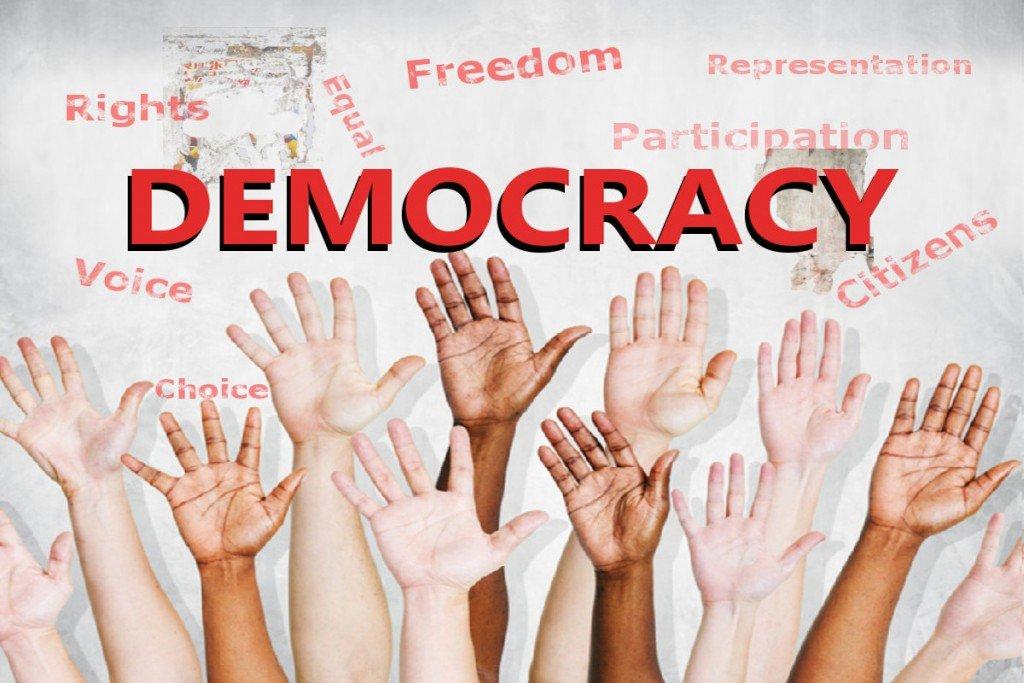
THE military government of General Abdulsalami Abubakar set May 29, 1999 as its handover date. It became Nigeria’s Democracy Day after Chief Olusegun Obasanjo who won the presidential election, assumed power.
On June 6, 2018, President Muhammadu Buhari responded to public yearnings and transferred the Democracy Day to June 12 every year to honour the memory of the winner of the June 12, 1993 presidential election, the late Chief MKO Abiola. It has become a national holiday.
After 23 years of our renascent democracy, the question really is: how has this democratic order impacted Nigerians? Buhari, in his 2022 Democracy Day address to the nation, claimed that Nigeria’s democracy “has made progress”. We did not have a different self-assessment. The reality, however, richly bespeaks of the opposite scenario.
What are our democracy dividends? Has our renascent democracy improved the people’s ability to choose their leaders? How has it promoted good governance and a better life for the people?
In terms of the democratic space, the 1999 Constitution had no link to the Nigerian people as falsely claimed in the Preamble.
It was a mere rehash of the 1979 “military command” federalism which heaped power in the centre, created a feeding-bottle federalism and reduced the federating units to ineffectual dependencies. This military command federalism ab initio shackled the democratic space.
The regime of Obasanjo rode on it as a military leader in civilian toga. The regimes of the late Umaru Yar’ Adua and Goodluck Jonathan introduced reforms that led to freer, fairer elections and more civic freedoms, thus transferring more power to the people.
However, these gains, little as they are, have almost been completely eroded, if current experience is anything to go by.
The Buhari regime will be remembered for its efforts to bring the media under its feet with the Twitter ban, muzzling of the broadcast media with a Broadcast Code, attempts to legislate a hostile, state-operated Press Council and strict monitoring of Social Media.
The free and fair elections that ushered in the present administration in 2015 gave way to vote buying, collation centre violations of results, electoral armed robbery and judicial hijack of the people’s power to choose.
On the economic front, the Naira has dropped from N180 to the US Dollar in December 2014 to N610 this week. At the same time, jihadists, bandits and herdsmen terrorists have driven farmers off their farms and many Nigerians into refugee camps.
Food inflation is sky-high. Corruption is out of control. Poverty stalks the land. Nigerians are no longer safe anywhere.
Indeed, we have made “progress”, but mostly in the negative sense. There is very little to celebrate about our democracy.
We wait, hope, pray and must work towards an improved leadership capable of taking us to democracy’s Promised Land.
Disclaimer
Comments expressed here do not reflect the opinions of Vanguard newspapers or any employee thereof.