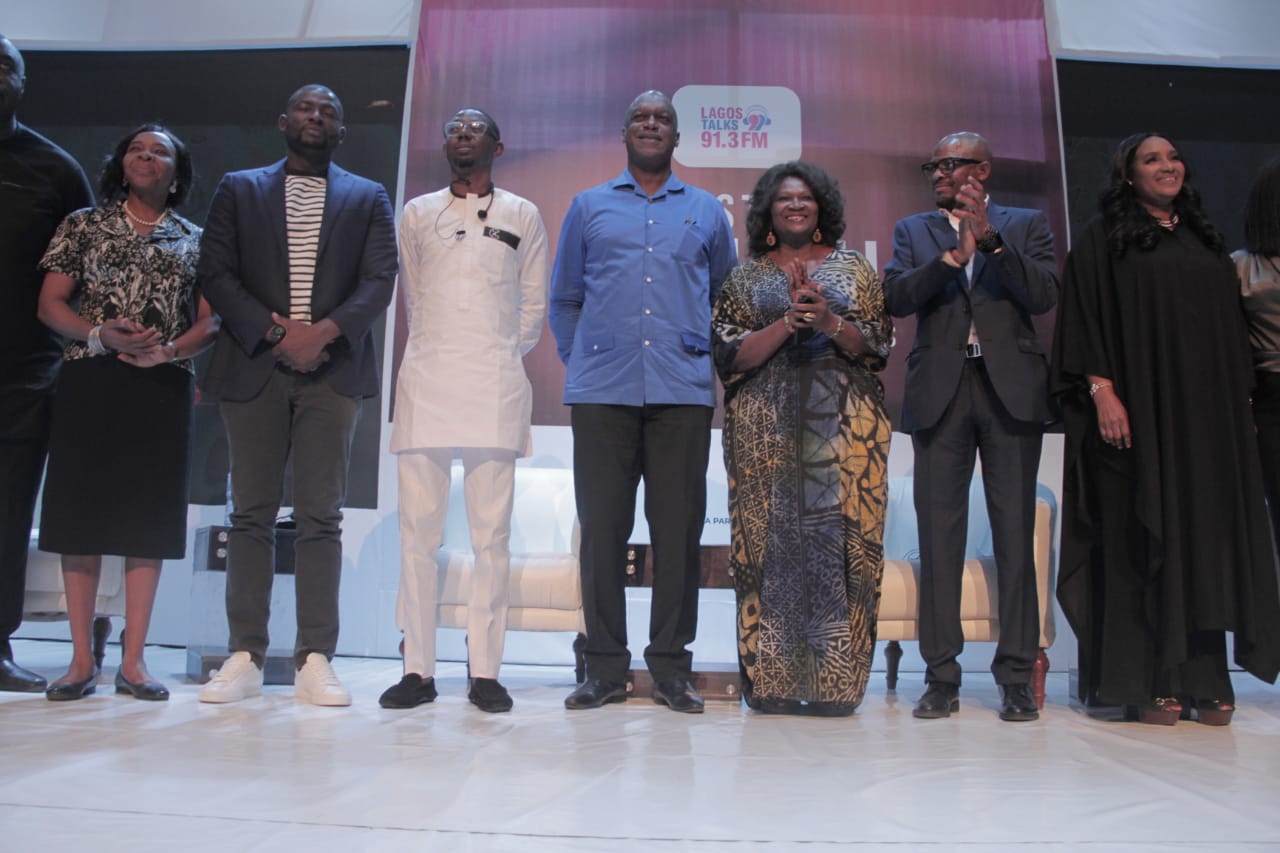
L- R: Mr Okwui Obosi, Head HR Megalectrics Ltd, Executive Chairman Ikoyi/Obalende LCDA Fuad Atanda-Lawal, Kunle Lawal Electoral college, Chris Ubosi MD Megalectrics, Miss Yemisi Ransome-Kuti, Lagos state House of Assembly rep Eti-Osa; Gbolahan Yishawu, Financial Director Megalectrics Ltd, Mrs Chidi Obijesi
L- R: Mr Okwui Obosi, Head HR Megalectrics Ltd, Executive Chairman Ikoyi/Obalende LCDA Fuad Atanda-Lawal, Kunle Lawal Electoral college, Chris Ubosi MD Megalectrics, Miss Yemisi Ransome-Kuti, Lagos state House of Assembly rep Eti-Osa; Gbolahan Yishawu, Financial Director Megalectrics Ltd, Mrs Chidi Obijesi
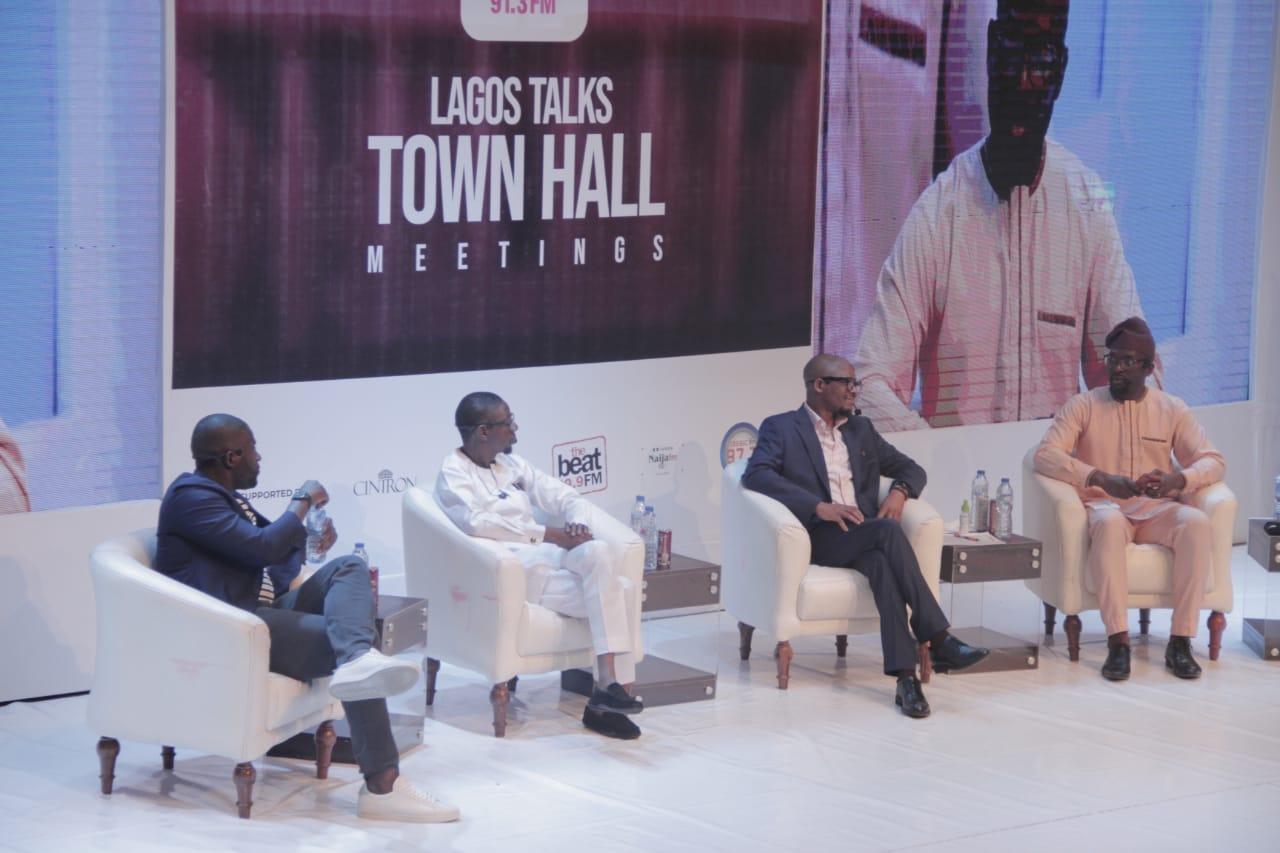
A leading talk radio, Lagos Talks 91.3FM organised the first in a series of Town Hall meetings.
The symposium, which served as a bridge between the citizens and their political leaders aimed at providing a neutral ground where developmental issues could be discussed and it did live up to its expectations.
Lagos Talks believes that the business of radio, particularly talk radio has evolved from the strict structure of reporting, research and investigative journalism to include the proper application of the research findings.
The “town hall meetings” is a direct response to its research findings, which divulge the poor education of the intending voter, the disinterest of the majority of the population in politics, particularly the youth and the lack of trust between the political leaders and an average Nigerian citizen.
The “Town Hall meetings” is an initiative of Lagos Talks 91.3FM and this emphasises the commitment of the station to influence socio-economic development and proper electoral/political education of the average citizen.
The first edition of the Town Hall meetings was held at the Muson Centre and it focused on the Ikoyi-Obalende Local Council Development Area, LCDA.
Major political leaders with influence over the developmental activities of the LCDA took part in the panel session.
They include His Excellency Fuad Atanda-Lawal, Executive Chairman Ikoyi Obalende LCDA and Hon. Gbolahan Olusegun Yishawu, member Lagos House of Assembly, Eti-Osa constituency II.
A member of the Civil Society and Founder Electoral College, Nigeria, Mr Kunle Lawal was equally a member of the three-man panel, which engaged with the audience and responded to questions.
Giving a narrative of the journey of Lagos Talks, the MD, Mr Chris Ubosi says, “we started Lagos Talks 6 years ago with the promise to engage our listeners, engage our constituency, engage our stakeholders in a conversation.”
“We want to create a platform where politicians and citizens can have an honest unbiased conversation about our local government areas, our LCDAs to create a platform for an honest exchange of ideas. We the people Want results. The government need all the honest feedback they can get.”
“Lagos Town Hall meetings is one which we intend to do every quarter.”
The members of the discussion panel and the special guests all agreed that the Town Hall meeting was a necessary inclusion to the polity, particularly one that is organised by a neutral force such as Lagos Talks being that it would engender trust, particularly among the citizenry.
According to Dede Kadiri, Executive Secretary Lagos Civil Society Partnership, “change begins to happen when people start to speak together and start to move together because of their conversation to one direction and one vision.
Expressing her excitement about the event, she says it is important for people to come together and work together for the development of the nation.
A frontline member of the civil society and Founder of Lagos Island Connect, Ms Yemisi Ransome-Kuti described the Town Hall meeting as “a very critical exercise you are embarking on.”
While presenting a paper on “the role of local government in nation-building rights and responsibilities of citizens,” she says, “the cycle of life happens at our local government.
“The local government is the most critical level of government. This is where we all live; in families, in our communities, where we school, work and have babies. It’s where we get sick; enjoy ourselves; party; go to various recreational spots. This is where we sleep and this is where we die. Everybody dies in one local government. So, governance at that level should be strengthened to deliver the needs in that domain.”
She encouraged residents within a local government area to engage in participatory citizenship by working collectively to grow businesses and improve livelihoods.
She also introduced the “2-kilo meters rule.”
This means that every individual’s need must first be sought within 2-kilometres of your residence before moving farther, which she says, will “promote the local economy.”
“Pay 90% of our attention to what happens in your local government.”
She called on local governments to work on the ease of doing businesses by eliminating multiple taxes.
“The local government must provide an environment where our businesses strive and we must hold each other accountable.”
She further asked the youth to get involved in governance and community building and “start your community talks” because the “youth hold power to national redemption.”
Energetic Lagos Talks in-house analyst and co-host on Morning Digest, Adeniyi Kunu challenged the government to review the content of the school curriculum.
He says the nature of education does not encourage interest in political decisions
“It has become very important to create a connection and review as a matter of importance, the kind of knowledge we give our students.
“We have an educational structure that doesn’t make these students appreciate the currency of events and therefore doesn’t make them want to know the person that leads them, especially at the level of local government.
.
He stated that help will not come from anywhere else except Nigerians therefore, “today and beyond today, one thing is very key, you have to reinvent your passion and love for this country.”
During their presentation, the panellists addressed different topics.
Speaking on the topic of “holding our elected public officers accountable,” Mr Kunle Lawal had asked for a distinction between politics and governance.
“Political parties are a vehicle to the office and nothing more. Every seat is guaranteed by the constitution of the federal republic of Nigeria.
Encouraged Nigerians to read the constitution saying though “it isn’t perfect, it is functional.”
“Anybody that tells you that the constitution of Nigeria is useless hasn’t read the constitution. I wouldn’t say it’s perfect because it could be better, it could be updated, and we could have better laws. Is it implemented to 100%? (I can tell you that) it is not even implemented to 40%. Nigeria has more anti-corruption laws than any other country. Yet!!!”
He described the local government as “the most important part of governance.
The first handshake of democracy from the centre to the people in the local government.
“Most people don’t aspire for this (elective positions within the local governments) because it’s too low. If you can’t effect change in your local government, nothing will happen.
“How do you explain less than 10% of the voting population participating in local government elections? Poor political literacy is a very serious problem in Nigeria, and because of that people are not concerned. You are not a delegate; you cannot alter what will happen in the primaries.”
Mr Fuad Atanda-Lawal Executive Chairman Ikoyi-Obalende LCDA in his remarks gave an account of his stewardship over the past 5 years.
He explained why he had to focus more on Obalende than other areas/wards within the local government area.
“The people of Obalende have been marginalised for a very long time.
Obalende was without street lights for 22 years.”
“When we came in in 2017, I can tell you that there were only two roads that were motorable in Obalende. As I speak to you, over 80% of roads in Obalende are motorable.”
Addressing the question of bridging the communication gap between the governed and the government, he says the local government has the responsibility to communicate the responsibilities of the local government as enshrined in section 7 of the constitution.
He said he interacts with each ward of his local government based on “needs assessment.”
Hon. Gbolahan Yishawu in his contribution addressed the separation of power and the responsibility of each arm of government.
“The Chairman is an Executive Chairman, he executes, we are lawmakers, we can oversight them. We can also do some level of representation.”
Narrowing down on the theme, “Closing the Gap Between the Governed and the Government,” he says the governed need the government and the government needs the governed.
“Why should we even be closing a gap, when as government, we are not thereby our desire, you put us there as your representative. So, each time we speak, each time we talk, we should be talking about your needs and your desire.”
He further commended Lagos Talks for the decision to organise such an event and more so, the theme for the event.
“I would like to commend you because right now, everybody is jostling about elections, but you choose to talk about what is important to the community. You have put the people that matter here.”
During the panel discussion, Folarin “falz the bad guy” Falana queried the vetting process of the Lagos State 2022 budget.
In his response, Hon. Gbolahan Yishawu explained the process stating that lawmakers had the right according to the law to infuse additional projects into the appropriation bill presented by the Executive.
He further said that the projects, which were infused including additional funding for the blue and rail line were for the benefit of the people.
In attendance at the Town Hall meeting were Market Women Associations, students of Holy Child School, Kings College and Aunty Ayo schools; legal practitioners, CSOs etc.
The highlight of the event was when the Executive Chairman offered an 11-year unemployed graduate of Mechanical Engineering an on-the-spot job offer.
Disclaimer
Comments expressed here do not reflect the opinions of Vanguard newspapers or any employee thereof.