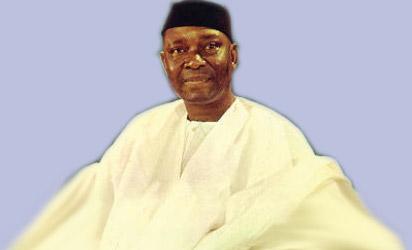
Late Dr. Nnamdi-Azikiwe
By Prisca Sam-Duru
The same issue of marginalisation of a particular section of the country which late Nationalist, Dr Nnamdi Azikiwe struggled so hard to address, for a united Nigeria, is regrettably, still tearing the fabrics of the polity. Factors such as inequality and injustice that ruled during his era, sadly, resonate in Nigeria’s political space till date, thereby, hindering the development of the country.
This is evident even in today’s politics as we see the two major political parties in Nigeria- APC and PDP, playing hide and seek with where to zone their presidency, which clearly indicates their unwillingness to allow a particular zone smell the number one seat of power in 2023.
Dr Nnamdi Benjamin Azikiwe, first President of Nigeria (1960-1966), passed away on May 11, 1996, at the ripe age of 91. Nine months before his demise, Zik of Africa as he was fondly called, granted an interview at Lincoln University, Pennsylvania, USA, in the summer of 1995, with Dr Funsho Oluyitan, Director of Public Relations of the University.
Zik’s ideology of non violent change and equal rights of humans, began taking shape as early as 1925.
“When I arrived in United States in 1925, I was not qualified to enter any university. As a matter of fact, I was studying for my London Matriculation. At that time, I got through Western Boys High School, now Methodist Boys High School. And the higher class there was for Junior Cambridge.
So I entered Storer College which was a junior college and I took certain courses, one in particular was American history. Before then I never studied American history, I studied English history. So when I took these courses, I studied the causes of the civil war 1861 – 1865 or thereabout. And when Abraham Lincoln was president, I read most of his speeches and his writings and he kept on speaking of equality of the human race, equality of Americans, and that the American constitution was made to apply to all citizens irrespective of their status, language, their race or their culture”, he told Dr Oluyitan.
He continued with the story of how the ideals of President Abraham Lincoln shaped his life. “Well, then I was 21 and young but these made an impression in me and I said well, if I were able to get through, and obtain admission into any university, that a person like Lincoln would help me because I realised that my country was then a colony and I wanted that country, Nigeria to be free but I did not want any revolution or bloodshed. I said it has never helped any country in history and I don’t see why it should. As a young man my knowledge of history was limited but I became a voracious reader of anything about Abraham Lincoln.
I kept that in mind but I had to face the fact that I came to United States to work my way through college because I didn’t have sufficient fund.
“My father worked in the Nigerian Regiment as a first class clerk but when I worried him that I wanted to go abroad to study, he decided to retire, raise gratuity and gave the whole to me to pay my fare ticket, my first year at Storer College.
“I had to work at Storer College as a janitor, as a dish washer. I kept on and was able to appreciate what Lincoln meant when he preached about being a friend of a common man. I also worked in the college farm; we had a horse and one of the ministers of the gospel was the head farmer, and he taught me how to handle the horse to plough.
So I said well Abraham Lincoln must have suffered a lot because he worked his way through school. And he came from parents who were not very wealthy but I kept that in the background and paid attention to my studies. I wanted to know more about this man that a university was named after him. I was looking for a university to attend but I hadn’t the funds so I remained in Storer College. I enrolled there in September 1925. And in 1926 I finished my college and high school course and I continued because of lack of funds”.
During his first year in the university, Zik said he took more courses on Abraham Lincoln and in one of these courses, he read about Lincoln’s role in the establishment of a kind of government; government of the people, for the people, by the people. “Well that impressed me a lot and I said, that is democracy. Well, not at home; we have a government of the people for the people by the colonial masters; colonial rulers. I said that will change; not by me alone but by society as a whole. But this is a means of obtaining knowledge. And if I went to a university which was named after Lincoln, I might learn more because that university would try to practice the ideas of Abraham Lincoln.
“In June 1927, a friend of mine, took me to Pittsburgh to work. I got a job in one of the restaurants there, I worked as a dish washer, and it paid because as a dishwasher, I had to clear dishes and whatever that was left, that was good, I ate. And whatever that was left in the kitchen, we all helped ourselves. I found out that there was international community there – Honduras, others from different parts of Latin America but very few from Africa.
I stayed there for a while. Later, there was a time they said miners were on strike, that foreigners were required to fill their posts, so I went there. After two days, we were shocked when we came to work and we were faced with what I call firing squad. They said we were strike breakers, that we came to take their jobs from them and that they were going to shoot us. I raised my hands and said that I came all the way from Africa as a student working my way through college. They spared us and so we took our pay and resigned”.
In addition to enduring hardship, Dr Azikiwe also had his host country’s immigration to contend with. “One day I was invited by immigration authorities, I was reminded that I entered United States as a student. I told them that I was on holiday and just wanted to keep myself busy and also I had no money to go to school. So they said as soon as the first term opened, you should be in school otherwise, you’d be deported. “So, I went to Howard and registered there with hope to go to Lincoln at the first opportunity. When I finished a year in Howard, I applied to Lincoln. They asked me why I didn’t want to graduate in Howard, I said well, I have every respect for Howard but Howard was named after Gen. OO Howard who was one of the leaders of the federal troops during American Civil War. But that Lincoln was named after someone not only the president of the United States but someone who spoke a lot, wrote a lot about the equality of the human race and also did everything to show that no job is so inferior that one cannot do and pointed out that no matter how poor you are, if you are willing to work, and there’s work to be done, you should do it and also save some money. I believed the university would put into practice the ideas of the great leader. So I was so happy and was admitted.
“Many years after, the ideals of Lincoln persisted in me and I kept watching and I noticed that the presidents take the personal interest of the students and did all they could to help. So I said, a thing like this is required in my country and if am able to play my own role, I would carry it out there and see what could be done to have another Lincoln in Nigeria”.
Zik further shared how Lincoln prepared him for life of service for humanity. And not long after his graduation from Lincoln in 1930, Kwame Nkrumah of Ghana came to the University to continue in Zik’s footsteps. Check out how Zik influenced Nkrumah’s decision to go to Lincoln.
“When I finished, I decided to go home and join the struggle. I couldn’t get a job in Nigeria but I got in Ghana. I was offered 15 pounds a month. In those days, that meant a lot. As I started the African Morning Post in 1934, one day, I was told that a young man wanted to see me; he was not called Kwame Nkrumah then, he was Kofi Kwaya, he said he wanted to study and he heard me deliver a lecture and that whether he had money or not, if he had a way or power to study, he would go to America, that he will find an opportunity to work but must not distinguish between what he wanted to do. I told him that I was a labourer for many years in America and that it made no difference to my intellectual achievements, that it helped because it gave me experience to deal with people who were poor or in the lower segment of society. So, I told him if you can do that, you have an opportunity.
He said how? I said you apply. If you apply then they’ll consider your qualification, if you are not qualified they’ll ask you to take what is equivalent to matriculation. If you finish that, then you can enter. So, he had the equivalent; he applied to Lincoln for admission and Lincoln replied. So he came to my office two months later full of joy that he had been admitted as a student at Lincoln. I said, accept my congratulations and that I hope you would go there, study and work; you can do any kind of work- labourer, but be ready to work as a dishwasher and then, spend less on what you eat. Because so many students who worked in the kitchen, had a lot to eat so they didn’t bother spending money in restaurants.
”In 1935, he went to Lincoln and graduated in 1939. So that’s what brought Kwame and I together. When he returned, he came to Nigeria to visit me. I was the Premier of the Eastern region. When he started his nationalist movement in Ghana, he invited me to come over and witness one of their programmes. I went there and advised him that look, what you are trying to do now, may lead to bloodshed.
He said yes, unless you fight and kill, you’ll not succeed, so I said no. Did Ghandi kill anybody, did Nehru kill anybody? He said if you don’t do that, they’ll kill you, that where is Ghandi? I said but Nehru continued and became the first Prime Minister of an independent India. But unfortunately, factors of division entered and we have Pakistan which later experienced the same thing. I made it clear to Nkrumah that we should not use force even though they may laugh at us”.
Zik of Africa further narrated how the use of dialogue helped in attaining independence from the British.
“We had to use dialogue in Nigeria, we knew that we had many soldiers of Nigeria origin, but they were inferior. In those days, the highest you could get was Sergeant Major. I said but by having dialogue with the British, we would not shed blood and we would not force the British to shoot at us. So, I got some friends in the Labour Party and that’s why during the assassination story days, they raised the question in Parliament and forced the colonial office to make a public denial that made it impossible for the government in Nigeria to carry out this sinister plan. They wanted them to have me assassinated during the general strike of 1945 when we were fighting for independence. These are some of the factors which made me and Nkrumah to play very important part in Ghana and Nigeria”.
65 years after he left Lincoln as class of ‘30, before his death, the ideals of Abraham Lincoln motivated Zik to also send his children and grand children to Lincoln University. He explained that, “Lincoln University carries the ideals of Abraham Lincoln. I told them our country is in need of the leadership of that type, because we fought for independence, we got it but after 34 years of independence, we found out that it was only nine or eight years that the civilian sector of the population ruled.
The rest was manipulated by the military. Well we want to change it but it was impossible for us to do so because we were not armed and even if we were armed, of what purpose will it be to kill each other. We asked the British to go; we didn’t fight them; we had dialogue with them.
So when they study in Lincoln, it’s to come back and make Nigeria a better place; let’s have a government of the people, for the people and by the people and not for a particular sector of the people. No particular group in Nigeria should dominate our political scene simply because they have control of the armed forces. It’s as simple as that. I thought that if Lincoln could help me realise that it is worthless shedding blood, why should my children, and grand children encourage shedding of blood. It leads to nowhere. But we can use dialogue, and apply the ideals and ideas of Abraham Lincoln”.
Disclaimer
Comments expressed here do not reflect the opinions of Vanguard newspapers or any employee thereof.