Nigeria needs not to panic over wheat importation, others-Ijewere
By Gabriel Ewepu – Abuja
Following the drive to change the narrative in agriculture and agribusiness, two giants in the agricultural sector, Nigeria Agribusiness Group, NABG, and International Institute for Tropical Agriculture, IITA, resolved to practically disseminate research solutions and technology to boast agribusiness.
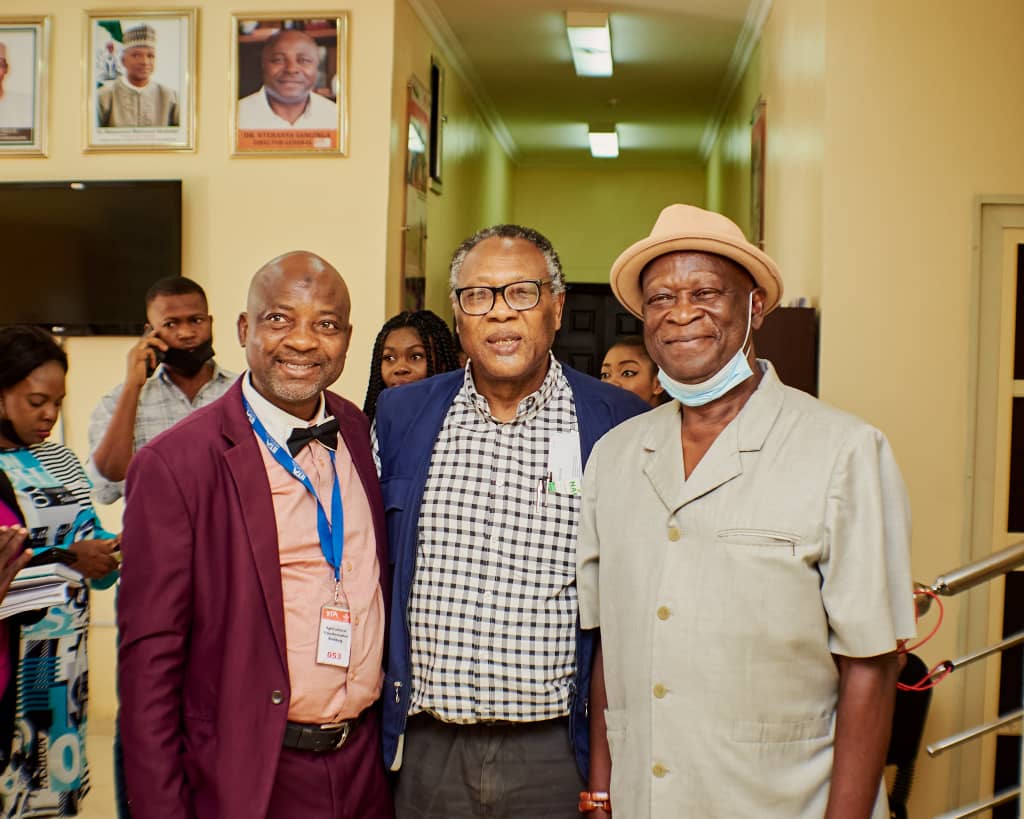
Speaking with journalists, during a courtesy visit by NABG to IITA Abuja Station, the President, NABG, Emmanuel Ijewere, explained the essence NABG is partnering with IITA to galvanize agribusiness towards improving farmers’ productivity including other stakeholders on various agricultural value chains.
According to Ijewere, the knowledge IITA has brought will be made available to farmers as NABG will continue to take advice from IITA.
READ ALSO: IITA expresses worry over poor performing seeds in Cassava production
He said: “The essence of the partnership is whatever is good should not be kept in the drawer or in secret, it must be brought out to people to improve their lives, and IITA has been in Nigeria for many years and has done many research works that have improved the agricultural space and have so may potentials but unfortunately, those who supposed to benefit from it don’t know so much about it because the more you the more you ask.
“NABG being a private sector organization now said everybody who is a member of NABG must be a millionaire giving the fact that we have over 200 million people so we ran to our brothers in IITA, and saying to them that all those things you have discovered over the years tell us about them let us see how we can make money from it.
“Working with them closely we intend to translate what the research work has produced.”
Speaking on how to sensitize farmers about the research solutions and technology, he said NAGB will change farmers’ psyche as they will be put in clusters at the local government level, and to achieve this NABG will work with them.
However, speaking on the fears and fall-outs of the ongoing raging Russia-Ukraine War on negatively impacting food importation, particularly wheat, he (Ijewere) said, “A lot have been done if as if we were anticipating things like this. Ukraine and Russia’s War, the major effect they will have is on wheat in Nigeria.
“As far as wheat is concerned so much work has gone over the years that wheat we thought over 20 years ago cannot be grown in a tropical country.
“We now have tropical wheat, and we now have organizations like flour mills are already training farmers to do it. So what we are saying is this, Nigeria was not asleep, is not that we did not wake up well enough, now this will help us wake up with a lot more open eyes to do those.
“But as right now we have been working on it, we just fast track what we are doing. So wheat is the biggest one, Russia the biggest exporter of wheat in the world, and Ukraine is number five, put those two together is about one quarter of the world’s wheat.
But Nigeria fortunately, has not been importing wheat from there so Nigeria needs not to panic at all.
We already know where we import our wheat from other parts of the world.”
He also added that, “More importantly, we are going to outgrowing our own, teaching farmers improving their lot that is where people are so important to us.”
Also speaking was the Head of Station, IITA, Abuja, Prof Lateef Sanni, said the partnership between the Institute and NABG became imperative, because of the current crisis in the world including COVID-19 pandemic, Ukraine-Russia crisis, global recession that have already caused scarcity of commodities, which is going to affect food security.
“So, the fact is how do we have local production to some of those shortfalls? For instance, we take about 11% of wheat from Russia and Ukraine together as a nation and our annual demand is 6 million metric tonnes, and today, CBN has supported 8000 metric tonnes out of that, and look at the huge gap.
“Two, Soyabean, majority, which more 40-55 per cent comes from Ukraine and Russia, and fertilizer, especially, potash and phosphate comes from Russia. So the essence here is to do wrap up production.
IITA over the years have developed modern best bets technologies and practices that we can actually scale up.
“So, now interacting with Nigeria Agribusiness Group is to be able to work together and synergize actions, strategies for us to be able to scale up and reach millions of smallholder farmers, and these are the three key points that were said today why we are interacting with ourselves”, Sanni said.
Meanwhile, Director, Development and Delivery, IITA, Dr Alfred Dixon, expressed confidence in NABG’s capacity to take the nation’s agribusiness to greater heights through the Memorandum of Understanding, MoU, it has signed with IITA.
“I believe in NABG that they can make things happen and become a powerful voice and lobby for Nigeria to promote agricultural transformation and that is why we are partnering with NABG.
“The MoU is to ensure we work with NABG to catalyse scaling of agricultural technologies in Nigeria such that Nigeria can yearly achieve agricultural transformation given the pandemic that hit us and we are recovering from it with global climate change that has come up with so many other things like pests and diseases, and like the crisis in Ukraine and Russia.
“Africa imports $35 billion worth of food and if nothing is done about it by 2025 we will be importing $110 billion, and Nigeria is a major contributing factor to that importation because of the population, and so when we do that we are actually exporting our jobs, jobs we need to produce in this country rather we are exporting to other countries. We are not helping ourselves. We must use what we have to get what we want. So we must turn our backs to things happening in the world now to serious local production”, Dixon said.
On the off-take of technology, he said, “The reason has been the dwindling nature of extension services. Before, when there was the World Bank funded programme that created the ADPs extension was very effective in Nigeria and was boosting production, but after that it began to dwindle down.
“Just like many other countries in Africa, the country has not been able to support that effective extension service we used to have before because we are looking at the pluralistic extension service-government and private, all provide extension service and if we can all work with those people disseminating technologies I think Nigeria will get to where it was before. I am happy with the pluralistic extension services.”
Disclaimer
Comments expressed here do not reflect the opinions of Vanguard newspapers or any employee thereof.