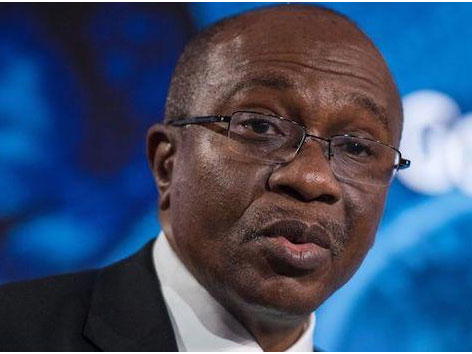
Although the Central Bank of Nigeria (CBN) is not directly involved in the country’s defence and security activities, the Bank, under its current governor, Godwin Emefiele, has been at the forefront of the significant amount of resources so far expended to push back violent extremism and other forms of criminalities in Nigeria.
Indeed, Nigeria has been spending scarce foreign exchange to procure military equipment and hardware for the fight against insecurity. Yet, it’s concerning that in the 2020 Global Terrorism Index released late last year, the country still remained in the third spot, the fifth time in a row since 2015.
From 2015 to date, security budgets have been on the increase just as total national budgets increased. The funding covers the main security agencies, including the army, air force and the navy, the intelligence agencies as well as the Interior Ministry, which is in charge of homeland security, including the Nigerian Police Force.
Checks from the Budget Office of the Federation and at the Office of the Accountant-General of the Federation (OAGF) showed a consistent record of full release and cash-backed allocations to the agencies domiciled in the Ministry of Defence, Interior and ONSA throughout the period under review.
This takes considerable and deliberate effort by Emefiele’s CBN, because the apex bank has to constantly, continuously and creatively source the very scarce foreign exchange required for the procurement of military equipment and hardware.
There are at least five major components of modern national security – the collective ability of a country to protect its people, interests, values and critical infrastructure; grow and develop its economy; prepare and respond to natural disasters, environmental degradation and climate change; provide food security; and secure its digital footprint against cyber attacks.
Perhaps, the area that has received Emefiele’s most direct intervention among these components is food security.
Making the connection between food security and national security shouldn’t be hard really.
Nigeria’s National Security Strategy (NSS, 2019) captures the essence of both the rationale behind connecting food security to national security and policy thrusts intended to be deployed to attain sustainable access to affordable and nutritious food.
“We recognise our farmers as the bedrock of this strategy, hence we will prioritise a range of measures to enhance their productivity. We have one of the most conducive environments for food production. With the drastic reduction in food importation, we will continue to develop our agricultural potentials to attain self-sufficiency in food production as well as exportation. We will also endeavour to overcome further challenges such as climate change, land conflict, land degradation, rapid urbanisation and insurgency,” the document states.
In this context, it becomes clearer why the CBN, under the leadership of its current governor, is investing in interventions that are boosting local production of agricultural products and enhancing food security. For instance, under the Anchor Borrowers’ Programme (ABP), the CBN has financed 4.5 million farmers that have cultivated 5.3 million hectares across 21 commodities through 23 Participating Financial Institutions in the 36 States of the federation and FCT. Even critics acknowledge the fact that progress has been made in this direction.
Another component of national security where Emefiele’s CBN has been actively involved is the area of cyber security.
Sensing that Nigeria could be a victim of its own success with the steady adoption of the electronic payments system channels, the CBN, under Emefiele, started making concerted efforts in ensuring that the financial sector is in line with global trends in e-payment development with the view to ensuring efficiency in the system as well as customer satisfaction.
However, the adoption of the e-payment channels as a preferred channel of payment increases the incidence of electronic fraud and cyber security threat.
This has led to the setting up of the Nigeria Electronic Fraud Forum (NeFF). The forum consists of all relevant stakeholders on cyber security issues charged with the responsibility to actively and proactively react to this challenge to safeguard integrity of the e-payment channels. Chaired by the CBN, the forum’s membership includes ONSA, the Economic and Financial Crimes Commission (EFCC), Electronic Payments Providers Association of Nigeria (EPPAN) among others.
In fact, the recent ban on cryptocurrency by the CBN, which also culminated in the creation of Nigeria’s own digital currency – e-Naira – was backed by intelligence that terrorists, their promoters and other criminals were exploiting the lack of third-party regulation of digital currencies to fund terror-related activities in Nigeria.
There is also the threat of ransomware attacks, which have increasingly targeted businesses and companies, disrupting the flow of production and services and demanding payments in the form of, wait for it, cryptocurrency!
All these point to the fact that, even in an area of perceived limited know-how, Emefiele has shown deft understanding of the country’s overall national security goals.
Disclaimer
Comments expressed here do not reflect the opinions of Vanguard newspapers or any employee thereof.