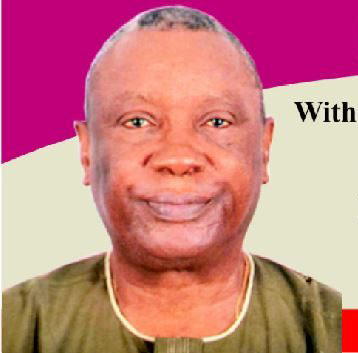
TILL he died on December 9, 2009, Dr. Ibrahim Tahir held the title of Talba Bauchi. It is not the title he is remembered for but his intellectual contributions on events and issues. Tall, big and imposing just like his cerebral ideas, he was outstanding and brilliant.
I used to read his articles in The New Nigerian Newspapers before 1975 when he became a member of the Constitutional Drafting Committee. Dr. Tahir was then a Senior lecturer at the Ahmadu Bello University, Zaria.
In the Constitution Drafting Committee, he was a member of the sub-committee on the judicial system headed by Alhaji Nuhu Bamali, who was once Nigerian Foreign Minister. Other members of the sub-committee at that time were Chief Richard Osuolale Abimbola Akinjide, who later became Nigeria’s Minister of Justice, Mr. Paul R.V. Belabo, legal adviser to the New Nigerian Development Company in Kaduna, Alhaji S.M. Liberty, the then Attorney General of Borno State and Professor Obaro Ikime, then Professor of History and Head of Institute of African Studies, University of Ibadan.
I formed a cordial relationship with Dr. Tahir, when he represented Bauchi/Alkaleri in the Constituent Assembly in 1977. Dr. Tahir was an orator and gifted in the delivery of ideas. If you knew him closely, you would never get tired of listening to him. On December 14, 1977, he addressed the Constituent Assembly on the need to return to Parliamentary System of Government. Now that we are discussing on the amendment of the 1999 Constitution, his views of 1977 are still very relevant.
He declared on that day “Mr Chairman, Sir, this is a Debate on the principles of the Draft Constitution and the Decree establishing the Constituent Assembly empowers this House to take whatever decision it likes on the future constitutional form and structure of this country. I am saying this, Mr. Chairman, in preamble because I would like to draw the attention of the House to the first principle of all.
“I believe that until the representatives of the people decide in favour one way or the other, the 1963 Constitution still remains the only legitimate Constitution of Nigeria. By extension, I would also like to remind the honourable members of this house about the issue of constitutionalism itself.
I am saying this, Mr Chairman, because it seems that we are likely to forget that the major and the most fundamental principles of Constitutionalism in all free democratic societies such as we are privileged to be, there can be only one source and one source only for the Constitution of the country; and, that source must be the will of the people, either directly expressed by themselves in a referendum or through their freely elected representatives.
I have no doubt, Mr. Chairman, that we are that group of men who are the elected representatives of the people and, therefore, we should shirk no responsibility whatsoever in saying whatever has to be said in order to keep with the spirit of the Administration itself…that the buck in Nigerian political history must stop somewhere.
Turning now to the main theme of my discussion which is still the fundamental principles and that is the theme of this debate of the Draft Constitution; I am happy to note as a member of the CDC that whatever else may or may not have occurred, the fundamental features except one, of this Draft Constitution, are in keeping with the 1963 Constitution.
“We are committed to unity as such there is no secession clause but regrettably somebody has asked for one. We are committed to the recognition of the fact that we are a plural society and on this basis we are committed to Federalism. We are committed to equality before the law, justice and most important of all, we are committed to freedom. The major features of the Draft Constitution, Sir, elaborates on this and other principles in the 1963 Constitution except one.
“Mr Chairman, I would like to submit that when the time comes there are particular clauses in the general features of the Constitution over which I would like to see some further modification. I will not tarry further but will proceed to my main business. Mr. Chairman, Sir, I would like to follow the Draft Constitution as it is presented.
“I would like first to take the two chapters which are of general importance and which relate to Fundamental Objectives and Directive Principles of State Policy and Fundamental Human Rights. I have followed the debates on them. The issues appear to be reduced to whether they are justiciable and whether justiciable or not, they do not provide the basis for future instability and unnecessary political wrangling.
“Finally, whether or not it is realistic to expect any government anywhere in the world to meet those objectives without jeopardising other fundamental things; I believe, Sir, that the issue really is that there are two fundamentals which are in conflict. If you have Fundamental Objectives and Directive Principles of State Policy you can not presume a multi-party democratic society.
“If you have Fundamental Objectives and Directive Principles which are taken as given and binding, you cannot also have a chapter on Fundamental human rights because subjects on which Fundamental Objectives and Directive Principles on State Policy refer are also subjects which fundamental human rights deal with. If you have a free multi-party political system, then in my view this House ought not to consider resolving this particular issue(to be continued).
Disclaimer
Comments expressed here do not reflect the opinions of Vanguard newspapers or any employee thereof.