By Sola Ogundipe
At the beginning of the new year, the Director-General of the World Health Organisation, Dr Tedros Adhanom Ghebreyesus noted that he remains optimistic that 2022 can be the year that the world can not only end the acute stage of the COVID-19 pandemic, but chart a path to stronger health security.
While a number of people share the WHO Director-General’s optimism, there are several others who do not.
Someone was even quoted as saying that the idea that COVID-19 can be totally eliminated is fantasy.
Can it be inferred from this that the world should be prepared to live with the disease for as long as it is going to take?
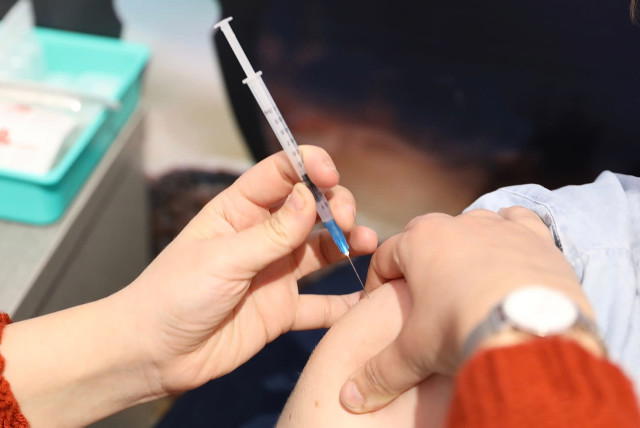
Barely a year ago, COVID-19 vaccines were hardly known, but today they are a household name an estimated nine billion vaccine doses have been administered to around 4.5 billion people across the world.
While vaccines have had a huge impact on averting deaths and helping countries return to normal, there are still problems.
In countries with high coverage, infections have been checked and deaths reduced so that even with new surges of infection, deaths have stayed low.
The speed of the development of the vaccines has been an issue perhaps because no vaccines in history have been developed so fast. But the bigger controversy is that vaccine doses have not been equitably distributed.
Some countries have more than enough while others do not have enough.
According to data presented by Our World In Data as of Sunday January 2, 2022, 58.3 percent of the world population had received at least one dose of a COVID-19 vaccine.
From the data, only 8.5 percent of people in low-income countries had received at least one dose.
Further, the data showed that 9.21 billion vaccine doses had been administered globally, and that 29.17 million doses were being administered daily.
According to Nature, the story of COVID vaccines is that of the haves and have-nots and the roll-out has been anything but equitable.
READ ALSO: U.S Govt promises more 18m doses of COVID-19 vaccine for Nigeria
In the world’s most-vaccinated nations, more than doses have been administered per 100 people while the opposite is the cases in the lower income countries.
Vaccine inequity has persisted. It was expected that poorer nations would get increased supplies once demand began to fall in wealthy nations, but most of them are now administering boosters. This, combined with the fact that many countries are stockpiling doses, could be contributing to a lack of access to those who really need them.
The availability or non-availability of COVID-19 vaccines was the hallmark of 2021 and the major determinat of whether the race is being won or lost.
Experts have commonly cited increasing immunity through vaccinations as one way to bring an end to the pandemic.
According to an infectious disease specialist, while people can still get the virus itself, even with vaccines and boosters, the disease is vastly mitigated once a person is fully vaccinated.
However, even with booster campaigns well underway in most countries, the fact that there are millions of people around the world yet to receive their first dose, remains worrisome.
No doubt boosters will make a big difference with Omicron in particular in preventing infection, however, it is not likely, on the long run, to solve the problem the unvaccinated.
In many ways, 2020 and 2021 can be tagged the years of COVID-19 vaccines and COVID-19 variants.
Three COVID-19 mutant viruses were isolated and tagged “variants of concern” in late 2020 and early 2021, now called Alpha, Beta and Gamma.
They seemed to spread faster than earlier circulating viral lineages, and scientists worried that these variants might also blunt the effectiveness of vaccines. Then came the Delta variant, and the latest – the rampaging Omicron variant.
As scientists race to determine how different vaccines will hold up against the fast-spreading Omicron and other variants, the realisation that a booster is needed for increased protection against becoming infected is cold comfort.
It is expected that vaccines will continue to prevent severe disease caused by variants, but to what extent is not yet clear.
Disclaimer
Comments expressed here do not reflect the opinions of Vanguard newspapers or any employee thereof.