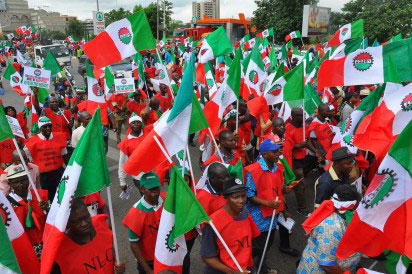
Labour
*Say National Water Bill is anti-people, ‘ll worsen citizens’ poverty level
By Victor Ahiuma-Young
Organised Labour, Civil Society Organisations, CSOs, and Public Service International, PSI, Tuesday rejected federal and state governments planned privatization of portable water supply in the country.Briefing in Lagos, National Union of Electricity Employees, NUEE, Amalgamated Union of Public Corporations, Civil Service Technical and Recreational Services Employees, AUPCTRE, Corporate Accountability & Public Participation Africa, CAPPA and PSI, an umbrella body for public service sector unions across the globe rallied Nigerians to oppose the National Water Bill, NWB, claiming the Bill “is anti-people and will make portable inaccessible to most Nigerians.”
At a joint news briefing, they advised Nigerians to take a cue from the privatization of electricity supply eight years ago but had failed to improve power supply while consumers had been over-burdened with crazy bills for darkness.
Speaking, General Secretary of AUPCTRE, Sikiru Waheed, said the best option was Public, Public Participation, PPP, insisting that “access to safe and adequate water is crucial to the quality of life of the citizenry. Privatisation will price water above the reach of the poor. Privatisation will lead to job losses to privatisers who are only interested in maximising profits. Cities that privatised water are now reversing their decisions and reversing the exercise. From Buenos Aires to Manila, Paris and across the globe the story is the same. This is exactly the reason we do not want Nigeria to take that path.”
Waheed lamented that “we have equally observed that some states are still bent on privatising their water resources. Of particular concern is the report we are getting from Lagos, Ekiti, Plateau, Bayelsa and Abuja, the federal capital territory. We implore Governments in Nigeria to develop the political will and swing into action in order to improve water infrastructure for regular water supply to the citizens.
“Also, privatisation should not be seen as the only option for reviving water facilities across the country. Policies makers are therefore advised to embrace democratic control of water that is environmentally sustainable and provide decent work as the true representatives of the people.”
Earlier, President of NUEE, Engr. Martine Uzoegwu, among others, contended that the government mantra was that the private sector would provide infrastructure and utilities more effectively and attract investment, declaring that the privatization of the electricity would address “Grid energy insufficiency and instability, network infrastructure challenges (overloaded transformers and feeders, obsolete equipment, limited network, lack of automation, etc), Gas limitation to the generation companies, annual water shortages at the hydro-generation station.
“The government also said privatization would address metering challenges (huge metering gap of over 6,000,000, estimated billing, poor meter maintenance, etc), operational challenges (long feeders, quality of the workforce, large operational areas, etc), funding challenges (absence of long term “patient” capital (equity/debt) to fund investment, high cost of borrowing, poor history of DisCos, etc), Lack of investment/upgrade of equipment and facilities, lack of diversification to other forms of energy, health, safety, and environmental issues.”
He lamented that eight years after, “Tariffs have been increased three times now and the fourth is imminent. This continues to put additional burdens on Nigerians who do not actually enjoy adequate power supply. The only beneficiaries of this regime are generator importers who continue to have a field day.”
Representative of PSI, Abi Badru, said: “all over the world the issue of access to potable water is a fundamental right that has the backing of PSI and the global group will continue to support Nigerian public sector workers to ensure access to potable water is not priced out of the reach of the common man.”
Similarly, speaking on behalf of the CSOs, representative of CAPPA, Philips Japu, urged Nigerians to join forces to stop both the federal and state government from privatizing water supply, warning that “NWB, is anti-people, anti-poor and will worsen the poverty level across the country. Even the borehole in your houses will be taxed by the government once the National Water Bill sailed through.”
Disclaimer
Comments expressed here do not reflect the opinions of Vanguard newspapers or any employee thereof.