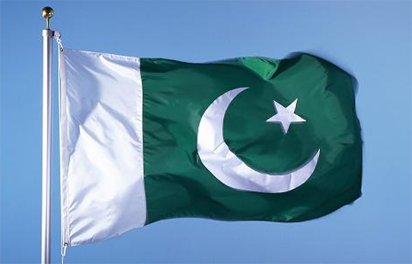
Pakistan
BY VICTORIA OJEME
Criticisms have come the way of the Islamic Republic of Pakistan for her part in the promotion of radicalisation and fundamentalism for personal gains.
The Islamic Republic of Pakistan, has been lambasted for its role in the promotion of radicalisation and using hard-line fundamentalists for its own interest.
Diplomats, politicians and experts who spoke at a two-day international conference on ‘Radicalization: Threats to the Architecture of Global Stability’ organised by IIM Rohtak in New Delhi, India, said the move by Pakistan posed a threat to regional peace and stability.
The Asian News International (ANI), reported that the conference had in attendance, speakers and delegates from over 25 countries.
In his remarks, Afghanistan Ambassador to India, Farid Mamundzay, stated that following the withdrawal of the United States troops from the Afghan territory, the Pakistani Army plundered away the arms and ammunition left behind by the United States Army.
“Hundreds of military vehicles with large quantities of arms and ammunition were taken away by the Pakistan Army to Sialkot and other places in Punjab, Pakistan where they manufacture their own military equipment,” Mamundzay said .
Mamundzay also said that taking a cursory look at the positive role played by India in rebuilding Afghanistan in the last two decades, it should be made part of the Troika constituted on Afghanistan-related issues.
The Afghan envoy further suggested that India should be allowed to form part of the deliberations of any international body put together in the handling of the issue of Afghanistan crises.
“India’s presence in the UN Security Council as a non permanent member will also benefit Afghanistan. Thus, the presence of India in the UN Security Council must continue,” Mamundzay also said.
Mamundzay however said the international community must exert pressure on the interim Taliban Government to prevent flagrant human rights violations and improvement of the status of women.
In his contribution, an eminent speaker on Bangladesh genocide, Dr Nuzhat Choudhury, said the radicalised groups operating in Afghanistan and beyond do not believe in the concept of nation-states or international boundaries.
Choudhury added that such challenges to the concept of the nation-state can cause instability in regions across the globe, as extremist ideologies do not respect national boundaries.
Choudhury concluded that there was a need for progressive Muslims to rise against Islamic radicalisation so that peace and calm can prevail in the Islamic world.
In his closing remarks, a Professor of Management and former Director of the Indian Institute of Management Rohtak, Prof Dheeraj Sharma, said it has become obvious that radicalisation has become a business for a few selected extremist groups, who were exploiting religion as a commodity for furthering their own propaganda.
Sharma added that the groups that have promoted the business of radicalisation have not taken into account the negative externalities of promoting radicalization, because of which the entire community has to bear the brunt.
Disclaimer
Comments expressed here do not reflect the opinions of Vanguard newspapers or any employee thereof.