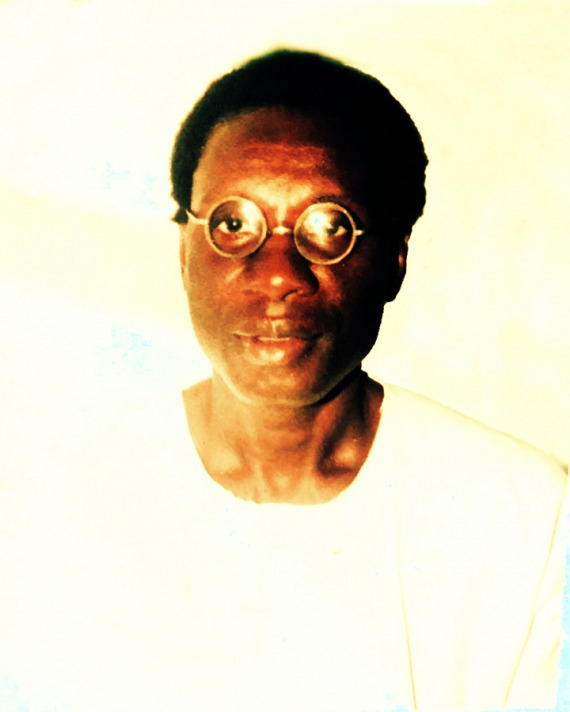
.
…how he lived gloriously but died in plane crash
By Kalu N. Kalu
It is today approximately twenty-five years from that day of November 7, 1996, that Claude Ake (born 1939) moved on to the great beyond, on that fateful day in the forsaken waters surrounding the outskirts of Lagos. A fallen hero, a genuine patriot, and an unusually self-effacing human being, Claude would be the last person to seek a eulogy on his behalf.
Knowing him that much, we might as well leave things to take their course. It is along this line that I have always resisted making a public commentary on a life despite all the frailties of human nature, was well worth living. Having known and met Claude variously gave me immense pleasure, but his reluctant departure continues to evoke harrowing memories.
I, among others earnestly looked up to him as a paternal figure and as a venerable mentor. The greatest thing we can do for Claude is to continue to remember him, not only in his own right as a supreme and respected scholar, but as someone whose works have been most instrumental in bringing indigenous African intellectualism into the international fora in a most profound way.
I have thought about this for some time. How best to leave a little token remembrance to a very good friend. But instead of professing him as a god, I have chosen to present Claude to you by way of a narrative. A narrative indeed as I came close to seeing it. However, it bears out to you, in whatever way it appeals to your inclinations, it is my earnest hope that you will be able to judge the personal side of the man with great admiration as well as hold him in dutiful memory for ages to come.
Even though he is gone, but yet, Claude remains with us by way of the literary legacy he left behind. His was an intellectual insurgency ahead of its time.
If we are told that the renown of great men would not survive their deaths but for the continued activity of their own souls in preserving their memory among us, how can we then dispute the fact that Claude’s soul continues unceasingly to cast its gaze on us? Giving style to one’s character – a great and rare art! Claude did it. A style exercised only by those who see all the strengths and weaknesses of their own natures and then comprehend them in an artistic plan until everything appears as art and reason and even weakness delights the eye, while the mundane which could not be removed is hidden, reinterpreted and made sublime.
Again, Claude epitomized it.
It was on a chilly September morning when I first met Claude outside of the building that housed the Department of Political Science at Yale. He had just arrived from Nigeria although I was already aware of his coming. Classes had already started at Yale for the semester before he arrived and this was due mainly not to his own fault. As fate would have it, it was Dr. Pierre Buyoya who was supposed to return to Yale for the second time in the Spring but when the Burundi coup took place, he was obligated to become President of his country and so he could not come. It was a frenzy as the Department’s administrative staff struggled frantically to get him properly situated.
As I approached Claude, he stretched out his hand and introduced himself. “I am Claude Ake,” he said. So humble, he never introduces himself with titled prefixes as most people with much less material than him are generally inclined to do. He simply introduced himself by his first name. I introduced myself equally in similar fashion. And all throughout, was a beaming and disarming smile which flashed across his face, the two front teeth shining as if they have just been polished by angels of the sun. Amidst the unbridled humility, it was a meeting of kindred spirits. We talked briefly and agreed to meet again later.
We could not see each other for a few days. It just happened that since it was the beginning of the semester, he was never in one place and so could not be reached quickly by phone. So about five days after our first meeting, I simply walked into his office and there he was, pondering over some articles and trying to get his Notebook computer connected to the system.
“Where have you been? I have been looking for you all this while?”
“I have also been looking for you, Chief,” I retorted.
And there was that disarming smile again. Well, we went over a couple of steps to get his system going, discussed other issues and I left for an appointment.
All this while, I was yet to make up my mind about this humble gentleman, and I was yet to be infected by the selfless zeal and simplicity of life which he always projects. You see, for some peculiar reasons and even without having known him, Claude is the sort of person you can never meet without liking him. I am delighted to say that I came to appreciate him very quickly. Three days later, I received his e-mail message. He had called and left a message in my mail box. I proceeded to see him. Two issues here, he will be travelling to Helsinki in two days to address a conference. He wanted to know if I would stand in and conduct his class for him during his few weeks’ absence. As he proceeded to retrieve a few of his materials, barely at the same time he also wanted to know when we can go to town to collect some essential amenities. We decided to do that on a Friday, but when I called up to inquire from him what time he wanted me to pick him up, he told me that he was in the downtown area and somehow happened to see some of those things and bought them.
I paused for a moment and said, “But Chief, those people will charge you much higher than if we had gone to some other places that I know in the New Haven area.”
Well, as he laughed it off, I kept wondering what the hurry was, and why he wouldn’t rest and let me handle some of these. It was finally that I came to realize from a former student of his at the University of Port Harcourt that Claude Ake never rests, and he was a man who in a way is given to a rare independence of spirit and action. It was vintage Claude.
Once in a while, I will step out toward Prospect Street and I will see Claude walking toward the downtown area. I will see him weave in and out of the sidewalk to avoid the pedestrians most of whom are students. As most of the students with their characteristic sternness (what the Brits call “stiff upper lip”) walk straight ahead unmindful of who they pass or not, Claude would move this or that way to avoid one person or the other; I will say to myself, “Lord forgive them for they do not know what they do.”
Would it not be nice if those students stepped aside and allowed the venerable Claude to pass? Of course, it doesn’t work that way. Not that it would have mattered so much to Claude. Claude was not someone to take, he was someone to give. He was not someone to tell you who he is, but he was someone who was content with who he is. And above all, he was someone who needed very little to satisfy him.
On occasion, I had tried to impress it on him to stay in the U.S and to pursue his lecturing here, since it was already obvious that many schools would have loved to have him, including of course his former school Columbia. He insisted that he must return to Nigeria, and that he does take precautions in light of the uncharted political waters in which the country remain immersed. Claude was very much dedicated to the Center for Advanced Social Science (CASS), a policy and research think tank which he founded in Port Harcourt, and which invariably had become the cornerstone of his intellectual and political pursuits. In fact, it was to attend a two-day meeting of international directors of the CASS in Port Harcourt, that he became a victim of the fateful ADC incident as he was about to return.
Though he would have returned home in December, he had insisted that it was a conference that would definitely require his presence, and so he was committed to that trip. I remember asking him why he could not wait till December to travel, but his presence there was a moral imperative.
On the day of his travel to Nigeria, I had called his office to bid him safe journey. He was not there. I called his house and he was already preparing to board the car that would take him to the airport. We spoke briefly, perhaps the last call he had from the United States; and hoped to see again on his return.
A few days later, we received news of the flight incident in Lagos. My mind immediately went to Claude. I spent the following weekend making frantic calls to his office in Port Harcourt to inquire if he was on that plane. There was a general anxiety both within the department of political science and in the Yale academic community, and quick answers had to be forthcoming.
By the following Monday, a World Bank official had called from Paris indicating that Claude was supposed to be there for a meeting concerning African issues, but that he had not arrived. It was among the first stomach-churning indications that things were not sounding right.
The next morning, I received a memo in my office mail box and all hell broke loose. Evil fate has dealt us an unforgivable blow. One of Africa’s most celebrated intellectual icons has been snatched from us. I had to go home immediately if for nothing but at least to get some sleep in the hope that when I wake up, the bad dream must have passed off.
No, it was not to be a bad dream. It was indeed real. But I had to stop by the hospital to pick up my spouse. On the way, she stated that she was suddenly getting hungry. Well, I said that there is something that I will tell you that would make the hunger disappear. I kept silent for about 5 to 10 minutes. Then I showed her the memo that I have just received. She did not even finish the first line when she started crying.
I could barely hold on to my own emotions, and the next two weeks was going to be even tougher to bear. Claude was a vegetarian, and we had planned a vegetarian dinner for him on his return from Nigeria. Unfortunately, that dinner was never to be eaten. It ran cold and froze to eternity.
The death of Claude was a personal loss for me. Just as we came close to developing kindred souls, fate would have it otherwise. You cannot meet the man without having a deep affection for him.
Some of my friends (even some on the net) called to console me. They already knew how much admiration I had developed for Claude. We had talked about these many times. But the irony of it all was that I should have been the one to call and console them on what they have missed. They never got to meet, listen, and share in that illuminating knowledge that can only come from Claude – a privilege they will never have again.
“It is true that all things in keeping with nature must be classified as good; and nothing is so completely in keeping with nature than that the old should die.”
But Claude was still a relatively young man, and so when “the same fate sometimes attacks the young, nature rebels and resists. While the death of the old is like a fire sinking and going out of its own accord without external impulsion; the death of a young person reminds me of a flame extinguished by a deluge.”
What we need to do now is to celebrate Claude Ake’s life, not to mourn his death. “However short a person’s life may be; it will still be long enough to live honestly and decently. If on the other hand, its duration is extended, then there need be no more sorrow than a farmer feels when the pleasant springtime has passed, and summer and autumn have arrived.” Claude lived and lived quite admirably.
A couple of years ago when I was just fresh out of high school, one of my then in-laws, a lawyer by profession, used to tell us that there were only three wise men in all of Africa: Kwame Nkrumah, Nnamdi Azikiwe, and of course “himself.” Well, I will have to remove my in-law’s name from this list and replace him with Claude Ake. If you were in a position to solve all of Africa’s perennial problems; if you were in a position to put Kwame Nkrumah, Azikiwe, Patrice Lumumba, and Claude Ake in the same room with the mandate that they should never leave until they have proffered effective solutions to all that ails the continent; figuratively speaking, you will indeed be very disappointed because you will get a proposition that would challenge the limits of logic and incisiveness simply because Claude was there.
What Africa lacks are not men who can think and deliver. It is blessed with these. Rather what Africa needs are leaders who can truly believe in what they preach, and at the same time preach what they believe in. But instead, what we have seen are imposters passed off as statesmen, and charlatans paraded as divine philosophers.
I can recall a statement that was made by then Sterling Professor David Apter when we attended an occasion that was hosted by the Yale Center for International and Area Studies (YCIAS) sometime in October 1996. He had asked me where Claude was since he was also expected to be present. I replied to him that I had seen him briefly going toward the library area. He then stated, albeit, jovially that “Claude is never where he is supposed to be when needed.” A very eerie statement that unfortunately came to pass. For on that day when the bad news broke, Claude was supposed to be in his classroom with his students. They needed him there, and they had gathered but it was not to be. How can one account for the many tears and outpouring of affection that overtook his students? People who were merely strangers just a few weeks before, Claude was sorely missed.
You see, some people (rather erroneously) attribute to Claude of habituating an inner consciousness embedded within the neo-Marxist frame and its revolutionary bent. And it happens that the justification for much of this misunderstanding was the publication of his book titled “Social Science as Imperialism: The Theory of Political Development” (1979 and 1982). The truth of the matter is that he was not a neo-Marxist, nor was he a Gramscian either. If anything comes close, Claude was an idealist, a social democrat, or if you wish a social critic of the vintage and mold of Vaclav Havel, the late former President of Czechoslovakia (1989-1992) and later of Slovakia in 1993, when Czechoslovakia split peacefully into two countries (Czech and Slovakian Republics) without firing a single shot – a deafening phenomenon in post-Cold war international politics that Nigeria, of all countries, still refuses to acknowledge as a remote possibility.
The book as referenced above was not a direct accusatory attack on the discipline of social science or other forms of scientific knowledge, but it was a critical repudiation of the use of “westernized” social science as a context-free basis for African political and economic development. For Claude, and to the extent that “one size does not fit all,” the peculiarities of the African condition must be used as the ideological grounding for charting the trajectory of its political and economic development.
As a fervent critic of the western theory of political development, he sought to demonstrate how Western social science (and the ideological character behind it) whether consciously or inadvertently, foist capitalist values and capitalist development on the Third World simply to serve imperialist ends. In fact, he saw it as abetting a model of economic development in which capitalism took the center stage without consideration of the indigenous and context-specific characteristics and requirements of the African condition. Hence to follow the same model of development that was used as a medium of exchange and transaction during colonial times, even after independence, was for Claude a form of imperialism – a pernicious conspiracy on a global scale. This for him, was what has reinforced the underdevelopment status of African countries and much of the Third World.
One would therefore not be at fault in drawing a stark parallel between the seeming inner torment faced by the German-speaking Bohemian literary writer, Franz Kafka (1883-1924), and Claude Ake. In their times, both men faced similar conditions – both of which harbored intrinsically competing themes of alienation, existential doubt, and the predicament and absurdity of living in a world in which the exercise of socio-bureaucratic power seem to have reduced the individual and the public as subjects without a voice. As one of the most prolific of a generation of African political scientists who attained global prominence, particularly during much of the Cold-war years and beyond, his other concerns would also focus on the roots of violence in Africa, political violence and ethnicity in Nigeria.
His last book, Democracy and Development in Africa, was published posthumously by The Brookings Institution (Washington, DC, 1997), and several scholarships and awards have been established in his name, including the Claude Ake Memorial Awards Program (funded by the Ford Foundation), as well as the Claude Ake Award for Excellence in Political Science.
In all, Claude Ake was a victim of the corruption that is Nigeria. He was an unyielding victim of the same kleptocracy that he fought so hard to eliminate; for what mattered most to him was to have a government that served in the interest of the people and at the same time remained accountable to them.
My dear Claude, as the sun sets over the tropical horizon, as the cloudy haze hides the solitary peak of the Kilimanjaro, as the grassy plains of the Serengeti beckons the call of the wild, and as the sands of time blow endlessly across the Sahara and Kalahari, you will remain a towering giant in the desolate African mist.
May God grant you the rest that your country could not give you. Farewell, my friend. Goodnight.
Kalu N. Kalu, Ph.D. AUM Distinguished Research Professor Montgomery, USA.
*First published in 1997 with the title, “Claude Ake: Giant in the mist”.
Disclaimer
Comments expressed here do not reflect the opinions of Vanguard newspapers or any employee thereof.