By Fortune Eromosele
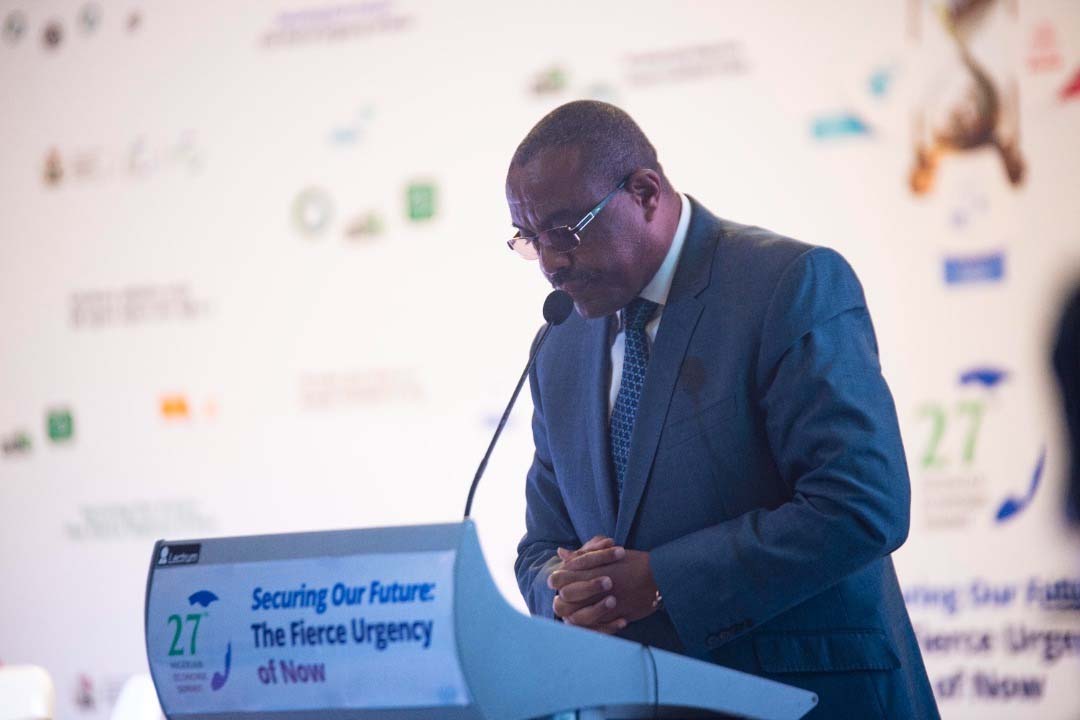
Nigeria having its fondly called name ‘Giant of Africa,’ former Ethiopian Prime Minister, Hailemariam Desalegn Boshe, has said that for Africa to develop a sustainable and prosperous economic environment, Nigeria has to be secured economically.
He stated this at a two-day Nigerian Economic Summit panel session with the theme: “Building a Secure Nigeria: Key Priorities for Economic Growth and Inclusion.” Boshe, AGRA’s (Alliance for a Green Revolution in Africa) Board Chairman, rendered the opening address at the Nigerian Economic Summit.
The panel session shed light on the economic, political and governance imperatives for repositioning Nigeria on the path to economic, social, political, environmental, and physical safety.
Other panelists were, H.E Atiku Bagudu, Governor of Kebbi State, Dr. Mrs. Zainab Ahmed, Minister of Finance, Budget, and National Planning, Nigeria, Dr. Adedoyin Salami, Chairman, Presidential Economic Advisory Council, Prof. Benedict Okey Oramah, the President and Chairman of the African Export-Import Bank (Afreximbank) and Mrs. Ndidi Nwuneli, Managing Partner of Sahel Consulting and AACE Foods and also AGRA Board Member. Mrs. Eugenia Abu, the CEO and Managing Partner of the Eugenia Abu Media moderated the session.
According to Boshe, “I want to contribute my thoughts to this fiercely urgent and all-important conversation of how to secure the future of Africa. Yes, you heard that right. This is really about Africa, not just Nigeria. I personally believe that when you secure the future of Nigeria, you secure the future of Africa.”
He however outlined key points that would foster rapid economic growth in the country. “Sound Macro Economic policy, firstly, is a precondition for economic growth. Economic freedom, at least for smallholder peasant farmers including pastoralists and small scale entrepreneurs, is the other variable associated with positive turning points. This calls for courageous decisions, particularly investing in pro-poor, pro-rural public spending.
“I would argue, therefore, sustained and shared growth with rapid poverty reduction takes place when, and only when, all three policy preconditions namely, sound macro-economic management, economic freedom, and pro-poor, pro-rural public spending policy pre-conditions have simultaneously been met.
“Our Agricultural Development Led Industrialization policy has created a conducive situation to address the problem of mass poverty, given most of the population lived in country side and depended for their livelihood in agriculture, by raising farm incomes.
“I would therefore suggest for brotherly countries including Nigeria that adoption of sound macro-economic policies and the establishment of economic freedom for farmers, pastoralists and small entrepreneurs, the evidence from Ethiopia and elsewhere in East Asia is the best learning experience for policy makers.
“This shift can easily be emulated during deep national economic crisis which is the case in most of our countries in the continent. Rapid and sustained economic growth and associated poverty reduction are pre-conditions for peace and stability in a certain country,” he stated.
Speaking on the issues of insecurity, banditry, terrorism and bloodletting, the former Prime Minister lamented that communal clashes between farmers and herdsmen, creates a constrain on economic growth, but however, lauded the federal government for its approach in addressing the current security challenges.
His words, “Fresh and reprisal attacks from the Boko Haram Terrorist Group, increasing banditry and kidnapping cases and recurring communal clashes between Farmers and Herdsmen have constrained economic growth and worsened growth inclusiveness.
“However, I want to commend successive administrations in Nigeria for their efforts towards uniting the diverse ethnic groups in the country despite the odds. Nigeria has survived multiple incidences of social unrest and a wide array of insecurity challenges which have threatened the peaceful coexistence of her citizens in more than a decade.”
Disclaimer
Comments expressed here do not reflect the opinions of Vanguard newspapers or any employee thereof.