*Says: Nigeria trapped in the morass of a failed State
By Gabriel Olawale
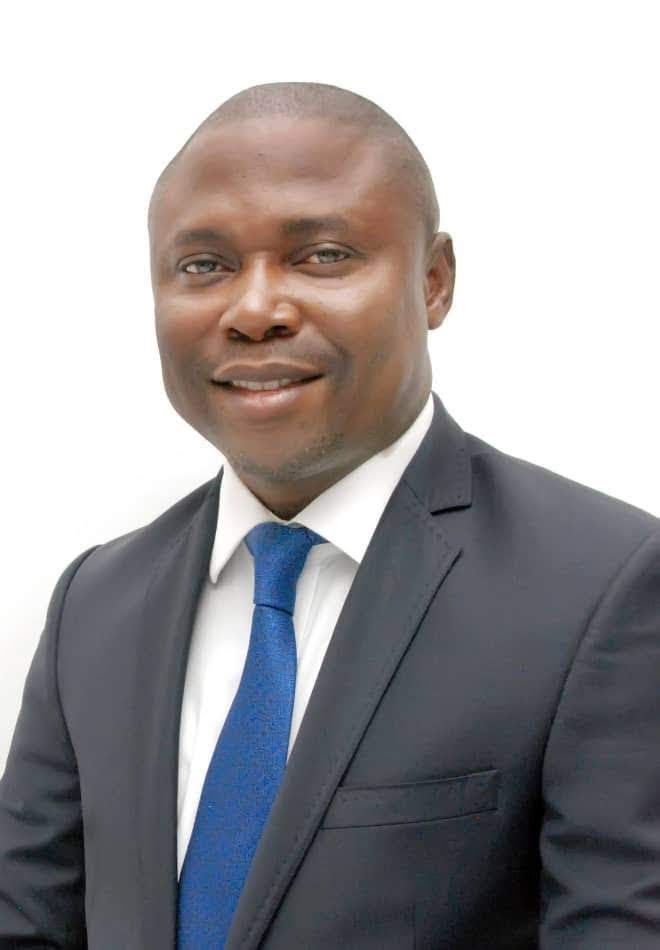
Dr. Kriz David is a futurist, a tax expert, a financial expert, a forensic expert, and a development economist. He holds a doctorate degree in Strategic Leadership with specialty in Strategic Foresight, in this interview, he speaks on the VAT war and the newly launched e-naira by the Central Bank of Nigeria among other burning national issues. Excerpts:
Recently, the VAT war took a new dimension in the country with states seeking to take control of VAT. What is your take on that?
My take on the VAT administration in Nigeria is premised on fiscal sustainability and consummating enduring prosperity for all Nigerians. As a futurist, in 2014, I peeped into the future of the economy of Nigeria, and I documented my thoughts in my book “Tax Strategy: Craft and Implement Fiscal and Monetary Policies for Economic Development and Prosperity”. I recommended that to promote economic competitiveness, industrialization, infrastructural development, reduce unemployment, and reduce inflation, VAT should be administered by State Government. So, I am not surprised that it is now the burning issue in the country today; perhaps someone has seen the wisdom in my proposal.
Some Tax Experts have argued otherwise that, the States do not Capacity or Structure to collect VAT.
The argument for capacity or structure is misplaced and misleading. What is capacity or structure? What is daunting about getting the right person(s) and right technology to drive the tax function of a State? Tax is a derivate of economic activities premised on law. The highest annual amount of Value Added Tax (VAT) generated in Nigeria since 1994 is N1.53trillion, which was in 2020. Does the amount of VAT generated annually truly reflect the taxable consumption in Nigeria? And does the total tax revenue of N7trillion in 2020 truly reflects the economic activities carried out in Nigeria? These are the questions we should be asking ourselves. VAT or any consumption tax is local, hence it is optimized if the administration is local. The VAT issue is just a fragment of the problem. Nigeria is bedeviled with fiscal crisis today because the inappropriate Tax Policy Mix and Design.
Are you saying Nigeria does not have the right Tax Policy?
The framework of taxation in a nation consists of the policy, the laws and administration by the tax agencies, these constitute the Tax Policy Mix and Design. Tax Policy Mix and Design is the organization of a nation’s taxing rights, tax types, the tax rates, and the base of tax types. So, is about which tier of government is best placed to administer a particular tax, the number of tax types that are enforced per time, the appropriate rates in relation to the base for each tax types. An appropriate Tax Policy Mix and Design facilitates tax buoyancy and elasticity, which optimizes tax revenue for economic development and prosperity. An ill-suited tax policy mix and design cannot capture the right people in the tax net and to pay the right tax. For instance, I gathered recently that Nigeria has over 41million individual registered taxpayers, yet the tax revenue from personal income tax is less than N1trillion annually. While South Africa generates over N12trillion annually from personal income tax from 6.4million individual taxpayers. The top 1% individuals in South Africa pay more tax that the bottom 90% individuals. The reason for the wide gap in tax revenue generation is the tax policy mix and design of the two countries.
Are Nigerians not paying the rights tax?
The wealthy are not paying their fair share of corporate and personal taxes. Only few entities and people pay the right tax to Government. This is so because an ill-suited tax policy mix and design will not capture the right entities or people in the tax net to pay the right tax and will over-burdened those are not supposed to be exempted from taxation.
Based on survey, most people do not pay tax because they feel or don’t trust government to use the tax revenue judiciously. Is that a justified reason for not paying tax?
This speaks to citizen’s perception to taxation in Nigeria. So, using citizen’s perception as a basis to drive tax policy is ill-informed because most of the people covered in the survey do not understand taxation, and are not supposed to pay tax in the first instance.
Albert Einstein was noted to have said that “like it or not, you must pay your taxes. The problem is understanding taxation requires more than a genius mind”. Not paying taxes is being clever by half. Revenue from taxation is supposed to be used to provide merit goods that is healthcare and education to citizens for free, because individuals paying for healthcare and education is usually too expensive. So, is either you pay tax to government to provide free quality healthcare and education, or you pay yourself at a higher cost. Unfortunately, rather than paying their fair share of taxes to government in Nigeria, wealthy Nigerians pay huge sums for medical tourism and school fee for their children abroad.
What is your take on the 2022 national budget presented by the President Muhammadu Buhari a few weeks ago?
A few years back, Professor Pat Utomi was asked of his view on the national budget, on a national television, and his response was that he has stopped discussing the Nigeria’s national budget. I have since realized that budgeting in Nigeria is just an academic exercise to fulfill all righteousness. A budget is a vision and not just a document with a fancy name. Here is what I mean. The 2022 budget has been presented, but we are yet to see the draft of the finance bill that should provide the policy framework for the budget, and the national assembly horridly passed the medium-term expenditure framework.
My budget appraisal model (“Two R Model” that is Relevance and Realistic) is a veritable tool for budget preparation and evaluating budget performance or implementation. Relevance seeks to address the human development needs in the budget, while Realistic provokes the assumptions and the policy mix to achieve the vision of the budget. If you apply this model to the Nigeria’s budget, you will realize that what we have is the “politicians’ budget” not the “peoples’ budget”.
What is your position on the newly launched e-naira, do you see it helping the economy?
What I see is the responses of Central or Reserve Banks of nations to cryptocurrencies. Cryptocurrency bypasses monetary regulatory authorities of nations, hence threatening not just their relevance but existence. In selling e-naira project to Nigeria, the CBN has put up enticing benefits for the economy. While it is good to innovate, the fundamentals for economic development and prosperity are infallible. Without a producing economy, your innovation will just be cosmetic. The naira will continue to lose value compared to other currencies of the world without local production. One factor that is endangering productivity and prosperity in Nigeria is the high interest rate. It is difficult to build capital in Nigeria. How many mega private industries without government funds do we have in Nigeria? The high interest rate is the major cause for lack of industries, high unemployment rate, high inflation rate and high exchange rate in Nigeria.
Nigeria celebrated 61 years of independence, but most people opine that there is nothing to celebrate. Do you support this assertion?
I share their sentiment because truly we are only existing as a geographical space not living as a nation fulfilling a purpose. The undeniable truth is, Nigeria is trapped in the morass of a failed State with the highest impoverished citizenry in the world and a future of despair as human life has become subservient. In my book “Leadership and Prosperity of Nations: Leverage Points for Prosperity of Nations”, I uncovered the secret of great and prosperous nations. Those nations offer their citizens a promise. What promise is or has Nigeria offered you or your children? All nations are built on value system. The choice of values espoused in a nation is pivotal to the success and prosperity or failure and poverty of that nation.
What is fueling insecurity, inequality and corruption in Nigeria and how can it be addressed?
During the 2015 general elections in Nigeria, one trending quote then was “if we don’t kill corruption, corruption will kill Nigeria”. Today, we have seen that insecurity will destroy Nigeria faster than anything else. The truth is, corruption, insecurity, economic woes, nepotism, impunity, and the other challenges that have bedeviled Nigeria are just the symptoms of the root cause of problem. The root cause of Nigeria’s quandary is INEQUALITY. Inequality is the predominant a value in Nigeria. It is subtle, but it the faulty foundation upon which Nigeria is built; and if the foundation is faulty? Inequality is the chief reason things are not working as expected, even the good intentions turn out with unintended outcomes and until the faulty foundation is addressed, everything in Nigeria shall continue to fall apart. You fix inequality, Nigeria is fixed!
Some people have argued that there should be restructuring before Nigeria goes into elections in 2023. Do you support this argument?
The word “restructuring” appears repulsive to some Nigerians, especially the politicians. The reason for this is not far-fetched. Politics in Nigeria is a zero-sum game. You capture power, you control all. While people without power clamour for restructuring, it is repugnant to those with power. Prior to 2015, those without power were the champion of restructuring, but as they got power, restructuring became unattractive. I use the word “power” because there is no governance in Nigeria.
What do think about leadership in Nigeria?
You will notice that I have not mentioned leadership in our discourse thus far. Leadership does not occur in a vacuum. In Nigeria today, if there is anything the ruling elites, regardless of their political affiliations have unequivocally accepted, it is leadership failure. The reality that insecurity has become incorrigible occurrence in every part of Nigeria attest to the leadership failure. Most Nigerians, the politicians in particular, do not understand what leadership is about. They see leadership as power and control, which is what they termed as influence. Leadership in Nigeria is predatory. Powerful individuals do anything and everything to capture power to control State resources. Leadership in Nigeria is self-servient not serving the people. What we need in Nigeria, is anticipatory leadership, leaders with foresight capabilities and that can engage system thinking to entrench the value system that offers equal opportunity for all Nigerians to prosper.
What are your dreams for a better Nigeria?
In 2019 general elections, I ran for the position of President of Nigeria not because of my personal ambition but driven my liberation mandate. Nigeria, being the most populous nation of the black race in world is trapped in an endless cycle of failure on account of ignorance and predatory leadership. My promissory note to Nigerians is documented is my book “Smart Government-The Preferred Future, Shaping the Nigerian Dream and The Pathway to Prosperity”. I articulated five unimpeachable steps that Nigerians should accept and genuinely follow to become a great and prosperous nation. A nation that offers its citizens a promise to fulfill their purpose.
My dream is to reconstruct the foundation of Nigeria to become an equitable and a fair society that promote equal civil rights, equal economic rights, equal political rights, and the pursuit of happiness for all Nigerians. Nigerians must espouse the virtues of equality, meritocracy, integrity, incorruptibility, abidance, diligence and excellence to sustain prosperity.
I envision a nation of virtuous people promoting equal opportunities for all Nigerians to prosper. I envision a nation where no one goes to bed hungry, where everyone has a befitting shelter. I envision a nation where the lives of people shall be supreme, where people live in peace and harmony. I envision a country where the virtues of equality and meritocracy are the basis for access opportunities.
*Dr. Kriz David is a futurist, a tax expert, a financial expert, a forensic expert, and a development economist. He holds a doctorate degree in Strategic Leadership with specialty in Strategic Foresight.
Disclaimer
Comments expressed here do not reflect the opinions of Vanguard newspapers or any employee thereof.