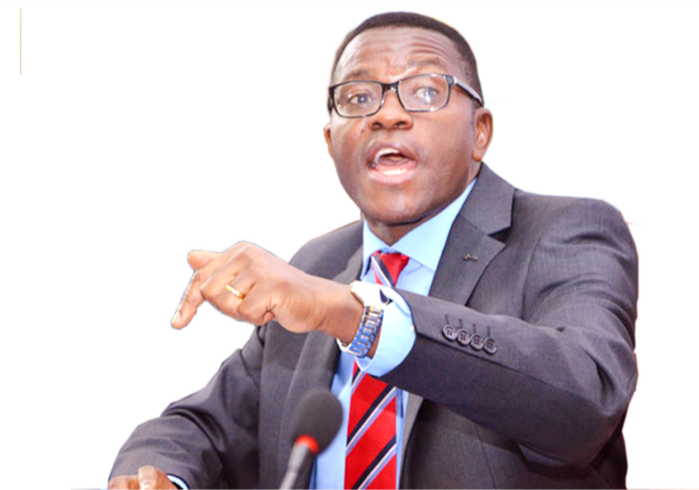
…says, whatever you see as tribalism starts from the people in government.
…advocates agro-based industry as best for the country’s economy.
By Chris Onuoha
Charles Peter Mayiga is the current Katikkiro (Prime Minister) in the government of Buganda Kingdom; a constitutional monarchy in Uganda, East Africa. The astute lawyer, cultural leader and author, holds sway for the reigning King, Kabaka Ronald Muwenda Mutebi II, in the areas of governance and administration. Mayiga who was appointed the Katikkiro of the Buganda government for over 8 years, spoke to Vanguard Culture reporter at his office in Kampala, on issues cultural interest among other things.
In the beginning, there was Buganda before Uganda; the styled ‘Pearl of Africa.’ Uganda is a landlocked country in East Africa with diverse landscapes that include the traditional seven hills, the great Lake Victoria and also, called the ‘Source of the great River Nile.’ The country has abundant wildlife with national parks, as well as rare birds. Uganda is bothered by South Sudan to the north, Kenya to the east, Tanzania and Rwanda to the south.
The country, before the European incursion, maintained a formidable style of government created by the assumed first King, Kabaka Kato Kintu Kakulukuku around 13th century. However, the dynastic rule of series of Kabakas enjoyed harmony even among other lesser kings from kingdoms that made up Ugandan country, until 1966 when President Milton Obote abolished the monarchy government.
Here, the Buganda Prime Minister, Mayiga speaks on the country’s journey so far:
The kingdom of Buganda is a constituent part of the country called Uganda in East Africa. Uganda got its name from the kingdom of Buganda. It so happened that by the time of the colonial incursions, the kingdom of Buganda was assumed the strongest in the Great Lakes region.
It was the greatest and the most socio-culturally organised. The kingdom of Buganda ran an effective government back then. It also happened, that foreign business merchants from the Arab countries including those from East African coast looked out for the kingdom of Buganda for slaves and ivory. This is so because, if they didn’t make contact with the kingdom of Buganda, the trade wouldn’t have taken place because the Buganda king (Kabaka) was quite influential and feared all over this area. This also applied to the first missionaries; Anglican and Catholics Missionaries who came to Uganda. When they came, they started with the kingdom of Buganda because of the kingdom’s historic importance. They were also followed by the colonial masters.
The name Uganda
The name Uganda was originally Buganda. When the Arab merchants and first Europeans came to this land, their first port of call was the kingdom of Buganda because of the Kabaka’s influence. It so happened that these foreigners who came with Kiswahili interpreters found it difficult to pronounce the word ‘Bu’ for Buganda. And in the process, they chose a simpler pronunciation ‘U’ shortening it for Uganda, which later became the adopted name for the country.
If the name was made possible by Kiswahili interpreters, why is it that the country, Uganda, do not speak the language as expected, like other East African States?
We do not speak Swahili essentially because ‘Luganda’ the language of the Baganda, the people of Buganda is the predominant language here in the country. The capital of the country, the administrative headquarters right from the days of the colonialists was in Buganda. The capital, Kampala, was named by the Kabaka of Buganda. The first European who came to Buganda in 1862, John Hanning Speke met Kabaka Muteesa I, here in Kampala, and that’s where it all started. The missionaries actually met him at one of the seven original hills that make up Kampala, which is actually today the headquarters of the Kampala Archdiocese of the Catholic Church in Uganda. The cathedral is where the palace of the king was.
When the colonialists came, they decided to set up their camp around the king’s domain at one of the hills, and for record purposes; Kampala as a capital, was actually in existence before they came. It was the capital of the kingdom. And because the kingdom of Buganda speaks Luganda, it became predominantly the official language widely used in commerce, social circle, media and entertainment. Because of its wide acceptance here, Swahili language fails to catch up in Uganda. But however, I think it is good to learn it because it is spoken as the lingua franca in most East African countries.
Do you see that as a pride of the Ugandans?
Yes, in a way, because, how do you preserve the heritage and culture of your people if you do not use your language. Some of the words in Luganda are very difficult to interpret into other languages. Ugandans also find it difficult to express themselves in Swahili language, hence adopting Luganda as the most accepted language. Other things also led to the non-acceptance of Swahili in Uganda. And the method adopted in spreading Kiswahili language back then, has not been practical in my view.
You may recall that the former President of Uganda, Idi-Amin Dada decreed that Swahili should be made the national language. But people didn’t accept it. And after 1966, when we had the violence in Uganda, the monarchy was abolished because the army used guns to ransack the Kabaka’s palace and overthrew him and was sent into exile while the Bulange administrative building, headquarters of the Buganda government was turned into army headquarters from 1966 to up to the early 1990s.
It also happened that the language of the security forces was majorly Swahili. And because there was violence against the citizens, unleashed by the military and the police to a large extent, the people resented the language. Kiswahili also became the language of the riff-raffs and robbers who used it to instill fear in the citizens of Uganda. Under those circumstances, the language became very difficult to promote here in Uganda. Personally, I think we should learn Swahili but we should not use it to relegate our indigenous languages in the country.
Looking at the uniqueness of the Buganda Kingdom, it seems to have cultural similarity with the Zulu in South Africa. Could you give us an insight of the origin of the Baganda people?
I think I can say, the Zulus, the Swazis are actually ones that migrated from here. Although we sound alike in ascent, and some cultures are same. Even some communities in Zambia, Zimbabwe and Malawi share similar culture because of the Bantu migration. The Bantu migration according to history started from the forest of Cameroon or Congo Kinshasa if I am not mistaken. But according to the Buganda mythology, the first king of Buganda came from heaven. That’s our mythology. But obviously, they could have migrated from the mountain of Ethiopia. The dynasty of the current king of Buganda called Ronald Muwenda Mutebi II was from the dynasty of Kabaka Kato Kintu whom we believe to be the first Kabaka of Buganda around the 13th century. Buganda mythology said he came from heaven with his wife Nambi. When he came, he conquered the kings he found in this land. He also revolutionalised leadership in the kingdom and brought all the clans together under his rule.
Buganda, from the time of Kabaka Kintu is described to be like a pot sitting on three cooking stones; one cooking stone is comprised of the descendants of the royal family – from those we get a king, or prince who becomes a king. The second cooking stone is made up of the clan leaders – these are the custodians of our culture and heritage. The third are the people. In Buganda, everyone belongs to a particular clan and each clan has a role to play, either in the Kabaka’s palace or in the kingdom generally. For example, I belong to the Mutima (heart) clan and our role is to fish for the Kabaka. It is from this third pillar that you get leaders like me – the ‘Katikkiro.’ In Buganda, you cannot be a Katikkiro if you are a member of the royal family. You have to be a commoner. It is not heredity to be a prime minister or an official of the king. It is an appointment of the king from the time of Kabaka Kintu till this day, thereby, making every citizen relevant in the administration of the kingdom.
…But the Katikkiro as a Prime Ministers is known to be as powerful as the King?
The Kabaka is the most powerful. But because in our system, the management of the kingdom affairs is the business of the Katikkiro, the Katikkiro is considered powerful too. When the Kabaka conceives ideas, programmes and projects, he hands it over to Katikkiro for implementation. On a daily bases, people are not going to interact with the king. The king just appears. Actually, in our language, ‘the King appears.’ That’s how he is described. The Katikkiro is in the news every day for the King and the kingdom. He handles the affairs of the kingdom on behalf of the king.
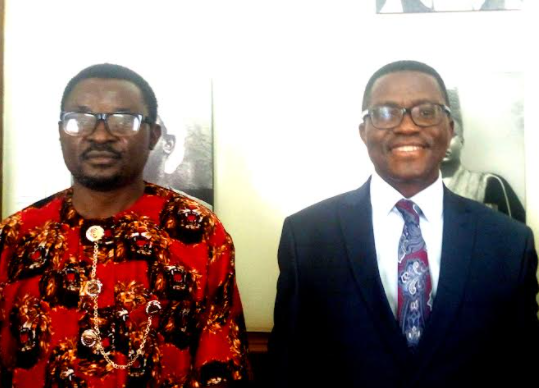
I became the Katikkiro of Buganda government eight year ago, when the King, Kabaka Ronald Muwenda Mutebi II handed the ‘Ddamula’, a mace that symbolizes the authority of the Katikkiro to me. That shows authority and you cannot be a Katikkiro unless the king hands over that symbol of authority. In other words, the possession of Ddamula means; ‘go and govern the kingdom on my behalf.’
For being powerful, well you may say so, because the Prime Minister is responsible for the kingdom’s duties on behalf of the king. But he derives his authority from the king. When a Katikkiro conducts himself in a manner in variance with the interest of the king or the kingdom, the King bans him.
What is the unique thing about Buganda culture and selection of Kings?
It is the clan system. Everybody belongs and bears names according to their clan. Another unique thing about the Buganda culture is that you don’t marry from your clan. The clan system is patriarchy of everyone except one individual, the Kabaka. The Kabaka takes after his mother’s clan. This is made in such a way that every clan will get a chance to be on the throne. Every clan owns the monarchy in the kingdom. We don’t have a privileged clan in Buganda. As the culture forbids you from marrying from your clan, which means, when Kabaka takes after his mother’s clan, it means that any other clan can be on the throne.
Today, the monkey clan is on the throne, because Kabaka Mutebi II’s mother is from there. His father was of the cow clan because his father’s mother was of the cow clan. His grandfather was of the back bush clan. So, in the end, there is no special privilege for a particular royal clan. For the Katikkiro, he can come from any clan unrelated to the royal family. And no royal blood can assume the position of Katikkiro because the position is meant for citizens under appointment by the king.
Is the position of Kabaka contestable?
The kingship system here is very strong and customary. It is not contestable by any other clan other than those that have the right at that time. For the princes that have the right, yes. It must be between the royals who are eligible. Many years ago, the system has been crafted in such a way that in the past, the Kabaka has so many sons and princess from which he chooses his favorite prince to become king when he dies. Now there is an official called Kasujju Lubinga who was supposed to keep guards over the princes. He would guard and keep an eye on them. When the king dies, he would present all the sons of the Kabaka to the Katikkiro. The Lukiiko, the kingdom’s grand council and the Katikkiro would pick the most eligible out of the princes to become Kabaka.
There could be fierce fights among the eligible princes to get to the throne which sometimes leads to death. That is how it has been. But the irony is that, even long before the selection, the Katikkiro would have known who would be king through scrutiny, no matter the pressure from the Kabaka’s preference.
Uganda seems to maintain two ruling governments operating simultaneously in the same country, why is it so?
In Uganda, the kingdom of Buganda has been in existence long before the central government. There was a federal system of government like you have in Nigeria, up to 1966 when the constitution was overthrown by Milton Obote. As the first executive Prime Minister of Uganda, he overthrew the constitution and abolished federalism in Uganda. History has it that Obote was unpopular at his time. He used the army to overthrow the government.
Under the federal system back then, the kingdom of Buganda had a government and it performed all the duties that the constitution allows it to do; other than having an army, conducting duties of foreign affairs and drawing national policies. But Buganda government effectively does the duties of health, education, road maintenance, empowerment programmes and other things. When the kingdom was abolished by Obote, these duties were abolished as well.
(The long history and reinstatement of the Buganda government)
Obote was assumed power hungry, because with the Kabaka in place, who stays in Kampala and drew much crowd whenever he appears in public, he was not comfortable with his immense public acceptance. The politicians were not equally happy with that. The Kabaka’s position can be compared to the UK monarchy; where the Queen commands more respect than the Prime Minister, despite the fact that the real power is with the prime minister. But the Buganda royal family has that kind of followership because people know them as the custodian of their heritage and tradition.
Obote was threatened and was falling out of favour with his own party, the Ugandan People Congress (UPC). And the stumbling block in his political machination was the kingdom of Buganda because of its powerful position. He decided to use an illiterate man in the army called Idi-Amin, who rose through the ranks to assume office of importance, to overthrow the Kabaka government.
Idi Amin and trajectory of misrule
Obote sent Idi-Amin Dada as an army troop leader to Congo to handle the internal skirmishes in the Kabinda areas. When Amin was there in Congo, it was alleged that he looted the gold in that area and when he came back to Uganda, he was questioned by the parliament about the looting which according to them was not part of his military intervention in Congo. It was also said that Obote did not go through parliament before sending the troops into Congo for the war. Otherwise, Amin was not approved by the parliament, but when he returned, it was alleged that he shared the gold loot with the Prime Minister and other greedy members of the parliament. There was a commission of inquiry in the parliament to look into the matter, and Obote was threatened for removal by his own party. Then he decided to go full blast with the army.
He later promoted Idi-Amin to position of army commander, and ordered him to attack the Kabaka’s palace. The monarchy was overthrown, and that same army of Idi-Amin, later overthrow the Obote regime after five years in office in 1971. He overthrew the president because when Obote overthrew the monarchy in 1966, he made himself the president without elections. He turned Uganda into a republic and became the president. In 1971, he flew to Singapore for Commonwealth Conference, and while he was there, Idi-Amin overthrew him. Obote stayed in exile (Tanzania) for eight years.
Idi-Amin, during his reign caused a lot of problem in Uganda. He killed so many people, ruined the economy and other things. His biggest challenge I think was the lack of education. If Idi-Amin was educated, he probably would have behaved in a different manner. Whatever the case, there was a lot of violence in Uganda. Many went into exile during the Amin’s rule. These aggrieved Ugandans in exile sought the help of President Julius Nyerere of Tanzania who merged his force together with the Ugandans in exile to overthrow the government of Idi-Amin. Amin went on exile to Saudi Arabia. When he was ousted, Obote returned and became the president again through an election he rigged in 1980. Obote was again overthrown by his own army in 1985 led by General Okello in a coup. Okello who installed himself as a president was eventually overthrown by Yoweri Museveni six months later.
Museveni enters the stage
Meantime, when Obote rigged the election in 1980 to become the President, Yoweri Museveni, the current president started a bush war and he was supported massively by the people of Buganda. These citizens had an axe to grind with Obote who abolished the monarchy. The current Kabaka, Ronald Muwenda Mutebi II was a king in waiting for those years in exile (his father, Kabaka Muteesa II having died in England in 1969). Before Museveni could overrun the government, Obote’s government was already overthrown by his own army and he went into exile the second time in Zambia where he died later on in 2005.
Museveni became the president in 1986 after capturing Kampala City from General Okello. And that’s when the negotiations with the leaders of Buganda kingdom started with Museveni for the restoration of the kingdom’s authority. The Baganda rendered him support during the bush war and even the present Kabaka also toured the areas he captured during the war and solicited support from them.
After seven years, the constitution was amended. Clauses were deleted. The Buganda kingdom government was restored and the king was crowned in 1993. The past month, July, 2021, we celebrated Kabaka Ronald Muwenda Mutebi II’s 28 years on the throne. But what was resurrected, the kind of government we see now, was not the kind of government we had prior to 1966. Now, we don’t collect taxes, we do not have administrative powers but the law allows us to promote culture, health, education and that’s what we do for now. We initiate programmes and generate little income to carry out the functions of the kingdom.
Do you see that as a way of reducing the powers of the monarchy?
Maybe, yes, in a way, because President Museveni doesn’t support the federalism system of government. He supports a unitary system put in place by Obote back then. Although he supports the culture as such, otherwise the constitution wouldn’t have been amended to have the monarchy restored. He supports us in a number of things but does not support federalism. He wants us to be restricted to the kind of things we do now. We operate within the law as it is, but we prefer the federal system of government.
Uganda has come a long way in a trajectory of challenges to maintain some level of peace. Do ethnic differences really exist here?
Ugandans generally, don’t have those deep strong ethnic divisions. Whatever you see as tribalism starts from the people in government. Ugandan citizens work very well together as a people. That is why here in Kampala, you can see all other tribes including foreigners settled peacefully. In the western part of the country, the home place of the President including other parts of the country, all the ethnic tribes including the Baganda live in harmony with no problems.
The kingdom of Buganda grew from three counties to the current 18 counties that constitute the kingdom. But whenever the kingdom extends, they would assimilate the people without any problem. My own county, Buddu, is in the southern end of Buganda kingdom. We became part of the monarchy 400 years ago. Before then, we were not part of the kingdom but when the reigning king at that time conquered the area, we were not forced, but willingly assimilated.
In other cases, all the ethnic tribes share similar culture. The people of Bunyoro, Acholi, Buganda, Toro, and other communities that make up Uganda share so many similarities. The Lunyoro language of the people of Bunyoro is similar to Luganda. All these predate colonialism. While the culture and languages are distinct, the people have learned to work with each other for a very long time. If we are not disturbed by the politicians who bring in these things because they want supports for their political ambitions, the people themselves are okay with the way they live together.
What is the relationship between Buganda and other kingdoms in Uganda?
The Kabaka has very close ties with the other kingdoms. There is a mutual cultural understanding with these kingdoms. We do cultural exchange during events and festivals including coronations and major events hosted by the Kabaka. That’s one way we have maintained peaceful coexistence. Although, the Kabaka is regarded as a superior but his relationship with other kings is cordial. There is no imposition of allegiance from Kabaka to the other kings, because they are independent kingdoms who relate as brothers. All the kingdoms share similar ideology; to promote education, better life and mindset change among the citizens for develop.
…and religion in Uganda?
Uganda is predominantly a Christian nation with a bit of Islam and traditional worshippers. This was made possible by the act of Kabaka Mwanga II who killed the Christian Missionaries (the Martyrs) in his time. He was a strong and brave king, loved by his subjects, who fought to keep the sovereignty of the kingdom from the colonial incursion.
It happened that when he became king, he realized that Christianity is overrunning the kingdom. This act of martyrdom was carried because Christianity then, gained ground and Ugandans embraced the religion very fast to the detriment of their own culture. The king felt bad that his subjects are not doing what he wants them to do and he also feared that Christianity will brainwash all his subjects to reject him, then he killed the Christian preachers and leaders. Obviously, it is assumed that because of the killing of the Martyrs, Ugandans became predominantly Christians.
Uganda celebrates ‘Martyrs Day’ every June 3rd and it turns like a sort of pilgrimage here. Mwanga II was exiled after that incident to Seychelles where he died. His son was chosen as a king at the age of 1 year in 1897.
What is the economy of the Buganda kingdom like?
The economy of the kingdom is very small because we do not collect taxes. But we initiate programmes that generate some income to enable us carry out our programmes. We have companies, for example, we own the most popular radio and TV stations in this country and many others. Although the central government still feels challenged with some of these initiatives in a way, but like I said before, harmony comes through engagement with government.
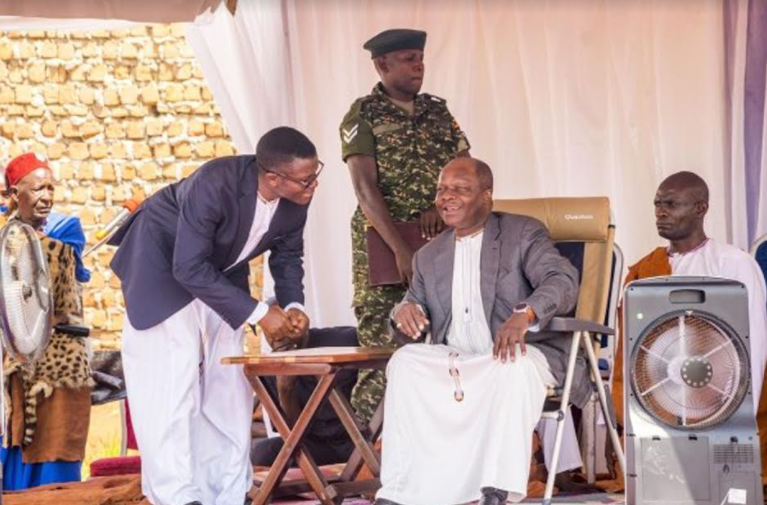
We try to collaborate with the central government to actualise some of our programmes. For example, we have what is called ‘The Kabaka Education Fund’ to assist the less privileged. The kingdom runs its own University called “Muteesa 1 Royal University” and many schools and colleges. We promote education vigorously because we are following the antecedents of king Muteesa 1, who wrote to Queen of England to send teachers to Uganda to promote education. Our schools are solely run by the Kabaka government but with the guidance of the government education curriculum. We have extensive programmes in agriculture and we always ask for central government support in the things we do to compliment them. All these are done in absence of federal system of government which would have given us direct resources.
On the issues of diplomacy, how do the two governments handle it?
The Buganda kingdom does not have ambassadors but we have cultural representatives appointed by the Buganda kingdom and attached to some of the existing embassies in countries where we have large concentration of Buganda citizens. Embassies of Uganda are for Uganda citizens, but the cultural attachés represent the interest of the king. We have about four representatives in the US. We also have some in UK, South Africa and Scandinavian countries where we have large number of Buganda citizens.
Are there clashes of interest between the two government’s policies?
There is no real clashes of interest among the two governments but at times, we are accused of taking side with the opposition party. In the recent election which was held earlier this year, I was personally accused of promoting the opposition, but it is ironical because the same opposition accused me of taking side with the government also. When Kabaka visits the president, some people will say it is the Katikkiro that arranged such a move. People would often say the two leaders are very good friends when they sit. This give the government mileage in fostering unity and peace in the country.
In all, our responsibility is to work with both the government in power and opposition as long as they respect our culture and heritage, and it is a must. We have to do it to promote culture and unity in the land. We are cultural ambassadors and custodian of people’s heritage. Members of the opposition are subjects of the king, likewise members of the ruling party. How do we keep them out? We have to work with both sides. But then, the political actors want you to be on their side. Mine is a difficult position.
How do you see the Uganda of today in the global economy?
Well, we are still a poor country, but our potentials are enormous to lift our economy to a height. Uganda is one of the countries that are most endowed with natural resources. We have oil which was recently discovered. Our fresh water is one of the biggest resources we have. If we harness the potentiality of our fresh water here and go into agriculture then we should be able to use it as a foundation for industrialization. We can produce food that will sustain the country and the rest of Africa, if we do the right thing. Ugandan soil is one of the most fertile soils in the world. In most villages, people grow farm produce without fertilizer and it does well with surplus. We have three rain seasons in Uganda every year and the climate is good.
Then, what is the challenge in harnessing these potentials in Uganda?
In my view, social and economic transformation doesn’t come by chance. Transformation takes place because you identify the problems and find solutions. You must establish the internal linkages. For example, when you talk about agriculture, you talk about the market. If you want to grow coffee, you must know where to export it. You must look at these things and build linkages. You must identify the strong points and take advantages of it.
Much talk about industrializations in Africa is however uncalled for. You don’t have to have a factory when you can get the same product cheap from outside your country.
You must take advantage of the resources you have; the comparative advantage. In Uganda, we talk a lot about industrialization with less attention on the advantages we have within the agriculture sector. We can produce organic food basically cheaper than any other country in the world. If government is serious with some of its policies, it should be that every home must own two or three cows as a way of making animal husbandry cheaper and accessible to the people.
We have about 10 regions in Uganda, and what is best produced in a region must be identified and encouraged. When we produce cotton for example, we need to extract oil from it. Factories must be established for the cotton oil processing. But if you are looking at computer manufacturing or mobile phone factories, I don’t think we can compete with Asian countries. Ugandan cotton is among the best in the world, because of the soil and climate. We have coffee, tea, sugar and the best organically produced fruits.
In my view, we should start with our comparative advantage which should be agriculture. Our industries should be agro-based. After these, we shall venture into hi-tech with time. Each and every one of us must do their duty with seriousness. We should be dutiful citizens and stop lamenting over our problems. We should think more about solutions. Of course, there are challenges but positive people look for solutions. This is what I tell Ugandans all the time. If you continue the blame game, we shall not get anywhere.
Disclaimer
Comments expressed here do not reflect the opinions of Vanguard newspapers or any employee thereof.