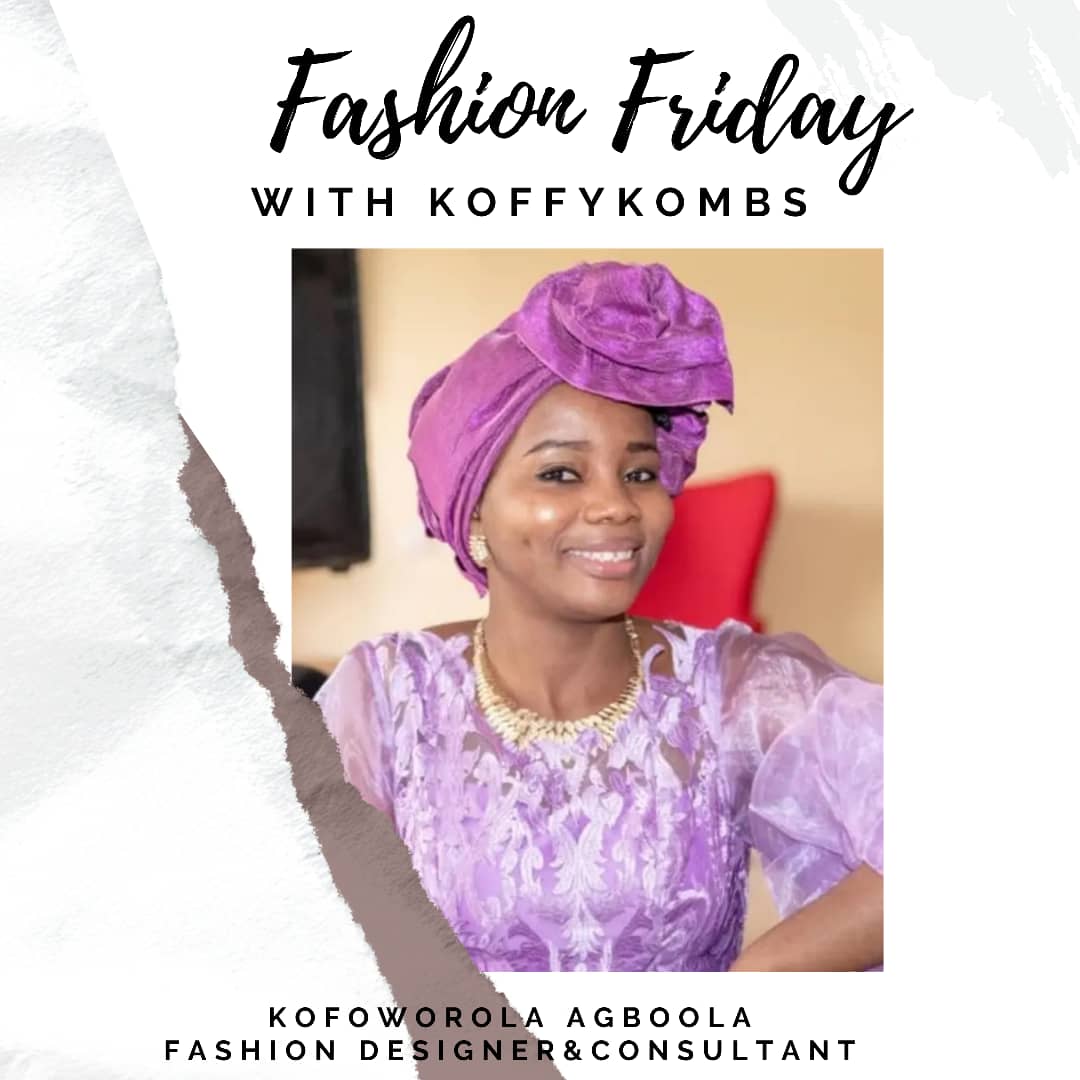
Kofoworola Agboola
The fabric is the fashion designer’s artistic medium and this makes understanding the nature and behaviour of fabrics an important skill to learn.
Today, let’s explore the meaning of grainlines and the important role they play in the final design and correct hang of the garment
What are grainlines?
Grainlines indicate the yarn direction in a piece of fabric, each grain has different characteristics that influence the manner in which the fabric will drape on the body or dress form
There are three basic grainlines that come in a woven fabric
1) Lengthwise grain/straight grain
2) Crosswise grain
3) Bias grain
LENGTHWISE GRAIN
The lengthwise grain is always parallel to the selvage of the fabric. The selvage of the fabric is the firmly woven edge that runs the length of the fabric on both sides. It does not fray. For example, on an Ankara fabric, the Selvage is the place on the fabric where you see the name of the manufacturer.
The lengthwise grain is always parallel to the selvage. The strongest threads run in the lengthwise direction and give less stretch. So the lengthwise grain is ideal for designs that you want to have structure and less give(stretch) eg Jackets, skirts, shirts, pants, etc To locate the lengthwise grain, fold your fabric vertically.
ALSO READ: Yakiss plans to wow fans with new music contents
CROSSWISE GRAIN
the cross-grain or the cross-wise grain is the section of the weave that runs perpendicular to the selvage.
The crosswise grains are the filling yarns or the weft.
The crosswise grain of the woven fabric has slightly more stretch than the lengthwise grain and is ideal for designs that you prefer more stretch, for instance, if you want to make a tight-fitting skirt, a tight-fitting skirt cut on the straight grain is likely to burst open when the client tries to sit down, but if you cut it on the cross-grain, the little stretch factor will provide room for expansion when a client wishes to sit down. To place the fabric on the straight grain, fold your fabric horizontally, perpendicular to the selvage. In draping, the crosswise grain usually lies parallel to the floor.
BIAS GRAIN
The bias grain possesses significantly more give and stretch than the lengthwise grain and the cross grain. To locate the bias grain in your fabric fold the lengthwise grain to the crosswise grain to create a perfect 45-degree fold line. The resulting 45-degree line is called a true bias.
Examples of designs that work well for bias grain of the fabric are draped designs, which fall gracefully over the body without using darts, cowl designs, cape collars, circular skirts etc.
Agboola Kofoworola is a fashion designer, coach and consultant and can be reached on [email protected]
Disclaimer
Comments expressed here do not reflect the opinions of Vanguard newspapers or any employee thereof.