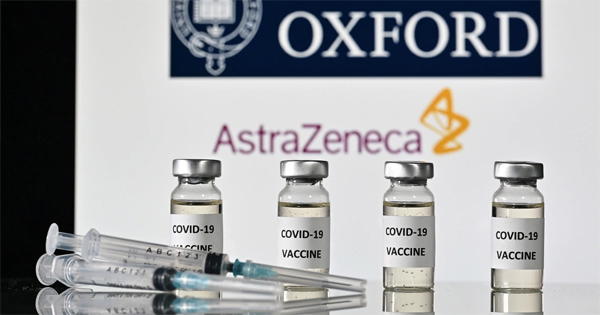
The EU’s medicines regulator said Tuesday it was “firmly convinced” the benefits of AstraZeneca’s jab outweigh potential risks, insisting there was no evidence linking the vaccine to blood clots after a host of nations suspended the shot over health fears.
The suspensions have led to intense debate over whether it was prudent to put AstraZeneca inoculations on hold just as vaccination campaigns begin to gather pace in many countries.
Experts at both the World Health Organization and the European Medicines Agency met Tuesday to discuss the vaccine, with the European organisation expected to publish conclusions Thursday.
While millions of doses of the vaccine developed with Oxford University have been administered, small numbers of people have developed blood clots, prompting countries including the European Union’s three largest nations — Germany, France and Italy — to suspend injections.
But the EMA insisted Tuesday that countries should continue using the vaccine.
“We are still firmly convinced that the benefits of the AstraZeneca vaccine in preventing Covid-19 with its associated risk of hospitalisation and death outweigh the risk of these side effects,” EMA chief Emer Cooke said.
“At present there is no indication that vaccination has caused these conditions,” she added, echoing the WHO and drugmaker AstraZeneca itself.
ALSO READ: Post COVID-19 era: Lagos trains student nurses, youths in agric value chain
Cooke noted however that the regulator was “looking at adverse events associated with all vaccines”.
Meanwhile deaths across the continent have topped 900,000, making it the worst-hit global region in absolute terms, according to an AFP tally from official figures.
– ‘I’m not concerned’ –
In Britain, which has administered more than 11 million AstraZeneca doses and where experts see no evidence of more frequent blood clots among the inoculated, Prime Minister Boris Johnson wrote in the Times newspaper that the shot “is safe and works extremely well”.
Some Londoners brushed off the controversy as they received the vaccine Tuesday, saying it was better to get the vaccine than not.
“I’m not concerned, I think it’d be better to have the jab than sit around debating whether or not it’s safe,” 57-year-old seamstress Sofia Harding said after getting the jab at the Science Museum vaccination centre.
But in France, immunologist Alain Fischer, who heads a government vaccination advisory board, said a higher number than normal of pulmonary embolisms — blood clots in the lungs — had caused alarm at the weekend.
“There were a few very unusual and troubling cases which justify this pause and the analysis,” Fischer told France Inter radio.
The country’s health minister later weighed in, saying he had received the shot and urging calm among other who also got it.
“There is no particular step to take, people are not in danger because they were vaccinated by AstraZeneca,” said Olivier Veran.
– ‘I’m an example’ –
More than 382 million doses of vaccine have been administered globally, the vast majority in wealthier countries while many poorer nations have yet to receive a single jab.
READ ALSO: Around $1bn needed for Nigeria humanitarian crisis ― UN
AstraZeneca’s shot, among the cheapest available, was billed as the vaccine of choice for poorer nations and the clot reports have had an impact beyond Europe.
Three big European powers — Germany, Italy and France — all suspended AstraZeneca this week, joining several other countries that have halted or delayed the rollout, including Indonesia, Venezuela, Sweden and the Netherlands.
But in Canada, Prime Minister Justin Trudeau urged citizens to get the AstraZeneca shot after reports of hesitancy based on the suspensions.
And Thai Prime Minister Prayut Chan-O-Cha was himself injected Tuesday as his country lifted its own AstraZeneca suspension.
“I am an example today,” he said.
– Vaccine options –
The pandemic spurred unprecedented efforts to develop vaccines, with a number of successful options now available.
Rollouts have been hampered by export controls, bitter diplomatic spats and production issues — in addition to the AstraZeneca suspension.
But a new agreement for Germany’s IDT Biologika to help produce the single-shot Johnson & Johnson vaccine would offer Europe greater certainty, Germany’s economy minister said Monday.
The developers of Russia’s successful Sputnik V vaccine also said they had reached production agreements in key European countries.
And on Tuesday Brussels sealed a deal to step up deliveries of 10 million doses of the Pfizer/BioNTech vaccine, now scheduled to arrive in the EU before July rather than in the third quarter.
China, where the virus first emerged in late 2019, has also developed Covid-19 vaccines and begun exporting them.
[AFP]
Disclaimer
Comments expressed here do not reflect the opinions of Vanguard newspapers or any employee thereof.