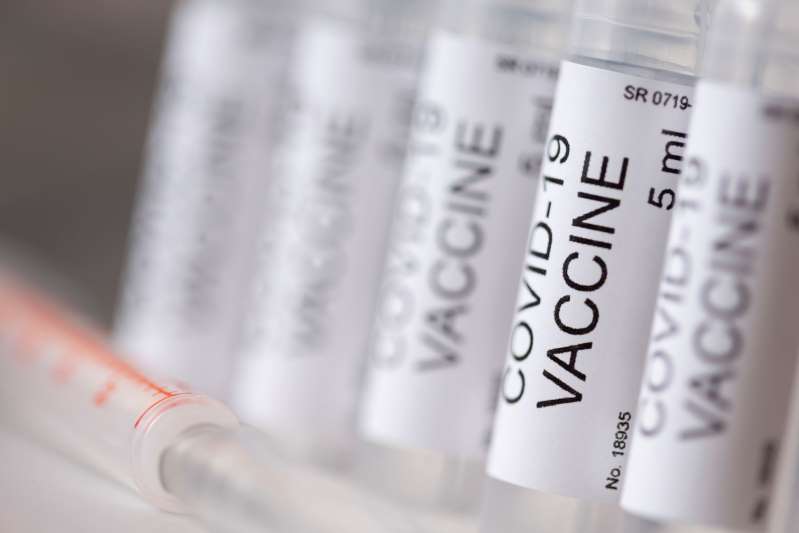
File image.
Say vaccine to cover 40% of the population
Say approach must shift from emergency response to strengthening the resilience and sustainability of the health system
Say by October 2020, testing capacity has expanded to over 70 laboratories across the 36 States, FCT
By Henry Umoru – Abuja
The thirty- six State Governors under the aegis of the Nigeria Governors’ Forum, NGF have disclosed that the country in this year, 2021, will get a total delivery of 80 million doses of COVID- 19 vaccines to cover 40% of the nation’s population, while another 60 million doses are being planned for next year, 2022.
Disclosing this on Tuesday, at Chatham House London, the UK at a Virtual event, Chairman of the NGF and Ekiti State governor, Dr. Kayode Fayemi said that beyond the procurement of Vaccines by the Federal government, the State Governors are also strong proponents of the utilisation of public-private partnerships in vaccines procurement as a means of closing the gap between what is available and what is necessary to achieve immunity.
Fayemi spoke on the ” Role of Nigeria’s State Governments in Recovery: Responses to COVID- 19 Linked Challenge”
The governors have however urged the Federal Government to as a matter of urgency adopt an approach that would make it move away from emergency response to strengthening the resilience and sustainability of the health system.
READ ALSO: PTF: State House clinic to get COVID-19 testing laboratory
Fayemi said, “We expect about 80m doses of vaccines would be available in 2021 to cover 40% of the population, while another 60m doses are being planned for 2022. Beyond the government’s procurement of vaccines, we at the NGF are also strong proponents of the utilisation of public-private partnerships in vaccine procurement as a means of closing the gap between what is available and what is necessary to achieve herd immunity.
“As we already know, vaccines themselves are not cost-effective, but rather immunisation is. To ensure people are immunized, State Governments have a role to play in supporting the logistics and ensuring people get the vaccines.
“As we look forward to recovery from the impact of the COVID 19 pandemic, our approach must shift from emergency response to strengthening the resilience and sustainability of our health system. We must task ourselves and rethink existing assumptions and facts around financing and delivery of health care in a manner that guarantees we build back better.
“In the medium to long term, we must begin to think strategically about the future of public health security and therefore explore the potential of in-country manufacturing of approved vaccines, following technology transfer. The pandemic is a good reminder of the implications of public health outbreaks on national security. We must take the leap and gain a better level of independence, in the area of vaccine research and development but also in science generally.
On the Current response, Fayemi said, “When Nigeria reported its first case in late February 2020, only four laboratories in the country could test for COVID-19. By October 2020, testing capacity had expanded to over 70 laboratories across the 36+1 States. The scale-up of laboratory services was important given the size of the country and the need to rapidly obtain results for suspected cases. As at December 2020, more than 45,000 health workers have been trained across the country on infection prevention and control measures.
“These preventive actions are important given that a major priority in the country’s response is to break the chain of transmission individually and collectively through adherence to public health and social measures.
“On the economic front, our major priority is to secure livelihoods. National monetary and fiscal policy reforms must align to support improvements in household income. Working with the Federal Government, a number of employment creation programs have been created and currently being implemented. The Central Bank of Nigeria (CBN) has played an important role here and we must commend them. Intervention funds have been made available with interest rates below inflation, in the hope that we can stimulate the growth of small and medium scale businesses. Similarly, institutions such as the Bank of Industry and Bank of Agriculture have also given moratoriums on existing loans to ease the burden of payment.”
Speaking on what the Federal and State governments have done so far, the NGF Chairman said, “Nigeria was very pro-active in handling the first wave and continues to remain so. Prior to the confirmation of the first case on the 27th of February 2020, the country actively monitored events around the world, with a public health advisory published by the Nigerian Centre for Disease Control (NCDC) a month before the first confirmed case in the country.
“A presidential task force was established to coordinate the multi-sectoral response to the pandemic while a public health emergency operation centre was established under the NCDC. In March 2020, the country’s airports were closed with the exception of essential flights and inter-state movements restricted in order to minimise the spread of the virus.
“On the health front, about $20m was made available to support the Nigerian Centre for Disease Control (NCDC) at the outset to scale its capacity to adequately respond to emerging issues.
“The private sector in Nigeria harnessed their strengths to establish the Coalition Against COVID-19 (CACOVID), which launched in March 2020 to support the Government’s control efforts.
“Raising more than $75m, CACOVID has provided medical supplies and equipment, tests, isolation and treatment centres for individuals with COVID-19. In addition, under its food relief program, essential food materials were donated to vulnerable persons across all States to cushion the effect of the lockdown.
“States also followed suit, responding to the pandemic by addressing the health and economic impact. In Ekiti for instance, the COVID-19 taskforce was established as early as March 2020 and prior to the detection of the first case in our State. Eminent citizens of the State under the Rapid Response Mobilisation Committee (RRMC) have helped raise about $3m and deployed the same to fund some of the critical infrastructural and social needs to support the State’s fight against the pandemic.
“As a State government, recognising the impact of the shocks created by the pandemic on our revenues, in 2020, we revised our budget mid-year with capital expenditure for a number of budget lines re-prioritised to enable us to channel resources to health and socio-welfare for the vulnerable. Remunerations for top government functionaries were also reduced by 50%.
READ ALSO: COVID-19: Everyone must be vaccinated to defeat pandemic — FG
“In my capacity as Chairman of the Nigerian Governors’ Forum, we quickly developed communications and collaboration plan for all State Governors. We recognised early on that no state in Nigeria is safe until every state is safe. We have met regularly with the NCDC since the beginning of the pandemic, we set up internal committees within the Forum to ensure engagement across various sectors of the response.
“Our voices as State Governors is very important, especially when thinking about social challenges like stigma and vaccine hesitancy. We have continued to participate in risk communications activities, to address these challenges and more. We have put out regular press statements, and in our states, funded grassroots risk communications and community mobilisation.”
Looking forward, Fayemi said, “With discoveries of new strains of the virus, it’s too early to predict the impact. However, we now have about a year’s experience in fighting this. Crises have consequences, often unknown at the outset. In the aftermath of the Second World War, the Bretton Woods institutions were created to help rebuild a shattered economy and promote international economic cooperation. As the second world war, the COVID-19 pandemic defines an era.
“As we look forward to recovery from the impact of the COVID 19 pandemic, our approach must shift from emergency response to strengthening the resilience and sustainability of our health system. We must task ourselves and rethink existing assumptions and facts around financing and delivery of health care in a manner that guarantees we build back better.
“This requires adequate funding of the health sector. We have begun to advocate for increased investment in health security and public health emergencies by State Governments. In Ekiti State for example, our capital budget for health in 2021 increased by 250% above 2020 figures. Our new four-year strategy for the health sector has public health security as a major priority. At the NGF, we are recommending that states begin to think about establishing their own Centres for Disease Control.
“In the medium to long term, we must begin to think strategically about the future of public health security and therefore explore the potential of in-country manufacturing of approved vaccines, following technology transfer. The pandemic is a good reminder of the implications of public health outbreaks on national security. We must take the leap and gain a better level of independence, in the area of vaccine research and development but also in science generally.
“Another key point to note is ownership. Public health is not for the health sector alone as is popularly practiced in countries including Nigeria. The COVID-19 pandemic is perhaps our biggest lesson around this, as the pandemic has affected all spheres of the economy. Nigeria now has a National Action Plan for Health Security (NAPHS) that includes a multi-sectoral approach to prepare for and respond to disease outbreaks. Every sector must now contribute to ensuring health security and this is not limited to the provision of funds alone. Many of the determinants of health are outside the health sector, and so we must have multi-sectoral leadership and response to public health emergencies.”
Disclaimer
Comments expressed here do not reflect the opinions of Vanguard newspapers or any employee thereof.