By Elizabeth Moses-Mullard
From independence on October 1, 1960, the position of Nigeria’s Head of State or Head of Government and Commander-in-Chief of the nation’s Armed Forces Ruling Council has been solely occupied by men.
From civilian to military and the pseudo-civilian interim regimes of the First, Second, Third and Fourth Republics, men have dominated the political playing field, across domestic and foreign policy spaces. Even with the Fourth Republic is slightly opening up and welcoming a handful of women’s penetrations into political high places, the nation has only produced one female Head of Legislature, while the positions of the Head of Judiciary and the Presidency and Head of Executive appear exclusively reserved for male candidates.
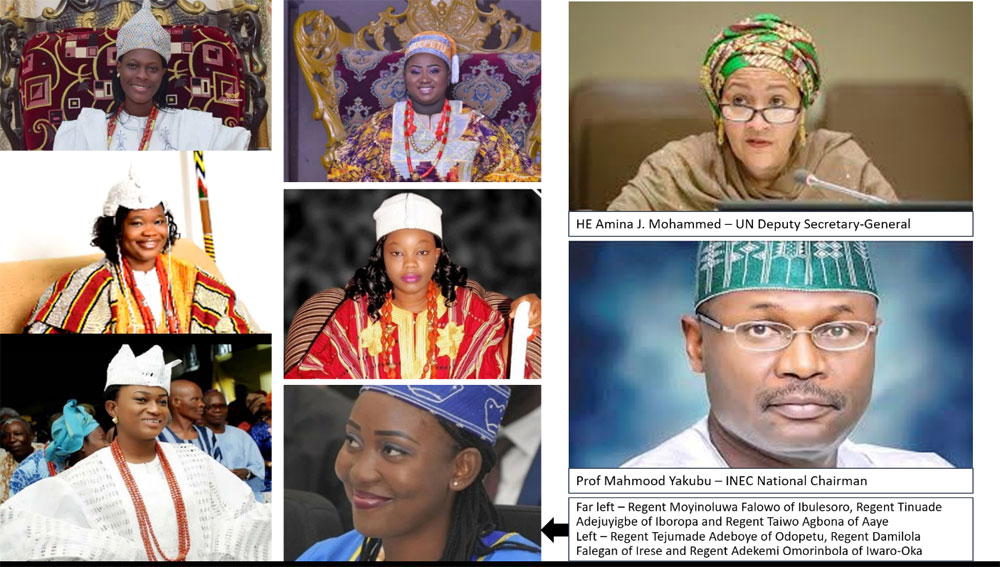
However, it is noteworthy and commendable that Nigeria is currently represented at the highest global multilateral level by a female Deputy Secretary-General to the United Nations, H.E. Amina J. Mohammed.
The dearth of women’s representation in Nigeria’s political leadership positions is often attributed to lack of interest and participation in politics among women or the predominant patriarchal culture which largely excludes women from holding positions of powers.
ALSO READ: Why women are insignificantly represented in Nigeria’s political structures —Tallen
Regarding the former, research has shown that Nigerian women, especially of the 21st century, are actually interested and participate in politics as much as men. However, the majority of women in politics lack the resources required to compete equitably with their male counterparts in a system where political recognition, even within the party structure and attendant godfatherism is primarily a function of the highest bidder.
Whereas, regarding the latter, female traditional rule and power, such as in South-Western region of Nigeria seem to be contesting the patriarchal argument.
In Ondo State, the Regency system of traditional rule recognises and celebrates gender inclusivity and equality with women holding power at the grassroots hierarchy. Although their powers are not formal as those of the State’s Legislature, Executive and Judiciary, they nonetheless command a high level of respect, trust and loyalty from their people and have considerable influence.
These female leaders are further strengthened with the vision, vigour and innovation of youth, as they seek to bring change to their communities within the traditional interim tenure they serve their people, a period that usually ranges from a few months to a decade or more, depending on when a new king is actually selected.
Currently, a group of young Regents in Ondo State, ranging from their early to mid-20s, have formed an alliance in collaboration with AlphaZULU Advocates, an international civil society advocacy organisation, towards peaceful and democratic elections in the Ondo State gubernatorial elections which will be held on October 10.
Through strengthening their capacity to share case studies as well as co-designing and implementing strategies for peaceful and democratic elections in their various communities, the Regents are optimistic that the brewing political tensions and violence across the state can be contained within their communities. This will ensure security to lives and property, while safeguarding vulnerable groups like children, elderly and women in their communities.
Speaking with one voice and decrying the spate of human rights abuses and violence in the state, the Regents have called for the prioritisation of the safety, peace and well-being of all in the forthcoming political elections, imploring the voting population and different political parties to exercise tolerance and respect for human rights, democratic rights, and for lives and property of fellow voters.
They have also commended the INEC Chairman, Prof Mahmood Yakubu’s engagement with traditional rulers as part of the National Peace Accord processes and his assurance that INEC officials will do their best to ensure free and fair election, adding when questioned, that to defend their votes, the people should wait and watch the ballots counted.
The collaborative initiative of Ondo State Regents to ensure peace within their communities during elections highlights the largely untapped potentials of women as a resource for political leadership and community peacebuilding. It emphasises the need for greater inclusion of women across all sectors and levels of Government, in addition to the creation of enabling environments for women in politics to ensure effective contributions.
According to Dr. Sally Osei-Appiah of the School of Media and Communications, University of Leeds, UK, who is also AlphaZULU Advocates’ Project Director for the Regents-led GPS Alliance Initiative, “increased participation of women in politics not only strengthens the democratic process but also ensures that we get the most benefit from the pool of citizens given that women form almost half of the Nigerian population.
“Therefore, we need to be more proactive in building women’s capacity through legislative, financial and logistical support among others to bolster women’s political endeavours. We also need to involve women in political leadership at all levels in order to ensure sustained and coordinated impact.”
In conclusion, it is strongly recommended that national implementation strategy for strong, peaceful, just and inclusive democracies, in the context of sustainable development, be designed with gender-lens approaches, drawing on inter-linkages between SDGs 5 and 16, to foster equitable participation and representation for women as well as adequately measure the quality and impact of women’s participation on whole of society and future generations.
Closing with a Yoruba proverb learned during an observatory visit to the Lagos State House of Assembly in 2009, “Bóròbádòròoyàn, kókóorí è làarígbámú”. These are important conversations we must have as a Nation in this new decade and indeed how to make it a decade of action for increasing the representation of Nigerian women in political leadership and one to look forward to welcoming the first Nigerian female president.
Moses-Mullard, International Development Advocate & Founder, AlphaZULU Advocate, writes from the United Kingdom
Disclaimer
Comments expressed here do not reflect the opinions of Vanguard newspapers or any employee thereof.