By Peter Duru, Makurdi
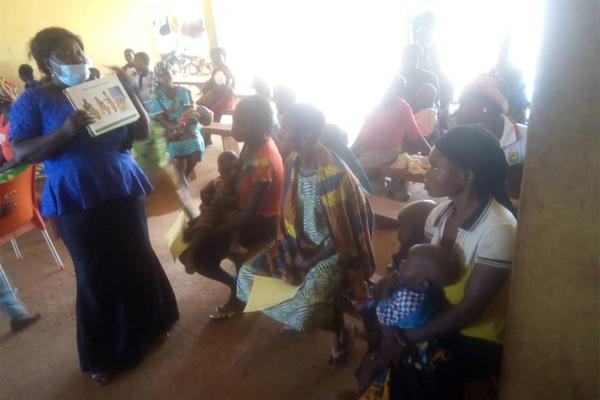
As part of activities to mark this year’s World Breastfeeding Week, the Benue state Ministry of Health has commenced aggressive campaigns and sensitization of mothers on the importance and benefits of exclusive breastfeeding.
According to the Baby-Friendly Initiative, BFI, Coordinator at the State Ministry of Health, Mrs. Faustina Shar the celebration with the theme: ‘Supporting Breastfeeding for a Healthier Planet’ took into consideration the prevailing COVID-19 pandemic.
Speaking yesterday shortly after featuring in a radio sensitization programme in Makurdi, the BFI Coordinator said “you may ask why this theme? It is because this year is largely preoccupied with the ongoing Covid-19 Pandemic: which demonstrates the fact that we are all independent around the world and all dependent on the same planet. Therefore a healthy planet is what we all need.”
Mrs. Shar who lauded the United Nations Children’s Fund, UNICEF, for its numerous interventions in the state and for taking the lead in the sensitization campaign, said the aggressive sensitization was being taken to hospitals, Healthcare Centres and communities in the 23 Local Government Areas of the state.
According to her, “apart from the radio programme, when mothers take their children to hospital or healthcare Centres for immunization we talk to them through our health workers on the importance of breastfeeding, how to ensure exclusive breastfeeding and the benefits.
“Already we have had our quarterly meeting with our Nutrition Focal Persons at the Local Government Levels during which we gave them orientation and told them to go and meet mothers and address them on the benefit of breastfeeding.
“It was basically for that purpose that we just had a radio programme at the Radio Nigeria Harvest FM Makurdi which was facilitated by Breakthrough Action as part of the celebration.
“All the discussions in the radio programme centered on the importance of breastfeeding to the child, the mother and the society at large.
“So during this week we will emphasize exclusive breastfeeding in the first six months of the child, early initiation of breastfeeding which is after one hour of birth and from then it is continued until six months when complimentary feeding is introduced because from that time breast milk alone is not be able to satisfy the baby.”
The BFI Coordinator added that “we are also bring to the fore the fact that during this period of COVID-19 mothers must feed their babies well and in doing that they must ensure strict hygiene.
“There must be frequent washing of their hands before their babies are breastfed. Babies toys and utensils must be disinfected and sanitized. Door handles and surfaces must be disinfected and sanitized constantly as well.
“Also during this campaign we are emphasizing the fact that all artificial milk and packaged baby food must be discouraged and all acts that will pollute the environment must be avoided,” she added.
Meanwhile in Gbajimba, Guma Local Government Area of the state, the Nutrition Focal Person, NFP, in the LGA, Mrs. Agnes Guma told Vanguard that her team had also embarked on aggressive sensitization of nursing mothers, women of child bearing age and pregnant women on the importance of breastfeeding as part of the breastfeeding week celebration.
According to her, “apart from doing the sensitization at the health facilities in Gbajimba, we also visit the Internally Displaced Persons, IDPs, camp in Gbajimba to sensitive them every Tuesday and Thursday.
“We have however intensified the sensitization campaign within this period. We do the sensitization everyday within this period of the breastfeeding week as part of the celebration of the week,” she said.
On its part, the UNICEF in a statement stated that the COVID-19 pandemic highlights the need for stronger measures to support exclusive breastfeeding, as Nigeria joins the world to celebrate this year’s World Breastfeeding Week themed “Supporting breastfeeding for a healthier planet.”
The call came as UNICEF and the World Health Organization (WHO), in the joint statement, urged governments to find innovative solutions to protect and promote women’s access to breastfeeding counselling, which they said “is a critical component of breastfeeding support.
According to the global organizations, Breastmilk saves children’s lives as it provides antibodies that give babies a healthy boost and protect them against many childhood illnesses. “While researchers continue to test breastmilk from mothers with confirmed or suspected COVID-19, current evidence indicate that it is unlikely that COVID-19 would be transmitted through breastfeeding.
“The ongoing COVID-19 pandemic, like most emergencies, leaves families with children in an extremely vulnerable position. Given the present lack of evidence that transmission of the virus could occur through breastmilk, we recommend that mothers should be encouraged to initiate and continue to breastfeed their babies while observing good hygiene practices,” said Peter Hawkins, UNICEF’s Representative in Nigeria.
“UNICEF and WHO recommended that babies be fed only breastmilk for their first 6 months, after which they should continue breastfeeding – as well as eating other nutritious and safe foods – until 2 years of age or beyond. Currently, only 29 percent of Nigerian children between the ages of 0 to 6 months are exclusively breastfed.
“Breastmilk substitutes such as infant formula, other milk products, and beverages not only contribute negatively to the health and development of the child, but also to environmental degradation and climate change.
“The production, packaging, distribution, and preparation methods of breastmilk substitutes have dire consequences on the environment. Metal cans used to package infant formula, if not recycled, are likely to end up in landfill sites. Plastic, aluminum and paper packaging often ends up in our streams and rivers with huge consequences to the overall health of the people. Breastmilk, on the other hand, is natural, and is the only food a baby needs in the first 6 months of life.
“The aggressive marketing of breastmilk substitutes is a major barrier to improving newborn and child health.
“UNICEF therefore calls on relevant agencies to strictly enforce adherence to the National Regulation on the Code of Marketing of Breastmilk Substitutes and relevant World Health Assembly (WHA) resolutions by putting to a stop to the unwholesome marketing of breastmilk substitutes. Civil society organizations should also not seek or accept donations of breastmilk substitutes in emergency situations.
“During the COVID-19 pandemic, availability and increased access to health care workers, including midwives and nurses, to deliver skilled breastfeeding counselling to mothers and families is essential.
“Through strengthened policy provisions and increased investment for breastfeeding, we can ensure that mothers in Nigeria are empowered to breastfeed their babies,” said Peter Hawkins. “Breastfeeding is still the safest during and after the COVID-19 pandemic.”
Disclaimer
Comments expressed here do not reflect the opinions of Vanguard newspapers or any employee thereof.