By Douglas Anele
The major function of a philosopher, in my opinion, is to shine penetrating bright light on any subject-matter whatsoever, with the aim of providing deep insights about it and, more significantly, bringing into bold relief important lessons derivable from that topic or phenomenon. That is why in analysing any issue, philosophers endeavour to be as objective as possible in spite of human fallibility and the impossibility of eliminating completely unconscious biases.
To be the best mirror of reality, sound reasoning, attentiveness to relevant facts and the critical attitude are the hallmarks of philosophical investigation which will be used to illuminate the subject our discourse today. Since February this year, the topic discussed most in virtually every country of the world is the novel coronavirus or Covid-19. By the latest estimates, over 1,500,000 million people have been infected by the virus, with more than 90,000 deaths worldwide.
Therefore, as the deadly virus spreads rapidly to the extent of putting health systems in the advanced countries of Asia, Europe and North America under extremely severe stress, it is appropriate at this point to examine the coronavirus phenomenon from a philosophical point of view, with special emphasis on the fundamental lessons humanity should learn from the pandemic. This is based on my conviction that any negative occurrence or circumstance of this kind is a golden opportunity to remind ourselves about the precariousness of human existence, the fundamental unity or oneness of humankind and the urgent need to improve our practice of life.
As Socrates, the ancient Greek philosopher wisely remarks, an unexamined life is not worth living. Therefore, the ongoing coronavirus disease provides an excellent reason for every human being without exception that has attained the “age of reason” to engage in self critical examination focusing especially on the meaning of life and on the best way to live a good life which, broadly speaking, is the kind of life inspired by love and guided by knowledge.
So, we begin our reflection by explicating the ontology of coronavirus. What exactly is coronavirus? To answer that question, one must first of all define a virus. Biomedically speaking, a virus is a microscopic parasite smaller than bacteria that cannot reproduce by itself. On its own a virus is inert, lifeless. But once it infects a susceptible cell, it can induce the cell machinery to produce more viruses. Most viruses have either deoxyribonucleic acid (DNA) or ribonucleic acid (RNA) as their genetic material, which could be single- or double-stranded. The entire infectious particle, known as a virion, comprises the nucleic acid enclosed in an outer protein coat or shell called capsid.
The simplest viruses contain enough DNA or RNA (and never both simultaneously) to encode 4 proteins, whereas the most complex can encode between 100 and 200 proteins. The sizes of viruses are measured in nanometres (nm), that is, one billionth of a meter. To have a concrete idea of how incredibly small viruses are, consider this: with a diameter of 220 nm, the measles virus is about one-eighth the size of E.coli bacteria, while at 45 nm the hepatitis virus is forty times smaller than E.coli. David R. Wessner, a Professor of Biology, provides clearer insight on this issue when he states that the polio virus which is 30nm across is about 10,000 times smaller than a grain of salt. In fact, the noticeable differences in size between viruses and bacteria provided the initial important clue to existence of viruses.
READ ALSO: Boris Johnson to doctors, nurses: I owe you my life
Researchers in virology and other relevant biomedical sciences agree that viruses occupy the tenuous fuzzy boundary between living organisms and non-living matter. As already indicated, a virus contains strands of DNA or RNA, the key chemical substances found in all living things. But it lacks the capacity to independently read and act upon the information encoded within these nucleic acids. Thus, the primary function of a virus is to deliver its nucleic acid genome into the host cell so that the genome can be transcribed and translated by the cell. It usually gains access into a host’s body through respiratory passages, open wounds and the saliva of insects.
Once inside the host cell, viruses release their genomes and disrupt or hijack various parts of the cellular machinery and their normal functioning. Specifically, these genomes “direct” or “instruct” the host cells to produce viral proteins, thereby preventing the synthesis of RNA that can be used by the host cell. Eventually, having compromised the cell’s defence mechanism the invading viruses gain the upper hand both inside the host cell and within the host itself by creating conditions that allow them to spread rapidly. When the viral load in the host’s cells goes beyond a certain threshold after the immune system had been overpowered, the disease associated with that very virus comes up.
For instance, a sneeze by someone suffering from common cold or flu releases about 20,000 droplets containing rhinovirus or coronavirus particles. According to experts, touching or inhaling these droplets is enough for spreading the cold or whatever disease caused by the particular virus in the droplets to others. Now, when one considers that throughout history pandemics triggered by viruses have killed hundreds of millions of people (the deadliest of which is probably the so-called Spanish flu that lasted from 1918 to 1920) and the way they disrupt the normal functioning of cells, these microscopic entities can justifiably be described as the tiniest and deadliest invisible terrorists in the world.
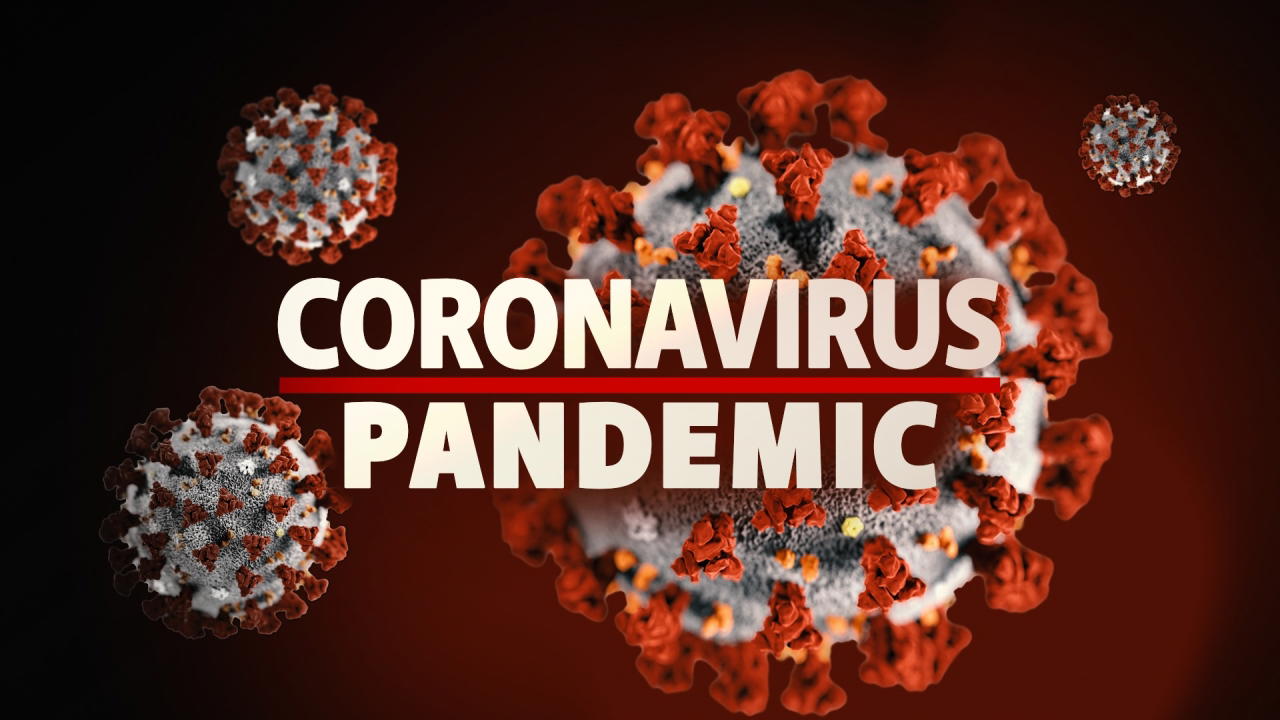
Focusing now on coronaviruses or CoVs proper, they belong to a large family of viruses that cause illnesses ranging from the common cold to more severe conditions like Middle East Respiratory Syndrome (MERS) and Severe Acute Respiratory Syndrome (SARS). The virus responsible for the current pandemic, the novel coronavirus (Covid-19), was identified late 2019 in Wuhan, China. It is a new type of coronavirus that has not been associated with humans before.
The aetiology of Covid-19 disease has been traced to a newly discovered virus associated with wild animals, especially bats and pangolin. But with the passage of time as the disease spreads from China to other countries, compelling the World Health Organisation (WHO) to reluctantly categorise it as a pandemic, different conspiracy theories have emerged to explain it. For instance, just like the speculations and rumours around HIV when it became a global public health emergency, some people, mostly non-experts, claim that Covid-19 is the unfortunate product of Chinese research into biological warfare which, either by deliberate design or sloppiness, infected some animals in Wuhan wildlife market from where the virus was passed on to humans.
Another story claims that the deadly virus leaked out from a vial containing the biological agent when a CIA operative who stole it from a laboratory in China tried to escape and mistakenly dropped the vial and it broke. The most recent bizarre account describes Covid-19 as a hoax created by China to cover up the deadly effects of the latest 5G technology pioneered by the Chinese electronic and telecommunications giant, Huawei. Of course, one cannot completely rule out any of these conspiracy theories a priori, considering the incredible human capacity for mischief and wickedness. However, I think it is more rational to see the new coronavirus disease as one of the very ugly consequences of global environmental degradation caused by man’s unwise disruption of the fragile ecological balance and injurious lifestyles that had weakened our immune system and distorted the natural life-enhancing electromagnetic interchange between the earth and members of the biotic community as a whole.
Disclaimer
Comments expressed here do not reflect the opinions of Vanguard newspapers or any employee thereof.