By Adetutu Audu
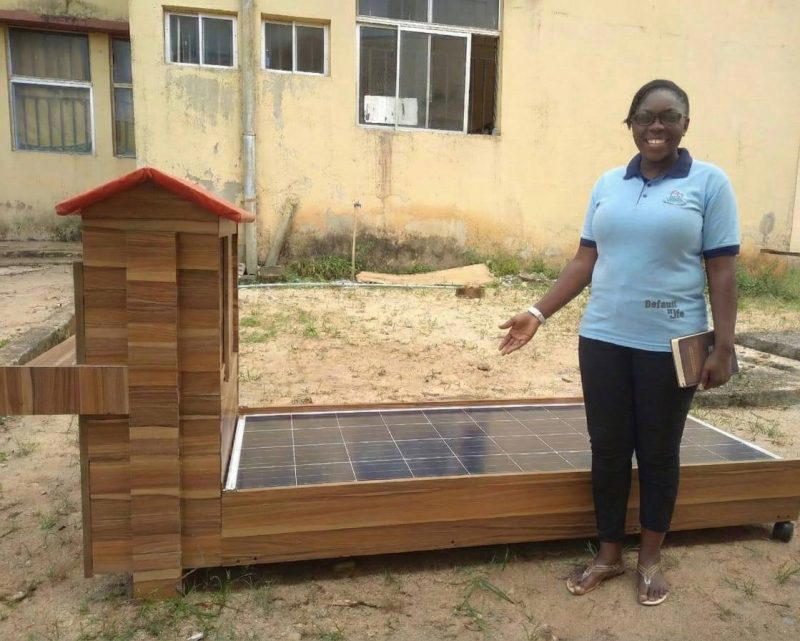
In Nigeria’s agricultural sector, where post-harvest losses can devastate farming communities, a recent graduate from the Federal University of Technology, Owerri has developed a solar-powered solution that is already transforming how farmers process and preserve their crops. What makes this achievement truly exceptional is that Winifred Ayogu not only designed the innovative system but also led cybersecurity research to ensure its security as it scales across Nigerian farmlands.
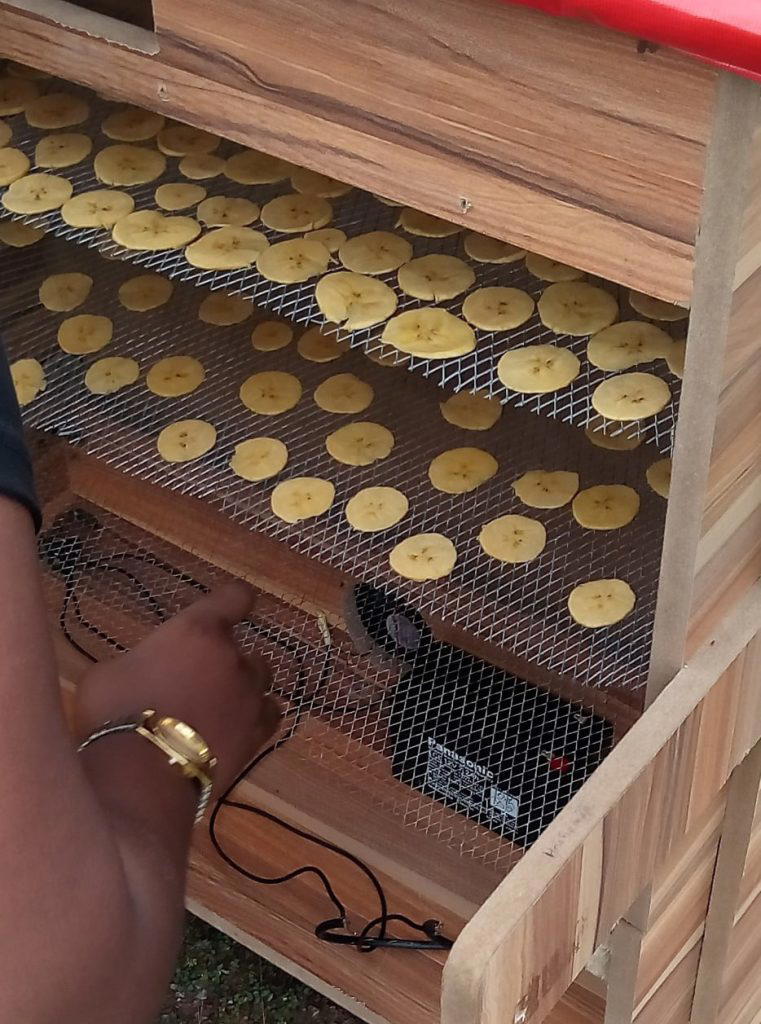
As an undergraduate student, Ayogu identified a critical challenge facing farmers in Imo State and beyond. Traditional crop drying methods exposed agricultural products to contamination, weather damage, and quality degradation. Her response was the Photovoltaic Thermal Collector for Drying of Agricultural Products, a sophisticated system that harnesses solar energy to provide controlled, hygienic drying conditions.
Through rigorous testing with crops including ripe plantains, she demonstrated that solar-powered drying could maintain nutritional value and safety standards while dramatically reducing processing time and contamination risks.
The technical achievement set a new standard in her department. By 2018-2019, her project had accomplished what no previous student work had achieved. The University’s Faculty of Science adopted and scaled the technology, and the Ministry of Agriculture in Owerri West Local Government Area recognized its transformative potential.
Today, with support from Hon. Okechukwu Oduh, representative of the Local Government Council, Ayogu’s solar drying technology is implemented across farmlands in Owerri West and expanding into neighboring regions. Farmers using the system report significant improvements in crop quality, reduced spoilage, and increased market value for their products.
But Ayogu’s vision extended far beyond building the physical system. Her photovoltaic thermal collectors incorporated Internet of Things technology including remote temperature monitoring, humidity sensors, and automated fan controls that allowed farmers to optimize drying processes in real time. This connectivity made the systems more efficient and accessible. However, as the collectors were adopted by farm businesses for scale into larger dryers for commercial purposes, Ayogu recognized that this same connectivity created potential security vulnerabilities that could compromise both equipment and food safety.
Rather than waiting for problems to emerge, she took action and assembled a cross-university research team including experts in cybersecurity systems and agricultural engineering from other Nigerian institutions. As lead author, she guided the development of comprehensive security protocols published in December 2019 under the title “IoT Security Assessment Framework for Solar-Powered Agricultural Systems: Integrating Cybersecurity Controls into Renewable Energy Food Processing Infrastructure.”
The research addressed critical security considerations for solar-powered agricultural equipment, from secure sensor authentication to incident response procedures that integrate with food safety protocols. This foresight proved remarkably prescient. Within two years, cyberattacks would cripple agricultural and energy infrastructure worldwide, from ransomware shutting down major food processors to attacks on renewable energy systems. Ayogu had anticipated these threats and built defenses before they could impact Nigerian farmers.
Following publication of the security framework, the IoT features in her solar drying systems are going to be implemented with robust cybersecurity protections built in from the start. Farmers across Owerri West and Imo in general now benefit from connected agricultural technology that will provide real-time monitoring while maintaining security standards typically found only in critical infrastructure systems. As the network of connected solar dryers continues expanding across the eastern part of Nigeria, this secure architecture ensures resilience against cyber threats facing agricultural systems globally.
What distinguishes Ayogu is the breadth and integration of her expertise. She is simultaneously a mechanical engineer who designed sophisticated solar thermal systems, a practical innovator who ensured her technology could be adopted by real farmers, and now, a cybersecurity researcher who led inter-institution collaboration, and a systems thinker who recognized how her innovation’s success would create new challenges. This multidisciplinary capability is extraordinarily rare, even among experienced professionals and is a remarkable achievement for Federal University of Technology, Owerri from where she graduated a few months ago.
The success of Ayogu’s secure solar drying technology in Owerri West has attracted attention from across Nigeria. Other states are now encouraged to adapt this proven innovation for their agricultural development programs. With Nigeria’s agricultural sector employing over 70 percent of the rural population, the widespread adoption of her technology could revolutionize food processing nationwide while addressing food security, rural economic development, and environmental sustainability simultaneously.
As neighboring communities witness improved agricultural outcomes, demand for the solar drying systems continues growing. “We are a food-producing nation and the unification of agriculture and technology is not left out. Her technology’s secure foundation ensures it can scale safely across communities while protecting both farmer operations and food security,” Okechukwu said.
Ayogu’s achievement represents more than individual excellence. It demonstrates Nigeria’s capacity to develop and deploy homegrown technological solutions that address local challenges with world-class engineering and foresight. Her work stands as a powerful example for the next generation of Nigerian students and engineers committed to transforming their communities through practical, secure, and sustainable innovation. Always remember thats you do not have to be a veteran in your field to make outstanding contributions to the development of our country.
Disclaimer
Comments expressed here do not reflect the opinions of Vanguard newspapers or any employee thereof.