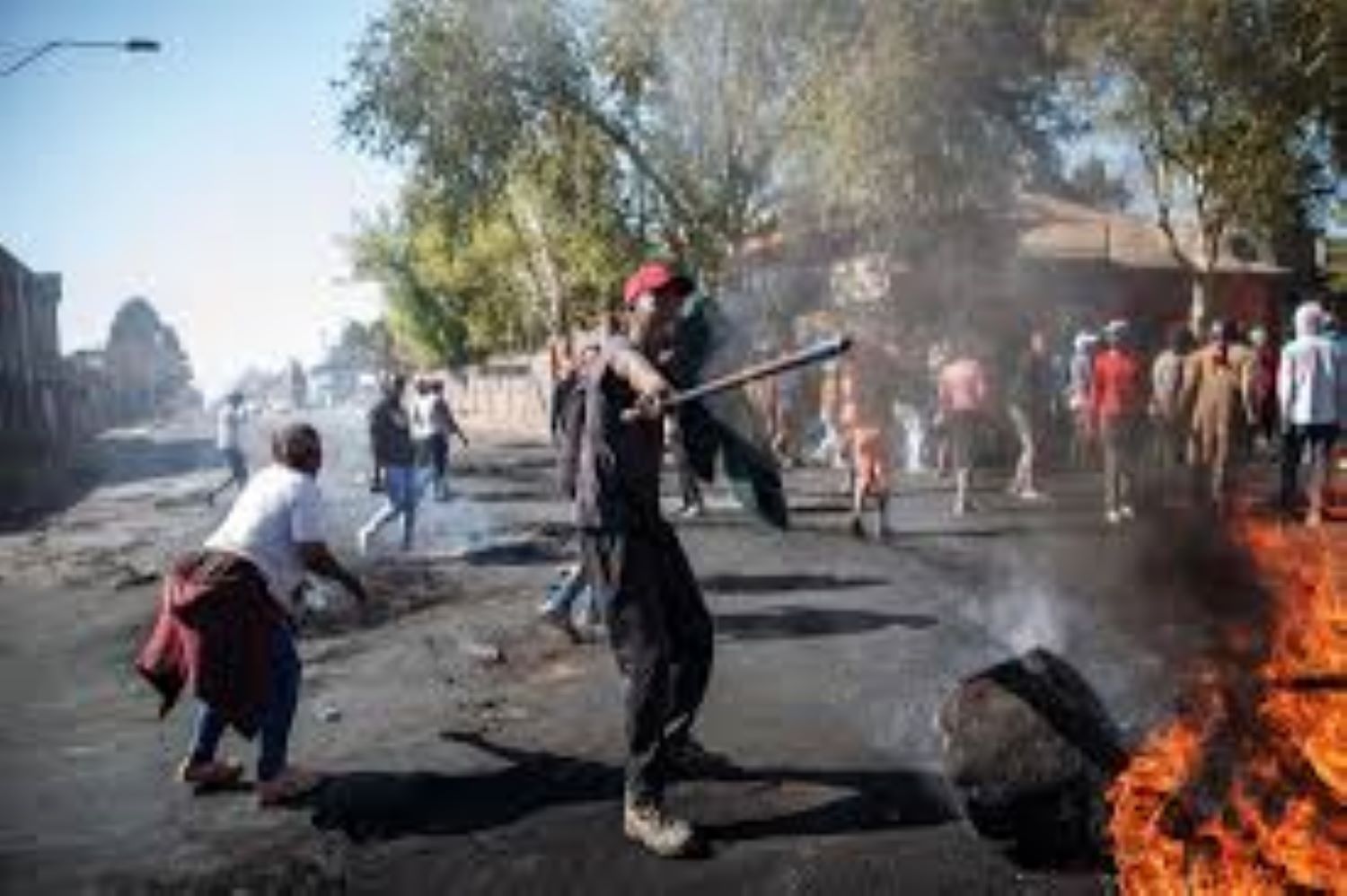
Xenophobia: File photo
By Eric Teniola
XenophobiaALSO partly affected by the order like many others was Chief Christopher Adebayo Alao Akala (69), the former governor of Oyo State who is from Ogbomoso. In fact, the First Baptist Church in Oke-Elerin in Ogbomoso and its environ became a refugee camp for Nigerians deported from Ghana. Also affected by the order was my in-law, Chief Edward Afolabi Abimbola (1930-2017), the Lijofi of Idanre land, the first industrialist to build a bicycle factory in Ghana. When the factory was opened on January 16, 1969, the event made a front page lead in the Daily Graphic of January 17, 1969. Chief Abimbola married a pretty Ghananian princess, Miss Lucy Menya Dudome of Peki town in Volta Region, Ghana in 1965. When he was evicted from Ghana, he was only allowed to take his wife along with him and was forced to surrender all his properties in Ghana. So prominent was he in Ghana before 1969, that the Afenifere Leader, Chief Ayo Adebanjo became his guest while in exile in Ghana.
READ ALSO:Software Practitioners advocate inclusive IT ecosystem(Opens in a new browser tab)
Under Ghana’s Alliance Compliance Order, Nigerians and other African and non-African immigrants were forced to leave Ghana as they made up 20 percent of Ghana’s population at the time. The returnees were mostly children but of Nigeria parents. They knew no other country than Ghana and that was during the Nigerian civil war. Mostly affected by the order then were Yorubas from Ogbomoso, Ikirun, Ilorin, Oyan, Offa, Inisha, Oke-Imesi, Ogotun, Ejigbo, Ede and other towns from the then Western states.
They lost their properties and money in Ghana for they were given less than fifteen days to pack out. In spite of appeals by then head of state of Nigeria, General Yakubu Gowon and other African leaders especially, Emperor Haile Selaisse of Ethiopia (1892-1975) and President Hamani Diori (1916-1989) of Niger Republic, Dr. Busia rejected those appeals.
Dr. Busia’s order of November 19, 1969 was that all aliens without valid residence permit were to quit the country within fourteen days, that is, latest by December 2, 1969. Official explanations for the expulsion as offered by the Government of Ghana included the following: (a) that there were about 600,000 registered unemployed in Ghana, which would be relieved by the expulsion of the aliens; (b) that the continuing balance of payment deficit was worsened by immigrant workers and traders who remitted home some of their earnings; and (c) that the aliens engaged in smuggling, especially of diamonds. Another important reason for the expulsion order of 1969 was the economic misfortunes that befell Ghana. From the late 1960s through the early 1970s, Ghana experienced severe economic decline. It should be recalled that the Ghanaian economy was cocoa dependent; providing over 70 per cent of foreign exchange earnings for the country. However, since the late 1950 up till 1970, the world cocoa price witnessed a continuous decline, falling by over 75 per cent as at 1969. This engendered an increase in the cost of living and import shortages.
Expectedly most Ghanaians hailed Dr. Busia’s action. On January 13, 1972, he was overthrown. Later fortune smiled on Nigeria. Drilling of oil commercially by Shell, Mobil and Agip doubled in the Niger Delta. The oil money was steady and hopes were high that Nigeria could prosper, despite the brutal military regimes that marred that period. In the 1970s the economy exploded when oil prices soared worldwide. The golden decade had arrived and the country became Africa’s wealthiest, securing its title: Giant of Africa.
By 1974, Nigeria’s oil wells were spitting out some 2.3-million barrels a day. The standard of living improved. There was an influx of people from the farms into the cities; when they travelled, robust iron boxes were generally preferred over cheap plastic sacks. The influx came not just from within Nigeria, but from across the region. Even Nigeria’s leader at that time, General Yakubu Gowon was reported to have boasted that money was not Nigeria’s problem but how to spend it. Suddenly Nigeria became an Eldorado.
Nigeria led the formation of the Economic Community of West African States known as ECOWAS. ECOWAS is a regional political and economic union of fifteen countries located in West Africa. Collectively, these countries comprise an area of 5,114,162 square kilometres (1,974,589 sq mi), and in 2015 had an estimated population of over 349 million. The union was established on May 28, 1975, with the signing of the Treaty of Lagos, with its stated mission to promote economic integration across the region.
The countries that formed at that time were Cape Verde, Gambia, Guinea, Guinea-Bisaau, Liberia, Mali, Senegal, Sierra-Leone, Benin, Burkina Faso, Ghana, Ivory Coast, Niger, Nigeria and Togo. Expectedly Nigeria’s General Yakubu Gowon was made the first chairman of ECOWAS.
Suddenly Nigeria entered the oil boom era. A lot of migrants from Africa came into the country in search of jobs and greener pasture. Nigeria was like the U.S.A., Britain, Germany, South Africa, etc., of today, that many Nigerians are queuing up for visas to elope to. During the oil boom period, there were jobs that Nigerians were shy or reluctant to do. Such jobs include driver, cobbler (shoe maker), tailoring (Obi-Oma), security guard, cook, gardener, etc. As such, those immigrants that came to Nigeria, were more than willing to do such jobs. In fact, in Lagos then, most cobblers, tailors, drivers, etc. were Ghanaians.
On September 24, 1979, Dr. Hilla Limann (1934-1998) was sworn-in as the elected President of Ghana. Mr. Limann, a Muslim from Gwollu in the Sissala West District of the Upper West Region part of Ghana was elected on the platform of Peoples National Party (PNP). Seven days later, on October 1, 1979, Alhaji Shehu Usman Shagari was also sworn-in as the President of Nigeria.
Disclaimer
Comments expressed here do not reflect the opinions of Vanguard newspapers or any employee thereof.