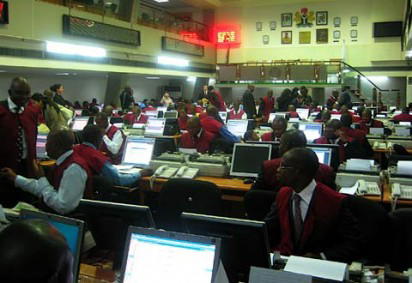
Stockmarket
By Dele Sobowale
Fools rush where angels fear to tread—Alexander Pope, 1688-1744, VANGUARD BOOK OF QUOTATIONS, p 62.
HUNDREDS of thousands of Nigerian fools and angels were rushed out on the Treasury Bills market early this month. Most are still in shock regarding what to do with the funds that will be released to them any time soon. A few have acted hastily instead of pre-meditatively when they suddenly found funds they had invested for years in this safe haven on their laps without a clue about what to do with the bundle.
READ ALSO:Benjamin Obidegwu: The Attorney reigniting capital market confidence(Opens in a new browser tab)
The news that the Central Bank of Nigeria, CBN, has ordered that Treasury Bills, TBs, should no longer be sold to private investors in their personal capacity caught virtually all of us by surprise. The CBN must be commended for its ability to prevent leakage of the sensitive policy change and hopefully for achieving a level playing field for all stakeholders. Whether or not it will achieve the objective of bringing down interest rates and stimulate investment by the private sector remain to be seen. The reason for scepticism is not, however, hard to discover.
When it was revealed a few days after that the Federal Government had generated N3 trillion deficit in just eight months of this year, even a Level 100 Economics student at any university must know that the CBN, as the Federal Government’s lender of last resort must have exhausted a great deal of its ability to provide funds through Ways and Means. The CBN is desperate; the Federal Government more so, at the moment.
Again, the causes of their problems are not obscure to financial experts. The FG, like any economic entity, must attempt at all times to maintain a strong balance sheet. Revenue and expenditure must be closely aligned; otherwise unpleasant consequences arise. For the Buhari administration the unwanted economic repercussions of failing to generate the revenue to fund its budget are beginning to show. No FG under any Nigerian leader had racked up such a dismal record of negative variances with respect to revenues budgeted and actual collection.
In no single year since 2015 till now had this government collected up to 70 per cent of the revenue estimates presented in the budget. Predictably, projects and programmes had been consistently under-funded. The annual budget had stopped being a ritual. It is now a bloody joke. It must be regarded as one of the wonders of the world today that Nigerians are actually paying lawmakers in the National Assembly, NASS, to waste everybody’s time considering Appropriation Bills which should be thrown into the nearest trash can. That Nigerians are suffering so much and still smiling must be another mystery to unravel about the Nigerian character.
For every folly of their [leaders] the [Nigerian people] feel the lash —Horace, 65-8BC. VBQ p 61.
Everywhere one looks, the evidence of deterioration is evident. To cover up their failures, Ministers have now taken to telling their “fellow countrymen” outright lies.“There is no hunger in Nigeria” according to the first. “Nigerian roads are not that bad” added the second. How a country can develop with such barefaced falsehood dished out as official statement is yet another puzzle.
Just as surprising was the report that some investors are moving from Treasury Bills to the Stock Market. That is simply silly – unless the investors plan to ruin themselves financially. The Nigerian Stock Exchange is certainly not the new destination for anyone who worked hard for the money previously invested in government securities. The evidence is quite clear. Remove the capitalisation of the stocks which were listed after 2017, and that includes some jumbo ones like telecommunications, and you will discover that the NSE has lost close to 30 per cent of its value from 2016 till today. Despite the new listings, the capital market is set to record another negative year in 2019. So, why would anyone in his right senses want to jump from Treasury Bills, which admittedly, offers good returns to one which will most likely provide negative returns on investment?
Each time I read about the “dividend” being paid to shareholders in most Nigerian companies, I am reminded of that quip by Mark Twain, 1835-1910. “Hain’t we got all the fools in town on our side? And ain’t that a big enough majority in any town?” (VBQ p 63).
The Nigerian Stock Exchange was the darling of the global investment community until 2008/9 when the combination of Banking Consolidation and later Banking Crisis took the shine off it. Since then it had been clattering downhill like an old wagon train with occasional bumps up which unwary investors regard as the sign of possible recovery. Unfortunately, hope for a turnaround any time soon is like looking at a mirage. It will not occur and become sustainable as long as the Nigerian economy remains in the sick bay. For quick reference, permit me to repeat once again the depressing facts of the Nigerian economy which serves as the background for all capital market activities.
With four straight years of abysmal economic performance to its record, the FGN has already put up a sign to portfolio investment managers reading “enter at your own peril”. Most Nigerians might not know, but professional managers know too well that when a government fails consistently in fulfilling its revenue and expenditure estimates the private sector is imperilled. They also realise that aggregate demand for goods and services will decline and profits will be hard to make.
Unlike many large economies, the Nigerian private sector is dependent on governments (Federal, State and Local) expenditure. These expenditures are in turn greatly influenced by the revenue generated. It is a foregone conclusion that the FG will once again fail to collect revenues promised in the 2019 and 2020 budgets. Even a glance at the Mid-Term Expenditure Framework revenue forecast reveals the same basic flaw in the budgeting process. Every budget until 2022 is founded on the unrealistic assumption that Nigeria will export 2.3 million barrels of crude oil per day when Nigeria as a member of the Organisation of Petroleum Exporting Countries, OPEC, is now committed to 1.8 million barrels per day quota. The largest percentage of the unfavourable variance in revenue generated is accounted for by this one item – which will not soon stop plaguing our economy.
Furthermore, the Ministries, Departments and Agencies, MDAs, apparently take the budget revenues allocated to them as a joke. No officer gets penalised for failure to collect what is expected from the agency. Meanwhile, they spend all their recurrent expenditure and wait for the FG to go and borrow to make up the deficit. Only Nigerians can fail to recognise an FGN which has totally failed in performing one of its basic functions.
There are other reasons why the NSE should not be the first port of call for Nigerians forced to exit the Treasury Bills market. But, a word is always sufficient for the wise.
LAST LINE. Giving advice is always dangerous. I know. But, until the situation in the financial markets become clearer, those forced to exit TBs are advised to seek advice before proceeding. It is easy to lose money in a turbulent market. Good luck.
Disclaimer
Comments expressed here do not reflect the opinions of Vanguard newspapers or any employee thereof.