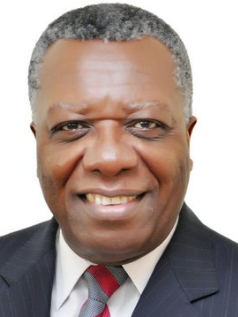
Chiedu Osakwe
By Olu Fasan
Last week, Nigeria lost a great son, Chiedu Osakwe, who died on September 22, aged 64, in Geneva, Switzerland. Ambassador Osakwe’s contributions to the world trading system, to Africa’s economic integration and to Nigeria’s trade diplomacy were so hugely significant and unparalleled that his death sent shock waves across world.
The large, multi-racial gathering at his memorial service at the Holy Trinity Church in Geneva on September 27 was a testimony to how much he was lovedand respected by the trade, diplomatic and academic communities in Geneva, his home for over twenty years!
Chiedu Osakwe
For me, Dr Osakwe’s death was also a personal loss. I first met him in 2005 when I joined the World Trade Organisation, WTO,as a research fellow, and he was a Director at the world body. I have fond memories of my interactions with him, and particularly of his deep knowledge, sharp mind and great passions for Nigeria and Africa.
United States accuses China of stealing military spacecraft technology(Opens in a new browser tab)
In his 19 years at the WTO, from 1998 to 2017, Osakwe held, at the most senior level, all the major development-oriented roles. He was, for example, Director of the Doha Development Agenda, leadingthe DDA negotiating process. In her tribute, Ambassador Amina Mohamed, former Foreign Minister of Kenya, recalled how she and Dr Osakwe “spent precious moments co-designing components of the multilateral trading system that would be most beneficial to developing countries”. Osakwe was also Director of the WTO Accession Division, where he helped several African and other developing countries through the difficultprocessof becoming WTO members.The Belarus Mission to the United Nations in Geneva said in its tribute that Osakwe”contributed significantly to the revitalisation of negotiations on Belarus WTO accession”. Many others owed their accession to him!
Hardly any other African has made as much contribution as Osakwe to push for a just and development-friendly global trading system. Someone called him “a voice of reason on trade issues”. Catriona Laing, British High Commissioner to Nigeria, described Osakwe as “a brilliant trade guru”. Indeed, he was brilliant, with enormous capacity to articulate eloquently the positive power of trade.
In 2017, Dr Osakwe retired from the WTO, and immediately took up the role of Associate Professor of International Trade, Policy, Diplomacy and Negotiations at the International University of Geneva. However, that same year, he took a leave of absence to become Trade Adviser to the then Minister of Industry, Trade and Investment, Okechukwu Enelamah. He was later appointed as the first Director-General of the Nigerian Office for Trade Negotiations, and Nigeria’s Chief Trade Negotiator.
These tasks seemed like a poisoned chalice.How would a man who spent his lifetime championing open trade persuade a deeply protectionist country to embrace meaningful trade negotiations and liberalisation? It was a tall order. But Osakwe believed in the power of logic and persuasion. As he once said: ”Countries that are open to trade grow faster and generate more jobs than countries that are closed up”.Of course, President Muhammadu Buhari has not embraced that wisdom; that would require a Damascene conversion. But it’s to Osakwe’s credit that the president at least acknowledged his “intellectual depth, fervour and sense of patriotism” as Buhari said in his tribute.
So, as we have seen, Dr Osakwe bestrode the world stage on trade, and tried, ideationally and institutionally, to transform Nigeria’s trade policy and negotiation landscapes. But it’s for his monumental contribution to Africa’s economic integration that Osakwe will forever be remembered. In June 2017, two years after the negotiations on the African Continental Free Trade Area, AfCFTA, were launched but had stalled, African leaders appointed Ambassador Osakwe as chairman of the AfCFTA Negotiating Forum.He was, as President Buhari rightly said, given “the front-line and historic role” of resuscitating and concluding the negotiations.
Well, within a year, Osakwe steered the negotiations to a successful conclusion, leading to the launch of the AfCFTA and the signing of its agreement by 44 African countries in March 2018. In his tribute, Ambassador Albert Muchanga, African Union’s Commissioner for Trade and Industry, described Osakwe as “giant of AfCFTA”, adding that: “He contributed immensely to what AfCFTA is and will be”. Indeed, Osakwe was AfCFTA’schief architect, who rallied the continent around the agreement.
But not his own country, it seemed. For over a year, Nigeria dithered and kept the world on tenterhooks about whether or not it would sign the agreement. It was deeply embarrassing. A Nigerian had helped Africa negotiate a historic continental free trade agreement, yet Nigeria balked at signing it. But Osakwe was not deterred. As Richard Ough, former Senior Economic Adviser at the Nigerian Office of the UK Department for International Development, DfID, said, Osakwe “demonstrated perseverance, passion and persuasion, convincing sceptics at home of AfCFTA’s merits”. In July this year, President Buhari bowed to pressure and signed the AfCFTA agreement; it was a fulfilling moment for Dr Osakwe!
This week, Nigeria marked its 59th independence anniversary. If anything is worth celebrating, it’s its people, who, like Osakwe, are so exceptionally brilliant that the world constantly callsupon their expertise. From the UN to the World Bank, from the WTO to the African Development Bank, Nigerians are helping to create a better world. Yet, paradoxically, Nigeria can’t run its own affairs. But Osakwe showed it could. He left enduring positive legacies with the creation of AfCFTA and the NOTN.
African leaders and the Nigerian government must build on Osakwe’s legacies. They shouldalso formally honour this great Nigerian, this great African. May his soul rest in peace!
Disclaimer
Comments expressed here do not reflect the opinions of Vanguard newspapers or any employee thereof.