By Uche Nnabuife
When Emeka Ihedioha was declared the winner of the governorship election in Imo State, the major contestants in the election, Senator Hope Uzodinma, Senator Ifeanyi Ararume, and Uche Nwosu filed petitions against him at the governorship election tribunal.
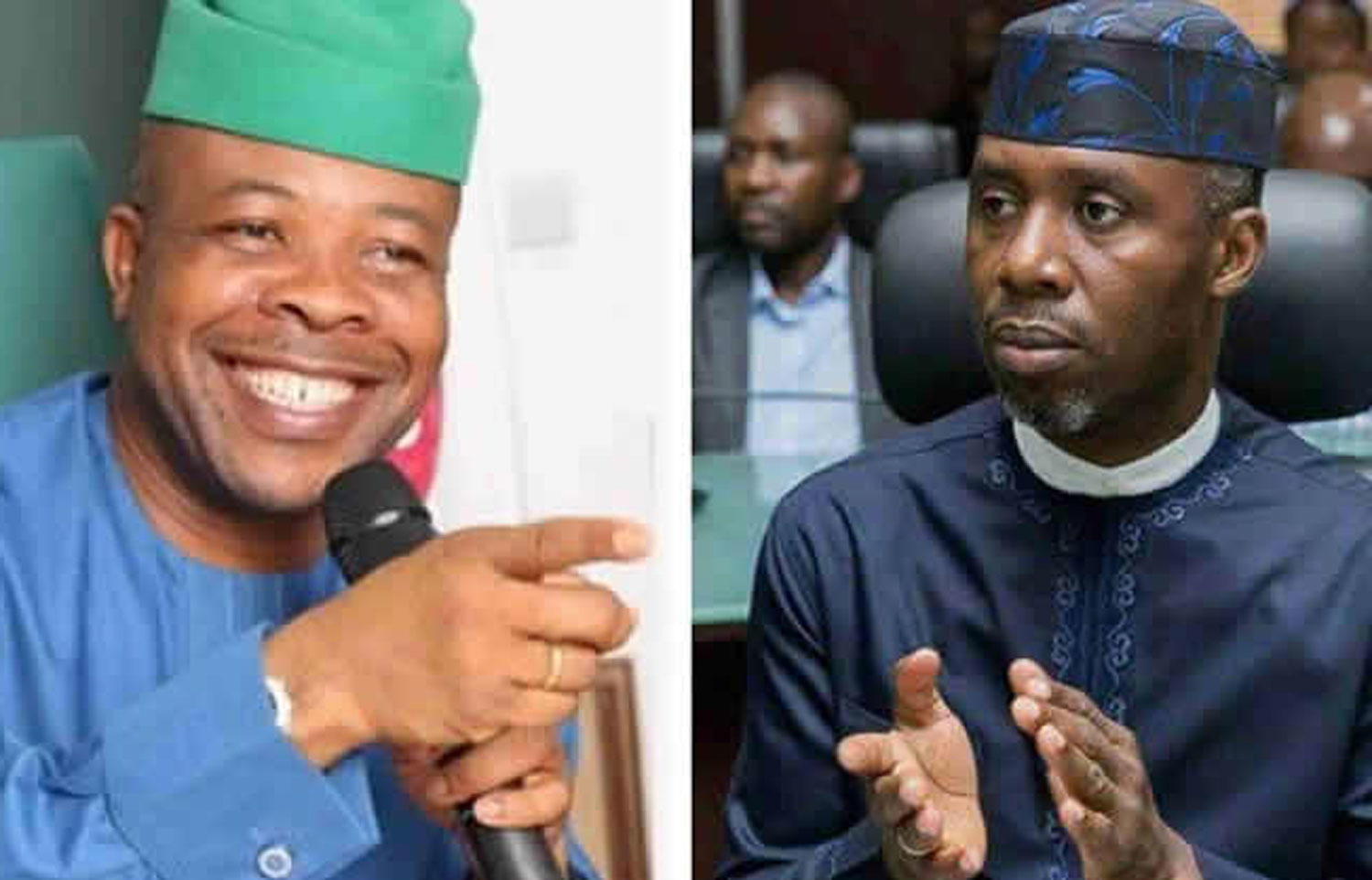
Ihedioha-Nwosu
While Senator Uzodinma premised his petition on the complaint that he won the majority of lawful votes and secured the mandatory one quarter of the votes cast in at least two thirds of the local governments in the states, he stated that in the petition that his votes were unlawfully excluded to ensure his placement at the 4th position.
Breaking: Tribunal declares Adeleke winner of Osun governorship election(Opens in a new browser tab)
Senator Ararume did not claim to have won the election. He complained that the election was marred by numerous forms of malpractices. He also raised the fact that the results were massively inflated in the three local government areas of Aboh-Mbaise, Ezinhitte-Mbaise, and Ahiazu-Mbaise. He expressed concern that the scores credited to Ihedioha in the three local government areas were higher than what Ihedioha scored in the remaining 24 local government areas.
Uche Nwogu’s case was built on the complaint that Ihedioha did not secure the mandatory 2/3 requirement and therefore ought to go for a runoff with him. He also claimed to have won the election with a majority of votes cast.
At the hearing of their petition, each petitioner, through their various counsels tried to prove their cases. Uzodinma called 54 witnesses and founded his complaint and evidence on the exclusion of the result of 388 polling units at the collation center. What was clear from the pleadings of both parties was that there was an election at the polling units which was free and fair.
What arose for determination by the tribunal was what happened at the collation center, whether any result was omitted or not. It was, therefore, a great shock to the PDP and Ihedioha when the Uzodinma team not only tendered the result of the 388 polling units but also called the witnesses. The Deputy Commissioner of Police in charge of Operations during the election also gave evidence and tendered the copies of the results of the 388 units given to his men at the field at the end of the election.
From the defence of INEC, the result produced by Sen Uzodinma was fake and a product of forgery. Regrettably, neither INEC nor Ihedioha produced any evidence to contradict the quantum of evidence called by Uzodinma.
Ihedioha called only four unit witnesses while PDP called only one INEC witness. INEC called no witness. Imo politicians were shocked that despite the monumental evidence produced by the petitioner, the PDP failed to counter the case of the petition in any material particulars. They did not produce their unit copies of the result and did not call even one collation officer to disprove the allegation of unlawful exclusion that was proved by the petitioner through the Form EC8B tendered at the trial. The collation form EC8B did not contain the results of the 388 units, thus evidencing the exclusion.
The distribution chart for sensitive materials used by INEC in the election and which was tendered by the petitioners and confirmed by the INEC witness called by PDP showed that the serial numbers of the result tendered by the police and Uzodinma fall within the serial number distributed by INEC thus evidencing the authenticity of the results.
Observers at the tribunal were surprised that in the face of these clear evidence and facts, INEC could not provide the original copies of the FORM EC8A in their custody to prove the forgery allegation against the Uzodinma. It was also clear from the inability of the PDP and its candidate to present to the tribunal their agents’ copies of the Form EC8A that they had no defence to the petitioner’s allegation of omission/exclusion of votes.
The petition filed by Uche Nwosu rests on the foundation that he, Uche Nwosu secured the majority of lawful votes cast at the election.
He predicted this on the assumption that if the votes of the 1st respondent Emeka Ihedioha from the three local government area are nullified on account of over-voting, it will be clear that he scored the majority of lawful votes. The legal huddle that faced Uche Nwosu is his inability to call a witness in all the polling units in the three local governments of Mbaise to prove the allegation of over-voting and other allegations of electoral malpractice alleged in the petition. It is not also clear how he intended to establish that he scored the majority of lawful votes in the face of the APC challenge and overwhelming evidence. His assertions when considered along with the APC case of exclusion will establish that he did not score the majority of lawful votes but that Uzodinma did.
The other leg of his case is that the 1st respondent did not secure the mandatory 2/3 requirements and therefore there should be a runoff between him and the 2nd Emeka Ihedioha.
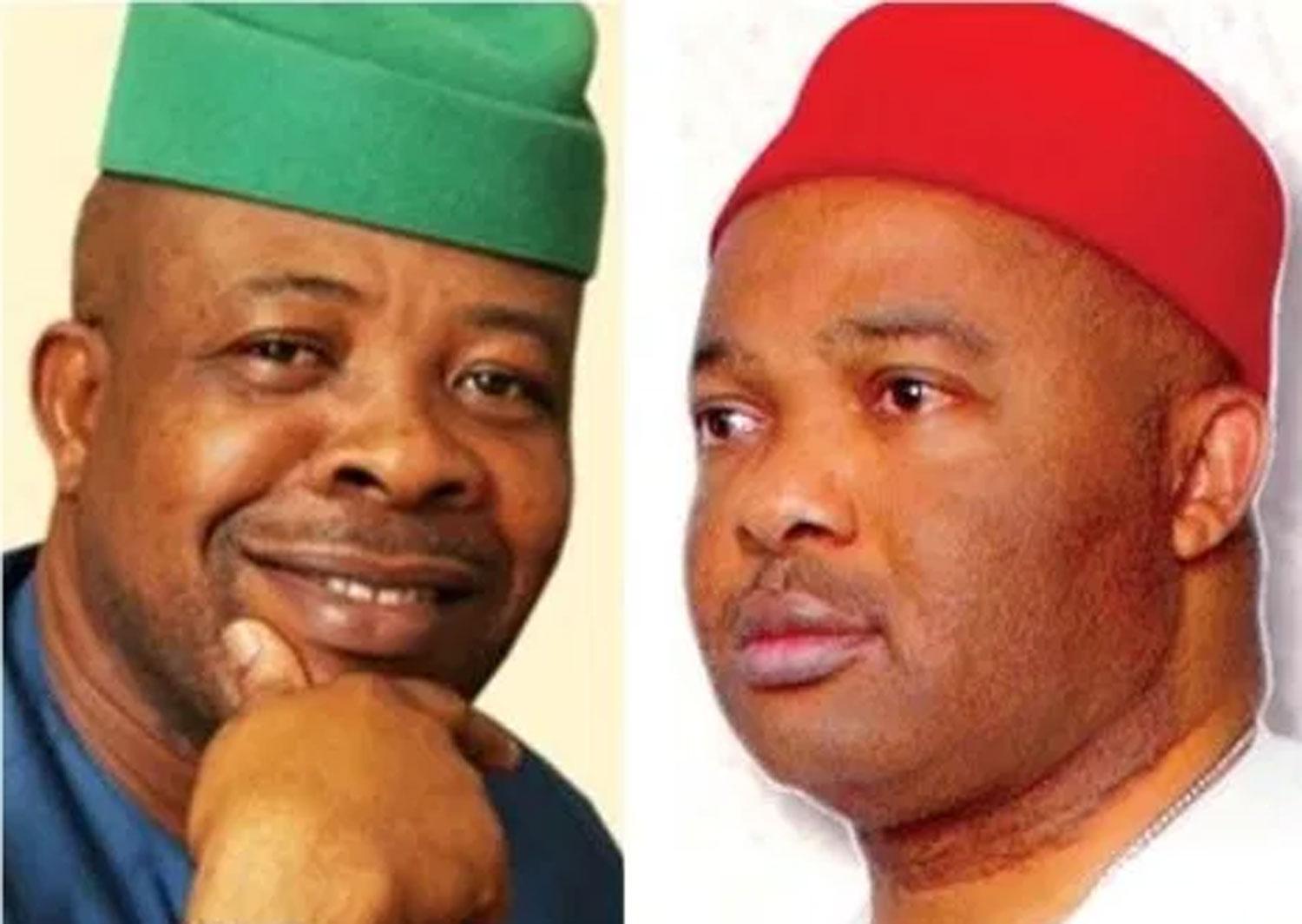
Ihedioha-Uzodinma
This position can only stand where the tribunal finds that Senator Uzodinma did not score the majority of lawful votes and did not secure the mandatory 2/3 threshold.
Any finding in favour of Hope Uzodinma will surely fault Uche Nwosu’s assertion. Evidently it is in doubt whether Uche Nwosu led enough evidence to show not only that he won the election but his total votes were more than the votes scored by Senator Uzodinma.
Ararume in his petition sought for a declaration that the governorship election conducted by
In summary, Senator Uzodinma appears to have technically and tactfully presented a case that is devoid of the heavy burden of irregularities and malpractices. By not alleging irregularities and malpractices he technically ran away from the burden of proving his case beyond reasonable doubt. His allegation of exclusion of the result of 388 units only requires proof on a balance of probabilities. He does not have the heavy burden of proving occurrences or electoral malpractices that will require proof beyond reasonable doubt and calling of unit witnesses. His main complaint just like the case of Jim Nwobodo vs Onoh and the case of Ajasin vs Omohoriowo is that the lawful votes secured by him were excluded during collation by the INEC collation Officers.
Sem Uzodinma appears to have done a better job in proof of his allegations. This is however subject to the superior opinion of the judges who have the final say on the matter.
*Nnabuike writes from Owerri
Disclaimer
Comments expressed here do not reflect the opinions of Vanguard newspapers or any employee thereof.