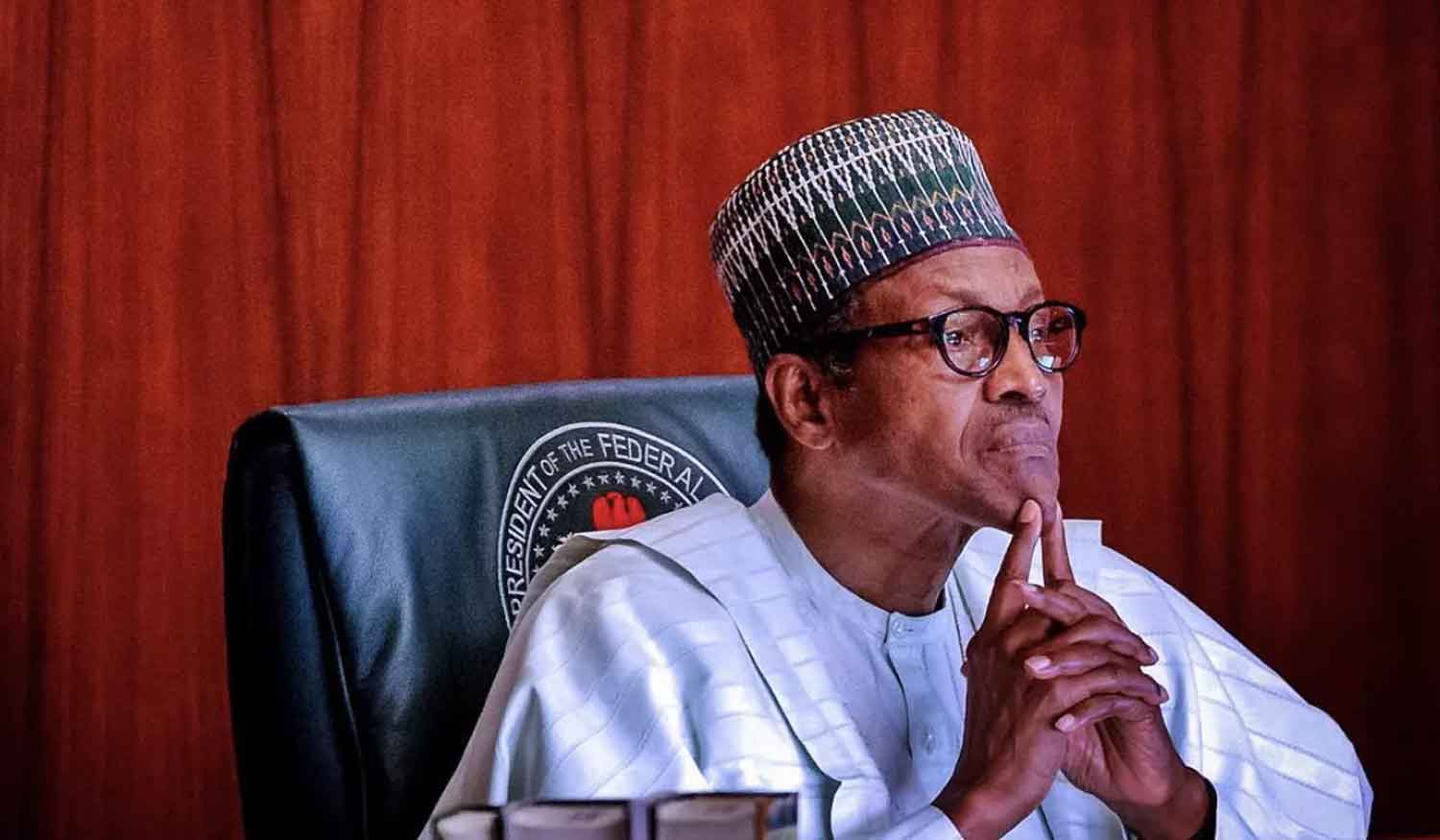
President Muhammadu Buhari
By Charles Kumolu, Deputy Editor
With empirical data from reputable international and national institutions, stating that little or no gains were made in critical sectors in the last four years of Buhari ‘s administration, there is no denying that Nigeria needs different outcomes this time. As enunciated by a Public Administration scholar and ex-public sector specialist by the World Bank Expert, Professor Ladipo Adamolekun, in an interview with Sunday Vanguard, the poor growth statistics are not only freighting but also have multidimensional consequences.
President Muhammadu Buhari
“The projections are frightening. Something drastic should be done or rather, drastic actions should be taken. The growth rate in Nigeria is about two per cent. When Nigeria was growing at seven per cent between 2005 and 2011, it was also reported. It is not good to only accept favourable data. Dangote recently explained our weak economy and I don’t think anybody has denied it. He said: ‘How do you have economic growth without power? No power, no growth because without power there can’t be growth. Egypt increased its electricity by 10 gigawatts which is equal to 10,000 megawatts within 18 months. In Nigeria, we have been struggling for 18 years without adding 1,000 and we have spent three times more than Egypt,’”.
Nothing to cheer
Indeed, the forecasts about Nigeria’s growth indices are nothing to cheer about.
Downplaying the reality or its magnitude for the sake of political correctness, as often done, could worsen the decline in key sectors.
Without bias to what analysts dismissed as inconsequential successes in some areas, the even poor performance in critical places takes Nigeria farther from the seven per cent growth target of the Sustainable Development Goals, SDGs.
Reports from the major sectors covered by this report, which include economy, health, education, oil and gas, power, agriculture, and security, do not illustrate that realistic steps to development are being taken.
Partisanship and sycophancy
The predilection for partisanship and sycophancy may provoke contrary positions, but you only need to live in Nigeria this time to agree more or less.
The renowned experts, who painted the gloomy picture in conversations with our correspondents, feel the situation requires rethinking and retooling of economic and social policies in this dispensation.
Perhaps, only a few would consider their reasons and disagree that things shouldn’t be done differently.
Just the way many experts argue that immediate past ministers underperformed, there is a consensus that much could be achieved in four years with revitalised determination.
Irrespective of your stance, the truth is that Nigeria is on a decline in many sectors, with the real danger being the politics of denial.
Also read: STATE OF THE NATION: Nigerians will value Buhari after he vacates office – Unagha
Corruption and ineptitude
It is a situation that characterises the city of Nogales Sonora, Mexico, in Daron Acemoglu and James A. Robinson’s ‘Why Nations Fail: The Origins of Power, Prosperity and Poverty’.
If you are lost as to the similarities between the state of the sectors identified by Sunday Vanguard and Nogales Sonora, deal with this: “The residents of Nogales, Sonora live in a relatively prosperous part of Mexico, the income of the average household there is about one-third than in Nogales, Arizona. “Most adults in Nogales, Sonora, do not have a high school degree, and many teenagers are not in school. Mothers have to worry about the high rates of infant mortality. Poor public health conditions mean it’s no surprise that the residents of Nogales, Sonora, do not live as long as their northern neighbours.
“They also don’t have access to many public amenities. Roads are in bad condition south of the fence. Law and order are in worse condition. Crime is high, and opening a business is a risky activity. Not only do you risk robbery, but getting all the permissions and greasing all the palms just to open is no easy endeavour. Residents of Nogales, Sonora, live with politicians’ corruption and ineptitude every day.”
Patterns of state failure
As could be seen in the submissions of experts, these patterns of state failure which are prevalent in Nigeria require deliberate leadership to be addressed in the next four years. On the economy, specialists in industrialisation, power sector and oil and gas, advocate a paradigm shift.
The synopses in this regard are unambiguous as the Federal Government is urged, in clear terms, to drop the protectionist approach to economic issues and get ambitious.
Take, for instance, the detailed examination of important power sector elements which passes for a work plan for whoever becomes the Minister of Power.
In the health sector, the conscience of policymakers is somewhat pricked with the demand for political commitment to the health of Nigerians.
On security, agriculture and education, the outlined plans of action sound strategic enough to bring about substantial improvements.
Those who may not align with the positions are taken would not agree less on the need for renewed approaches in critical areas that impact socio-economic growth.
Now, the onus lies on the newly assembled Ministers who, regrettably, have been dismissed as not inspiring confidence.
Disclaimer
Comments expressed here do not reflect the opinions of Vanguard newspapers or any employee thereof.