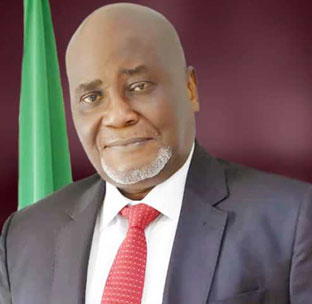
Charles Dokubo
By Soni Daniel, Editor, North Region
If there is one development that has significantly altered the dynamics in the Niger Delta in Nigeria’s recent history, it is the declaration of amnesty for repentant combatants and the strategic implementation of a programme of Disarmament, Demobilisation, Rehabilitation and Reintegration for the youths of the region under the Presidential Amnesty Programme, PAP.
Charles Dokubo
Since June 25, 2009, when the late President Umaru Musa Yar’Adua made the historic declaration aimed at bringing peace and stability to the troubled region, a lot has changed especially in reining in the ex-combatants who used to cause myriads of atrocities that ruffled the country’s mainstay-oil.
If not for anything, the ability of the government’s amnesty programme to pay a monthly stipend of N65,000 to no fewer than 30,000 youths, who embraced the programme, surrendered their arms and denounced militancy, remains a feat yet to be rivalled in country’s chequered history. It remains epochal and those through whose hands the programmes have journeyed steadily till date-Timi Alaibe, Kingsley Kuku, Paul Boroh and now Charles Dokubo, deserve accolades for steering the ship with ex-combatants, whose mindset and orientation, sharply contrast with the ideology of progressive learning, training and skills acquisition to become better equipped to face the challenges of life in a dignified manner rather than constant survival struggles.
Problem to dwarf the intention of the PAP
But there is a problem that has set in with a potential to dwarf the real intention of the PAP: the payment of the N65,000 monthly stipend to each of the 30,000 beneficiaries whose faces, fingerprints, locations have not fully been captured biometrically has tended to enlarge the army of beneficiaries daily and stifle the main business of identifying, grooming and arming genuine Niger Delta youths with relevant skills necessary for securing them high income-yielding jobs in the oil industry, which flourishes in their backyards. The quest by majority of both repentant combatants, their foot soldiers as well as the generality of Niger Delta youths to be placed on the monthly stipends has led to the daily outpouring of emotions and venoms against the current Coordinator of the Presidential Amnesty Programme and the Special Adviser to the President on Niger Delta Affairs, Professor Charles Dokubo, who has only spent just a year and two months, having been appointed effectively on March 13, 2018 following the removal of his predecessor, Paul Boroh, a Brig-General.
Although his predecessors suffered the same fate, the animosity against Charles Dokubu, a professor of international affairs, stems principally from his insightful reminders to them that the payment of the stipends will not last forever, as amnesty will end someday and somewhere. Dokubo wants them to begin to focus their mindset on how to create jobs and be gainfully engaged and stand on their own instead of relying on handouts called stipend. But the boys don’t just want to hear such news and may not want to be educated on anything that will not continuously drop that cash on their table every 30 days!
Dokubo, an accomplished academic and full-blooded Niger Delta from Abonnema in Akuku-Toro Local Government Area of Rivers State , is conversant with what will actually make the amnesty beneficiaries to stand on their own even after the federal government might have ended the programme and is therefore designing and tailoring the scheme towards delivering a solid future for the youths and the combatants despite the short-sightedness of many, who want quick cash rather than skills that can advance their capability and demand in a competitive environment.
The PAP coordinator is aware and convinced that the payment cannot just be stopped abruptly given the circumstances in which it was started in the first place and the special conditions of the beneficiaries.
“Some people have often asked why we are still paying the stipends to some of the ex-combatants. This question becomes necessary because some of them have already undergone training and are expected to stand on their own. However, it does not end there,” Dokubo told senior journalists in Abuja.
Human Trafficking: Edo Taskforce lauds Senator Urhoghide, Niger Delta Ministry
“The answer is this: by the rules of DDR, those who have undergone training must be fully empowered with functional employment. They must be re-integrated into the larger society with alternative means of livelihood other than militancy.
“Payment of stipends will continue for the time being until it is replaced with an effective way of life for the ex-combatants. They must first be functionally re-integrated before we leave them alone. Anything to the contrary will be counter-productive. There are provisions in the re-integration process as to when payment of stipends will stop and we are working on that. It certainly will not continue forever. But winding down the operations of amnesty is a gradual process that will be completed someday, soon,” the coordinator explained during the interaction in Abuja.
Perhaps, it is for these reasons that Dokubo has redoubled his empowerment programmes to equip the ex-combatants to be better placed to face their future with hope and confidence as they march into the larger society.
So far, he has adopted a two-prong approach to facilitate the attainment of a better future for the amnesty beneficiaries- PAP Empowerment through Vocational Skills/Acquisition and Entrepreneurship Development, which among other things seek to empower them with relevant skills and capacity to work for themselves or to be gainfully employed by others in an outside Nigeria.
Operating under the two schemes as a guide in grooming the beneficiaries, Dokubo has trained a total of 18,602 in different specialised vocational areas since coming on board more than a year ago. The figured us broken down to: agriculture, 2,265; automobile mechanics, 1,171; welding/fabrication 4,686; entrepreneurship, 2,074; carpentry, plumbing & pipe fitting, 402; electrical installation/maintenance, 714; Information and Communications Technology-ICT, 401; Crane/heavy duty operations, 1,536; health safety & environment-HSE, 249; music/fashion/entertainment/catering, 1688; others, 2,185; aviation, 187; and Boatbuilding, 152; Out of the 3243 in training, 3,006 are receiving education; 2,799 in universities in Nigeria, and 207 students in universities and colleges abroad.
Specialised vocational training
Also, no fewer than 237 are receiving specialised vocational training with 217 in vocational/skills acquisition in Nigeria, and, 20 undergoing specialised training Aviation training at the Nigerian College of Aviation Technology-NCAT.
Prof. Dokubu is working on setting up in collaboration with the different state governments vocational Training Centres (VTCs) in different fields. Two of these Centres are already commissioned. The oil and gas training Centre in Agadaba-Obon, Ondo State and the Basic Skills Training Centre in Kaiama in Bayelsa State.
Under this aspect, the agency has creatively and intuitively developed programmes towards the expansion of economic activities through entrepreneurship and job placements of all trained delegates. Right now, PAP is liaising with different organisations such as the United Nations Institute for Training and Research (UNITAR) to help in this regards.
Despite being proactive and strategic in his management of the PAP so far, the destruction and looting of the Kaima Vocation and Skills Acquisition Centre in Bayelsa State by suspected elements who are opposed to his quest to expand the scope of training and empowerment of the youths, Dokubo remains confident and settled in his mind that his programme of activities will not only resettle the ex-combatants but will also provide them with a brighter future and bolster their confidence in life.
Disclaimer
Comments expressed here do not reflect the opinions of Vanguard newspapers or any employee thereof.