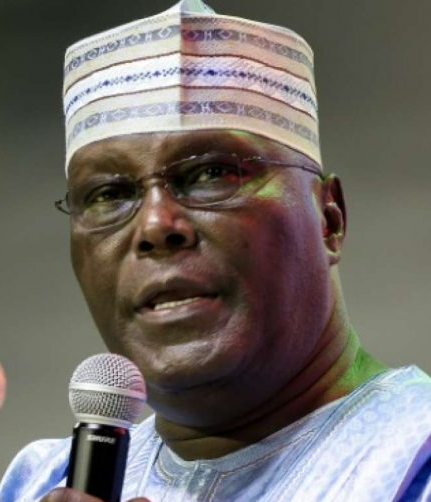
Alhaji Atiku Abubakar
By Olu Fasan
EMINENT statesmen from the North and South of Nigeria publicly endorsed the candidature of Alhaji Atiku Abubakar in this year’s presidential election. Leaders of the Pan-Niger Delta Forum, the Northern Elders Forum, the Middle Belt Forum, Afenifere and Ohanaeze Ndigbo came together under the umbrella of the Leaders and Elders Forum of Nigeria and gave their collective backing to the presidential candidate of the Peoples Democratic Party. They said Atiku “demonstrated the deep understanding of the critical needs of the country at this time and possesses the capacity to proffer clear solutions in that respect.” The former vice president, the elders concluded, was the only candidate who could “retool Nigeria on the path of development as a true federal entity”.
They were right. I too warmed to Atiku’s candidacy. Over many years of contributing to public discourse on Nigeria, I have advocated three main ideas – political restructuring, free market economy and wider institutional reforms – as the way forward. So for me, only the candidate with credible intellectual and policy commitments to root-and-branch economic, political and institutional reforms could lead Nigeria. Well, Atiku ticked the boxes. His manifesto document, entitled “My plan to get Nigeria working again,” was a masterpiece in policy reform ideas. In a country where policy analysis is shallow, Atiku put intellectual rigour into analysing and proffering solutions to what he rightly described as Nigeria’s “economic and political structural fault lines.” His economic vision was radical, as was his agenda for political and wider institutional transformation.

Atiku
Without a doubt, I preferred Atiku to President Muhammadu Buhari, whose socialist economic policies and stubborn resistance to political restructuring hindered Nigeria economically, politically and socially in his first term, and whose re-election “Next Level” manifesto was a road to more of the same. Unsurprisingly, Atiku was also the choice of international investors, who preferred his bold market-based economic reform agenda to Buhari’s dirigiste and anti-business policies and actions. The Buhari government is arguably more hostile to businesses than any previous government in Nigeria – think of the arbitrary, disproportionate and punitive actions taken against foreign investors, such as MTN! At every international business event that I attended in Europe, the vibes and mood music were certainly in favour of Atiku, whose commitment to economic liberalisation, including privatisation, was overwhelmingly preferred to Buhari’s statist and often ruthless interventionism.
But I wasn’t starry-eyed about Atiku. I shared widespread concerns about his personal reputation. However, the bigger picture mattered more. For me, if Atiku could implement his wide-ranging and far-reaching economic, political and institutional reform plans and set Nigeria on the path of true market economy and federalism, that would offset his alleged past misdeeds, which I hoped he wouldn’t repeat in office. Surely, Atiku was not a saint, but, compared with Buhari, he was, as I wrote in this column, “the lesser of two evils”!
https://newlive.vanguardngr.com/2019/03/polls-we-support-atiku-pdps-going-to-court-southern-m-belt-leaders/
Well, the election has come and gone. Of course, the outcome remains controversial. The contest was widely predicted to be close. Few thought Buhari could wallop Atiku in the North or beat him by over four million votes across the country. To be sure, the poll was marred by serious irregularities, including the abuse of incumbency, and some have argued that Buhari’s massive votes in the North were inflated. But, as I once wrote, while there were significant irregularities in the presidential election, they did not materially alter the outcome, although there might have been some vote inflation. That said, the matter is now in court and we must await the verdict of the judges, who, in the interests of Nigeria’s democratic and political development, must do the right thing!
Yet, here’s the point. Even if Atiku finally lost in court, he should be proud that he represented a real choice, a real alternative, in this year’s presidential election. He set an agenda for retooling and transforming Nigeria that cannot be ignored. Truth is, Nigeria cannot be united and stable unless it’s politically restructured; it cannot prosper unless it becomes a private sector-driven, open and competitive economy; and it cannot be an effective state, and make real progress, unless it transforms its bureaucratic institutions and tackle corruption through robust institutional means rather than a personalised rule. These were the reform programmes that Atiku set out in granular detail in his election manifesto.
A long-standing advocate of political restructuring, Atiku argued, rightly, that “the Nigerian states have been reduced to parastatals of the Federal Government” and promised to devolve powers, responsibilities and resources to the country’s sub-units. On market reform, he promised “to pursue with vigour the deregulation and liberalisation of the economy”, including the privatisation of state-owned enterprises, notably NNPC. He set out an elaborate agenda for public-sector reform, and a robust institutionally-driven anti-graft strategy, including a set of “first 100 days in office” immediate actions.
Let’s face it, Atiku lost the election largely because of negative perceptions about his integrity. But Nigeria must not throw away the baby with the bath water; it must separate the message from the messenger. For this country needs Atiku’s economic, political and institutional reform ideas to prosper. What’s more, the ideas, particularly political restructuring, simply won’t go away!
Disclaimer
Comments expressed here do not reflect the opinions of Vanguard newspapers or any employee thereof.