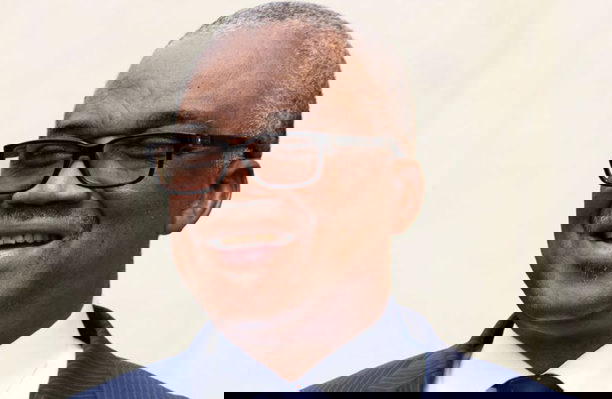
•Kalu, SAN
By Awa Kalu, SAN
The quantum of materials and diverse opinions (founded and unfounded) trending on social media since the purported suspension of Justice Walter Onnoghen as Chief Justice of Nigeria, is sufficiently suggestive that Nigerians are acutely aware of the dimensions of the fight against corruption.

•Kalu, SAN
However, notwithstanding the volume of commentaries and the inconsistencies subsumed in some of those commentaries, it is easy to be drawn into the conclusion that a lot of disinformation and misinformation is flying around, thereby obfuscating the crucial issues to which attention must be drawn.
It is easy to forget that President Muhammadu Buhari did not invent the fight or war against corruption. It is also easy to forget that from the onset, the fight or war against corruption (as the case may be) has been a very controversial and sore point – depending on whether you belong to the political party, for the time in power or the opposition as the case maybe. Accordingly, and for the avoidance of doubt, we find it useful to remind the discerning reader about how the war began since the return of constitutional government in 1999.
President Olusegun Obasanjo, it must be remembered, made the avowed fight against corruption the cornerstone of this presidency.
In September 2000, when he inaugurated the Independent Corrupt Practices and Allied Offences Commission, ICPC, he said with presidential and magisterial authority that; ‘with corruption, there can be no sustainable development nor political stability. By breeding and feeding on inefficiency, corruption invariably strangles the system of social organisation.
In fact, corruption is literally the anti-thesis of development of progress.’ Soon after the inauguration of that commission, those who suspected that the ‘war’ was to be turned into a weapon for political vendetta, took umbrage and began a systematic opposition to the ‘war’ as it was at the time.
The reader maybe reminded that two quick suits were filed at the Supreme Court by the Attorneys-General of Abia and Ondo states respectively, challenging the competence of the Federal Government through the National Assembly to legislate on Corruption. It is also necessary to recapitulate that because the suit filed by the Ondo State Government was propelled by the doyen of the Bar at the time – the late Chief F. R. A Williams, SAN, – the Supreme Court chose to hear the suit first, and the other suit filed by the Attorney-General of Abia State was to abide by the outcome.
On account of the Constitutional significance of the suit, the Supreme Court invited amici curiae to assist the court in the determination of the suit, namely; Chief Afe Babalola, SAN, Professor Ben Nwabueze, SAN and Chief Olisa Agbakoba, SAN.
These learned senior counsel filed briefs of argument which the Supreme Court found illuminating and helpful.
Each Justice of the Supreme Court who sat on the matter agreed that corruption needed to be fought without mercy. It may be helpful to refer to some of the speeches as appear in the Law Reports.
According to Justice M. L Uwais, who was Chief Justice at the time;”corruption is not a disease which afflicts public officers alone, but society as a whole. If it is therefore, to be eradicated effectively, the solution to it must be pervasive to cover every segment of the society.” Othman Mohamed JSC stated that; “It is quite plain that the issue of corruption in Nigerian society has gone beyond our borders.
“It is no more a local affair. It is a national malaise… the disastrous consequences of the evil practice of corruption has taken this nation into the list of the most corrupt nations on earth.”
Justice. Katsina Alu, (later CJN) held the view that; “Corrupt practices and abuse of power spread across and eat into every segment of the society. These vices are not limited only to a certain section of the society.
It is lame argument to say that private individuals or persons do not corrupt officials or get them to abuse their powers. It is good sense that everyone involved in corrupt practices and abuse of power should be made to face the law in our effort to eradicate this cankerworm.”
At this juncture, it is perhaps necessary to emphasize that the learned justices of the Supreme Court found rather persuasive some observations in the preamble to Chief Babalola’s brief, where he said; “In the last 20 years, the pervasiveness of corruption in all its ramifications has assumed renewed dimensions of cancerous proportions in Nigeria, to the extent that the Germany-based Transparency International, a respected independent, universal, non-governmental organisation ranked Nigeria in the unenviable position of being the most corrupt nation in the world for a consecutive period of more than seven years.
The unpleasant news was published in all national newspapers in Nigeria.
In foreign countries, Nigerians are regarded and treated as corrupt people. Unlike other nationals, no bank would allow Nigerians to open a bank account as of right.
The Nigerian Green Passport is synonymous with corruption. Consequently, at foreign airports, Nigerians with green passports are separated from other nationals. While others are allowed to go freely, Nigerians are subjected to degrading and inhuman treatments and treated as pariahs on the ground that they are Nigerians who hail from the most corrupt country of the world. National newspapers are filled with stories of looted money stashed in foreign banks.
The stolen resources, lost by Nigeria through endemic corruption and abuse of office have had inimical effect on the economy of the country.”
In a nutshell, the Supreme Court found that the Federal Government had constitutional justification in enacting the ICPC Act.
The reader may also be reminded that upon validating the ICPC Act, the Federal Government through the National Assembly enacted the Act which established the Economic and Financial Crimes Commission, EFCC, and thus widened the frontiers for the now controversial fight against corruption. Perhaps, it may serve the reader well to acknowledge that the fight or war against corruption has brought each successive government in power, led by Chief Obasanjo, President Musa Yar’Adua, Goodluck Jonathan, and now President Buhari in collision with the opposition parties, and this has led to a lingering question, that is, first; how should we fight corruption? And in consequence, is the war being fought with the appropriate weapons? And in good faith?
In an attempt to answer these questions, the second part of this article would dilate on what has happened so far in the war against corruption, but before then, what, we may ask, is corruption? According to the Black’s Law Dictionary, corruption is symptomatic of depravity, perversion, or taint and may suggest an impairment of integrity, virtue or moral principle, especially the impairment of a public officer’s duty by bribery.
Disclaimer
Comments expressed here do not reflect the opinions of Vanguard newspapers or any employee thereof.