By Adam Effiong
AS widely acknowledged, budget is a financial plan for a defined period of year. It may also include planned sales, volumes and revenues, resource quantities, costs and expenses, assets, liabilities and cash flows. Companies, governments, families and other organisations use it to express strategic plans of activities or events in measurable terms.
A budget is the sum of money allocated for a particular purpose and the summary of intended expenditures along with proposals for how to meet them. It may include a budget surplus, providing money for use at a future time, or a deficit in which expenses exceed income.
This is one critical aspect of governance which Emmanuel Udom did get right, and which had also been the major policy thrust that brought about the much talked about industrialisation and economic diversification of Akwa Ibom State.

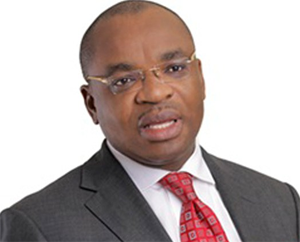
Udom Emmanuel
For the year 2016, Governor Udom Emmanuel has presented a budget proposal of N426 billion for the 2016 fiscal year for the State. It is noteworthy that recurrent expenditure for the 2016 budget is N92.964 billion, while the capital expenditure is N245 billion and while Consolidated Revenue Fund Charges is N88.036 billion. Most states in the federation hardly have enough as budgetary allocation for capital expenditure which stimulates growth and development, and improvement on existing infrastructures.
It must also be noted that there was a drop in the state’s budget for 2016 by N58 billion, when compared with that of 2015 which was N484 billion as a result of economic recession the nation was plunged into by the mismanagement of economic and monetary policies by the APC-led federal government. Road and Transports was allocated N100.244 billion (which is the largest), Health was allocated N7.419 billion, while Investment, Commerce and Industry, and Agriculture were allocated N7.986 billion and N8.071 billion respectively. Other sectors and their allocation in the budget were: Education, N9.888billion; Rural Development, N3.258 billion; Science and Technology, N0.861billion; Land, Housing and Urban Development, N31.257 billion.
In 2017, Governor Udom presented a budget which was N58 billion or 13.7 per cent lesser than the N423billion budgeted for the 2016 fiscal year.
In the budget christened “Budget of Consolidation”, it was aimed at expanding economic activities as well as promoting industrialisation in the state.
In it, N16 billion was allocated to lands and housing; education, N8.6 billion; agriculture, N6.8 billion; culture and tourism, N700 million. The sum of N94.8 billion or 26 per cent of its N365.2 billion budget was for roads, works and transport sectors, as they were considered critical to the boosting of economic activities in the state. This further prompted the state government to draw up a Road Master Plan for the state in 2017 for effective and efficient transport operations.
According to the budget, N43.1 billion is being allotted to capital expenditure and N94.6 billion for recurrent expenditure, while consolidated fund charges stand at N120.8 billion.
The tradition of allocating more funds for capital expenditure was sustained in 2018. A budget of N651.50 billion was proposed for the outgoing year and was higher than the 2017 figure of N485.79 billion, with N165.71 billion. Again, N92.69 billion recurrent expenditure, which ensured for three (3) years it never gulped more than a quarter of the budget. N437.67 billion was for capital expenditure, while consolidated revenue stood at N120.86 billion. The total projected recurrent revenue for the year was N289 billion as against N188.50 billion estimated in 2017.
The budget which was christened: “Budget of Consolidation on Industrialisation,” was expected to drive the state government’s industrialisation policy to a logical conclusion and was predicated on developmental objectives.
In the 2018 budget, roads, works and transport as usual got the lion share of N211.42 billion; education, N10.53 billion; and N17.91 billion for agriculture.
As we approach 2019, the state government is still very much committed to what has become a tradition in the last three years by forwarding a budgetary proposal to the State House of Assembly and which could be termed, a continuation of the audacious attempt at repositioning the state economically.
The budget christened Budget of Industrialisation for Poverty Alleviation, comprised N445.936 billion for Capital Expenditure, N97.096 billion for Recurrent Expenditure, and N127.686 billion for Consolidated Revenue Fund Charges.
On Wednesday, Governor Udom presented the 2019 budget of N670.72 billion to the state House of Assembly for consideration. It is higher than that of 2018 figure of N646.65 billion by N24.07 billion.
It is made up of N97.09 billion recurrent expenditure, N445.94 billion capital expenditure and consolidated revenue of N127.69 billion.
The budget was predicated on oil benchmark of $60 per barrel at a production rate of N2.3 million barrels per day, with an estimated exchange rate of N305 per US dollar.
The 2019 budget is intended to establish more industries and attract more direct foreign investments and guided by the International Public Sector Accounting Standard, IPSAS.
The policy objectives of the 2019 budget are to broaden and diversify the state’s resource base through improvements in the collection of Internally Generated Revenuem, IGR.
The budget is expected to boost production of local businesses through the promotion of trade, commerce and tourism between the state and the rest of the world and also aimed to develop agriculture through the supply of improved agricultural inputs, credits and extension services.
BudgIT, an independent assessment by a non-profit organisation in the field of social advocacy , which uses an array of tech tools to simplify the budget and matters of public spending for citizens, with the primary aim of raising standard of transparency and accountability in government in a recent report stated that Akwa Ibom, with Edo and Ondo states ranked top positions as a result of their revenue profile and manageable recurrent expenditure obligation.
BudgIT also identified a commendable appearance by the states with low expenditure outlay and sizeable debt, and the index looked at the ability of states to meet their recurrent expenditure obligations with their Value Added Tax, VAT revenue, IGR and advantage income, and their ability to sustainably manage their debt profiles. This hasn been a plus for the present admininstration in the state.
One must also acknowledge that the budget approach and fiscal discipline by the Udom-led government has yielded the envisaged industrial revolution as funds were made available for execution and completion of some projects.
The Electric Digital Metering Solutions Manufacturing Factory, Syringe Manufacturing Factory (Largest in Africa), and Pencil Factory & Toothpick factory are examples of projects completed and operating at optimal capacities.
The syringe company has a production capacity of a billion syringes a year, while the Electric Digital Metering Solutions Manufacturing Factory will ensure electricity companies bill Nigerians accurately. The validation of the profitability of this venture was through the Port Harcourt Power Holding Electricity Distribution (PHED) and some others in the Niger Delta region which ordered over one million meters from the company.
Other projects which were executed as a result of budgets geared towards industrialization and economic diversification are the resuscitation of Peacock Paint Industry and refurbishing of Cassava Processing Factories located at Ikot Okudom, Eket LGA; Nung Udoe, Ibesikpo/Asutan LGA and Ikot Ekang in Abak LGA which was leased to private operators for the production of high quality garri, odorless foofoo and cassava flour.
The Flour Mills and Coconut Refinery, Ibom Deep Seaport, Ibom Industrial Park/ Jetty, Plastic Manufacturing Factory and Fertilizer Blending Factory, and construction of No. 33 Cassava Micro-processing mills are ongoing projects due to the budgetary approach of the current administration.
One cannot but agree that Emmanuel Udom has secured the future of Akwa Ibom through fiscal discipline and financial frugality.
Disclaimer
Comments expressed here do not reflect the opinions of Vanguard newspapers or any employee thereof.